
Section 5
Burgos to Carrión de los Condes

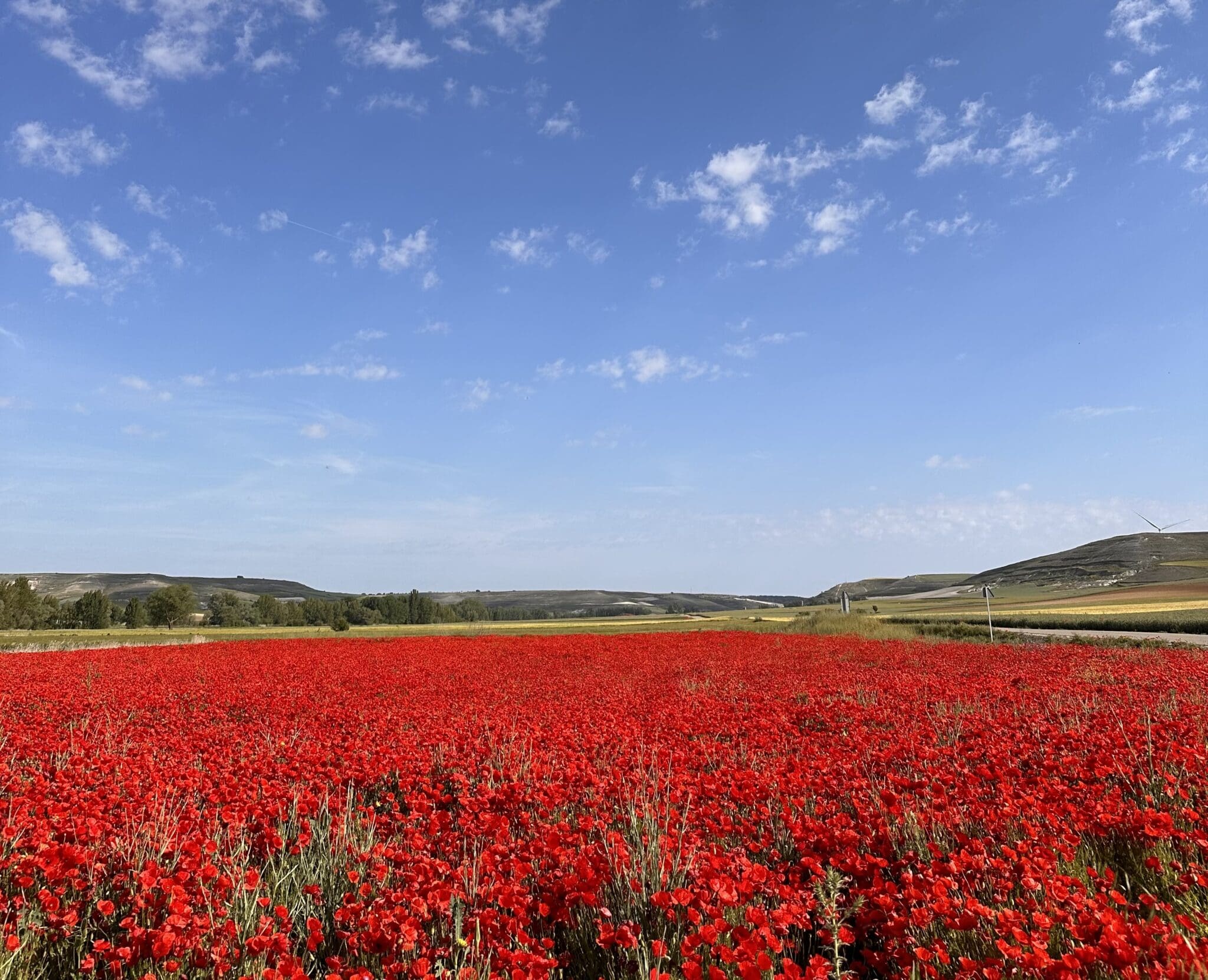
This next stretch takes you across the first half of the Meseta, the hot and dry high table-top plateau that dominates the centre of Spain, and for me, it’s one of the finest sections of the entire Camino Francés. I’ve never understood why the Meseta is so maligned. People talk about skipping it by bus; they say it’s too flat, too long, too boring. But for me, it’s magical. Big skies, tiny villages, corn poppies lining the path and fields of wheat or sunflowers stretching to the horizon.
They say the first third of the Camino is about the body because it’s physically demanding as you adjust to long days on your feet. And they say the last third is about the soul, as Santiago draws closer and the journey nears its end. But the Meseta. The Meseta is about the mind. There’s a stillness to it, a space where your thoughts have room to stretch out and go wherever they need to go. So let’s get started.

Burgos
490 km (304 miles) to Santiago
The walk out of Burgos is much more charming than the walk in. That wouldn’t be hard. From the cathedral, just head back to the river and follow its bank. As you near the edge of the city, the path briefly crosses a few roads that can be busy and slightly awkward. The signage can feel a little unclear here, and it is easy to lose the arrows and drift onto the road. I have done it myself. If that happens, do not panic. Just backtrack to the path.
Tardajos
478 km (297 miles) to Santiago
After about 10 kilometres, you’ll reach the village of Tardajos. The Camino veers away from the main road here, and from this point on, you won’t return to anything resembling a busy road for days.
Rabé de las Calzadas
476 km (296 miles) to Santiago
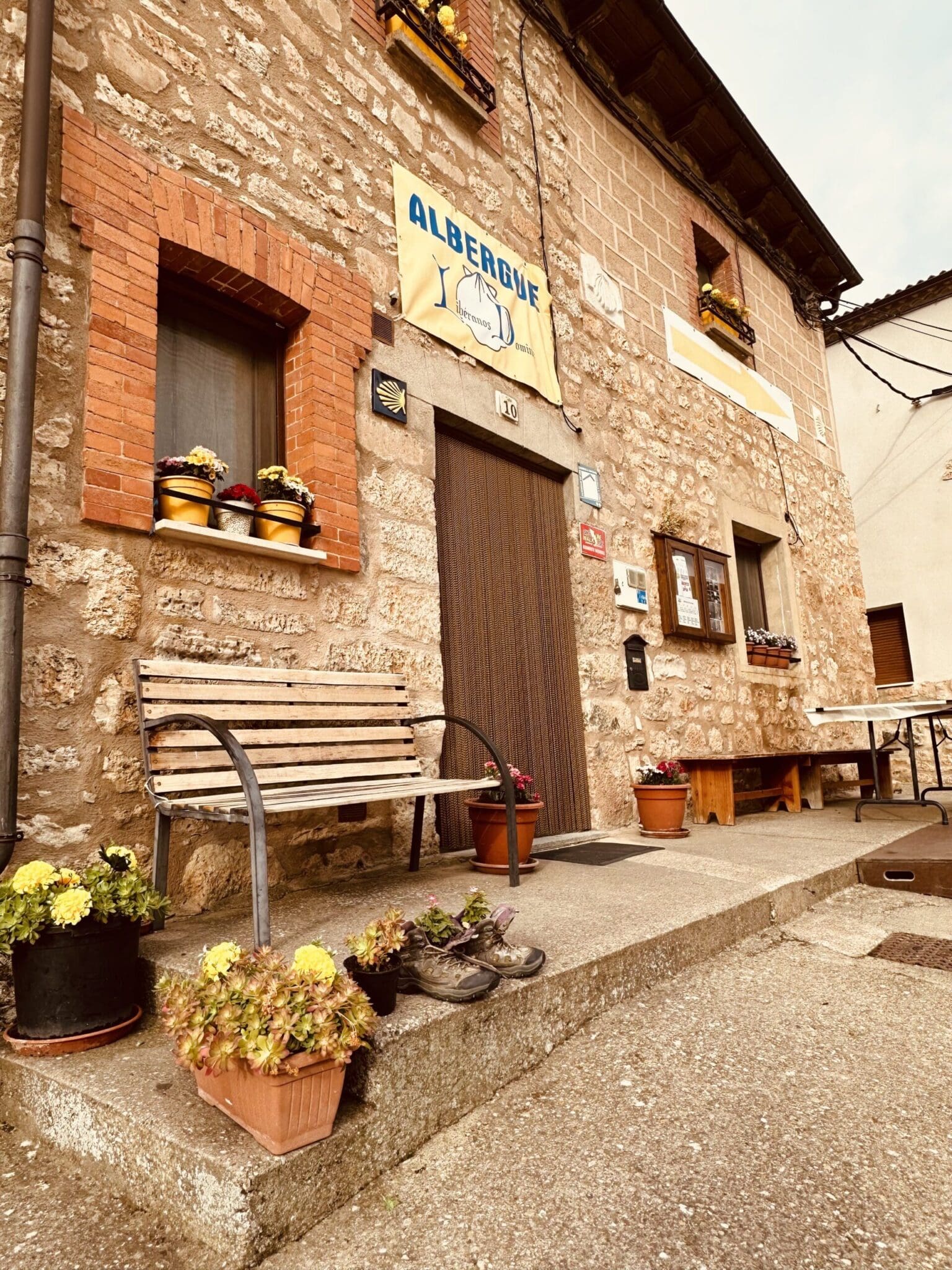
A few more quiet kilometres and you’ll come to Rabé de las Calzadas. The Camino is now slipping fully into the heart of the Meseta. There’s a fabulous little albergue here, Albergue Liberanos Domine. A quintessential family-run place with a true homely feel. A real gem. The host is Clementina. If you’re like me and prefer to stay in that Camino headspace, avoiding cities with all their traffic and noise, then skip Burgos and stay here. The food’s great too, proper home cooking.
Hornillos del Camino
468 km (291 miles) to Santiago
As you leave the village, you’ll pass a little chapel on the left: Ermita de Nuestra Señora del Monasterio. If the door is open, step inside. Sister Teresa of the Daughters of Charity of Saint Vincent de Paul looks after the chapel. The quiet kindness she shows to thousands of pilgrims each year has made her something of a Camino legend. She offers everyone a simple, personal blessing. She’ll ask your name, gently place her hand on your head, pray for your journey, and place a Miraculous Medal around your neck. You’re also welcome to have your credential stamped, light a candle, sit in silence, or simply chat for a few minutes. This was one of my favourite Camino moments.
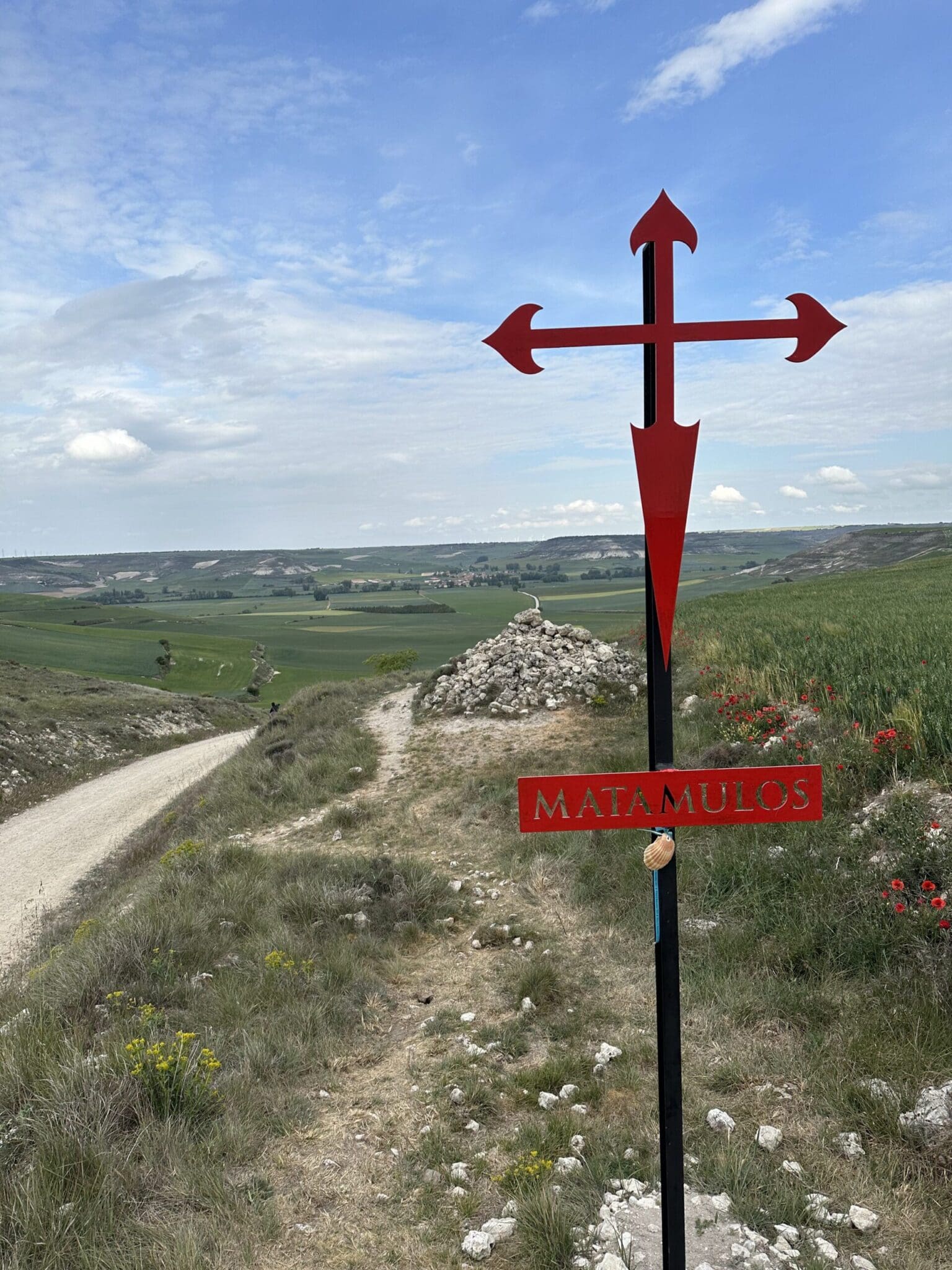

From here, continue for about 10 km towards Hornillos del Camino. The trail follows a long, flat stretch before reaching the edge of a plateau, where the landscape suddenly opens up into sweeping views across the valley below. The Cross of St. James, a red cross shaped like a medieval sword, marks the vantage point. Locals know this spot as Alto de Matamulos, which translates to “Mule Slayer.” This name likely refers to the poor animals that once had to haul their loads up to this point. Good news, though: you’re going the other way, and from here it’s a steady downhill all the way into Hornillos del Camino. I think the name means “little oven”, maybe from the old days when it was a place for pilgrims to stop and eat. On a hot summer day, it might take on a completely different meaning.
Hornillos can become a bit of a bottleneck on the Camino. It’s about 20 km from Burgos, while the next village with accommodation is another 10 km further on. As a result, many pilgrims choose to stop here, and beds can fill up quickly during busy periods. There is a wonderful municipal albergue just off the small square beside the church. Housed in a beautiful old stone building, it’s a little different from many other municipal albergues in that it accepts reservations for around half its beds. In the evening, they often prepare a communal meal. Hornillos Meeting Point is another excellent option; they have a small pool in the garden for soaking your feet, and the paella dinner there is terrific, worth booking ahead.
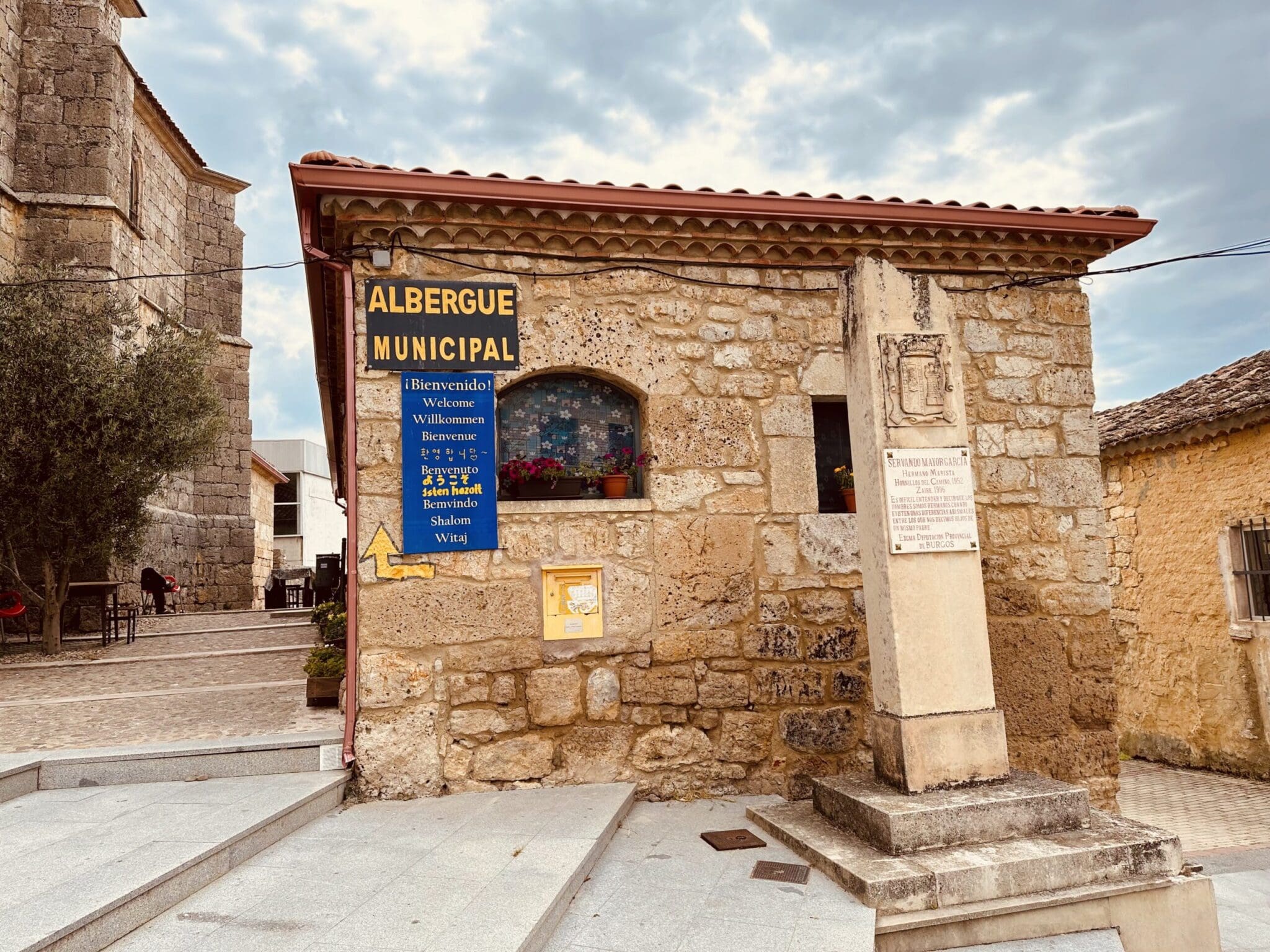
Europeans, especially the Spanish and Italians, seem to have a real soft spot for classic rock. On the Camino, you’re far more likely to hear James Taylor than Taylor Swift. It’s baby boomer heaven, whatever your age. Here in Hornillos, you’ll find what I think is the best music bar on the entire Camino, Casa Manolo. This cool little spot opposite the church is a proper rock-and-roll bar, with guitars hanging on the walls, old band photos, and classic rock pouring from the speakers. If you’re lucky, there might even be some live music.
And if it seems odd that the village’s only bar is a rock and roll bar, it’s even odder that the only restaurant in town, Nanumi, is an authentic Korean restaurant. It’s just on the way out of the village and run by a Korean pilgrim who decided to make their home on the Camino. The food is excellent, with dishes like bibimbap, bulgogi, japchae, kimbap, and prawn rice bowls. Another grand reason to stay in Hornillos, if you can secure a bed.
Arroyo San Bol
462 km (287 miles) to Santiago
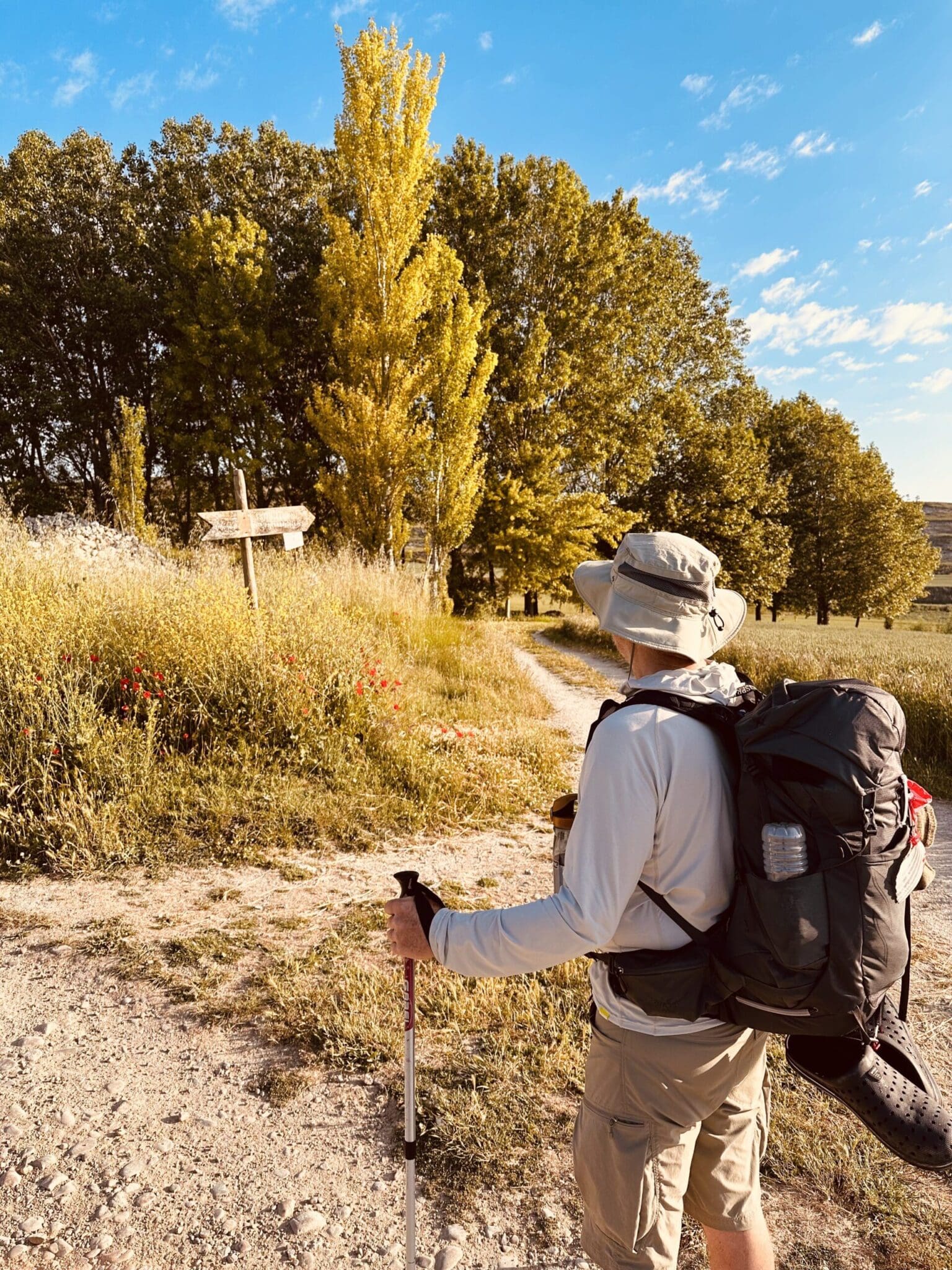
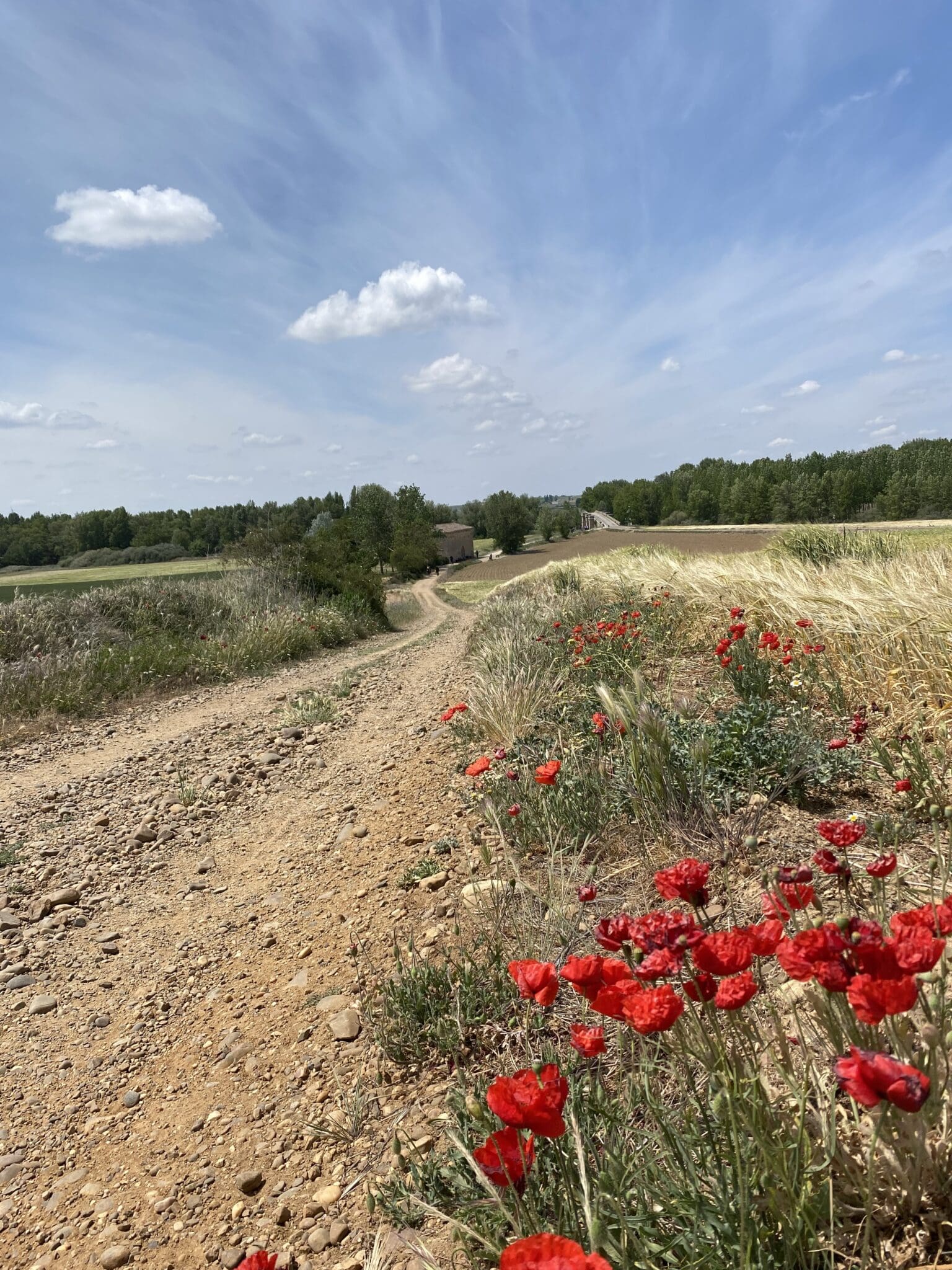
Leaving Hornillos, the Camino rolls on along a simple, beautiful track, and you really start to feel the vastness of the Meseta. It’s especially beautiful from April to June, when the fields are thick with crops swaying in the wind and wild poppies splash red along the track.
After about five kilometres, keep an eye out on your left. Roughly 200 metres off the path sits Arroyo San Bol, a lone beehive-shaped building in the middle of nowhere. It operates as a small albergue with around 10 beds, and in the evening, they gather everyone around a large round table for a fantastic communal meal.
Arroyo San Bol is far from everything, with no light pollution, and is a perfect place for stargazing. The Milky Way reveals itself in full glory here; check the moon cycle; you want a night with a new moon to catch the whole cosmic show.
There’s also a small spot where you can soak your feet. The water must rise from a deep spring because, no matter how hot the day, it always seems icy cold. They say the water heals sore pilgrim feet. Whether or not you’re planning to stay, take the 200-metre detour, sit for a while, and enjoy the splendid isolation.
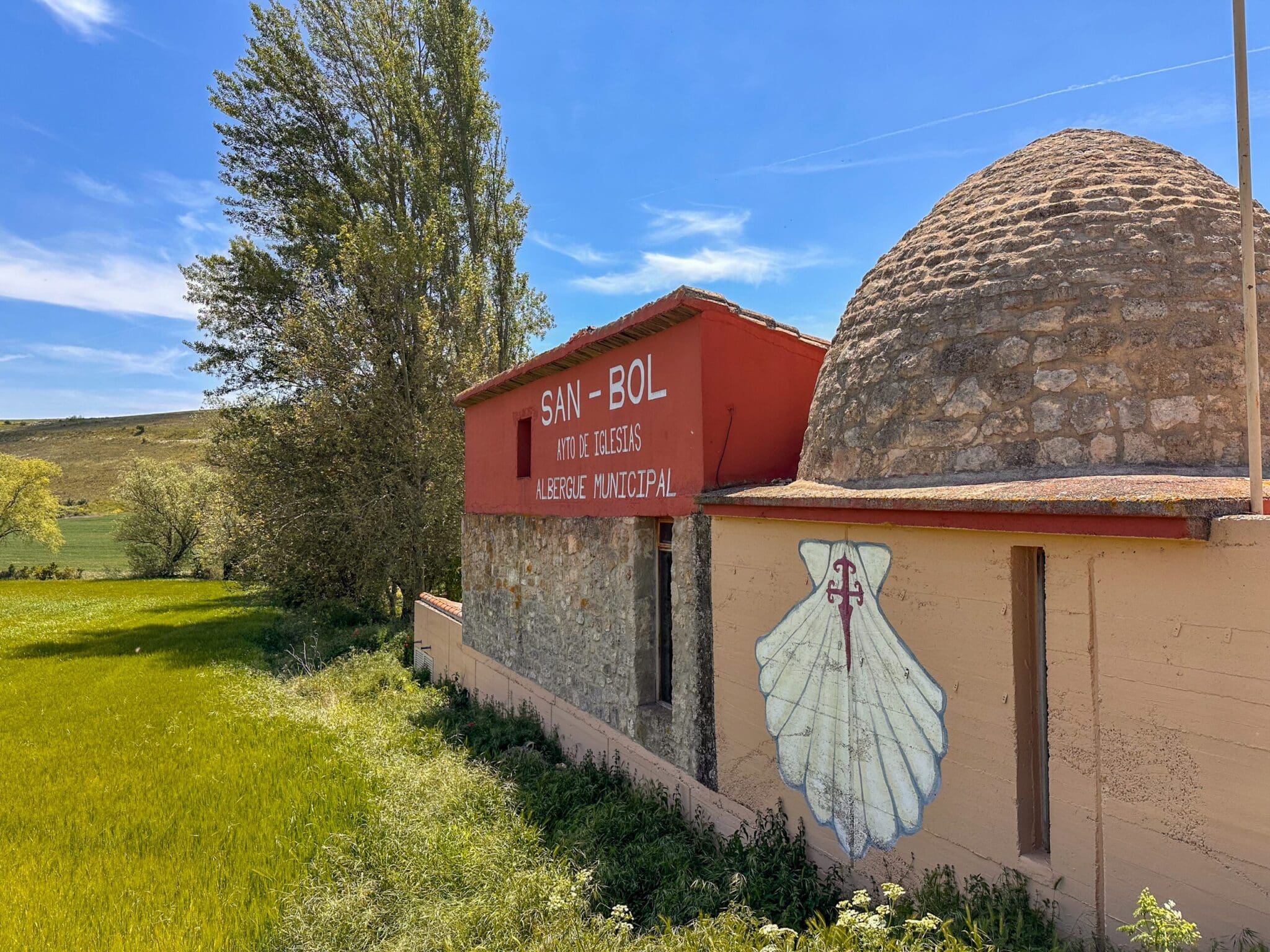

About 4km past Arroyo San Bol, this time off to the right of the path, you will find another fine albergue, Fuente Sidres Albergue, sitting out in the middle of nowhere. Good food, good vibes.
Hontanas
458 km (284 miles) to Santiago
Most villages along the Camino are built on hilltops; you see them from a distance, a goal on the horizon, but not this one. Hontanas hides in a shallow ravine, tucked into the land itself. It seems to appear from nowhere, a sudden gift. You’re walking through empty space, and then there it is.

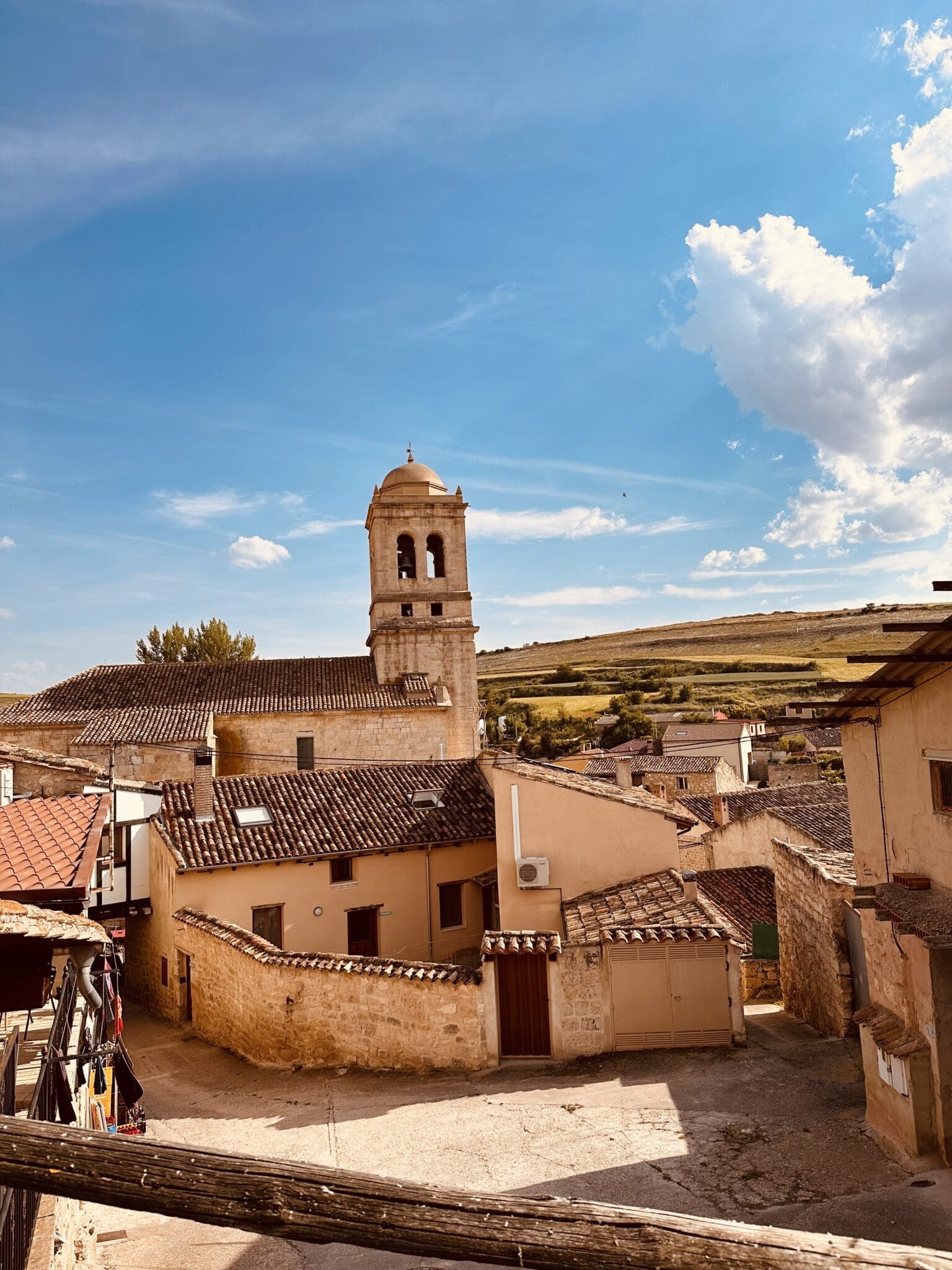
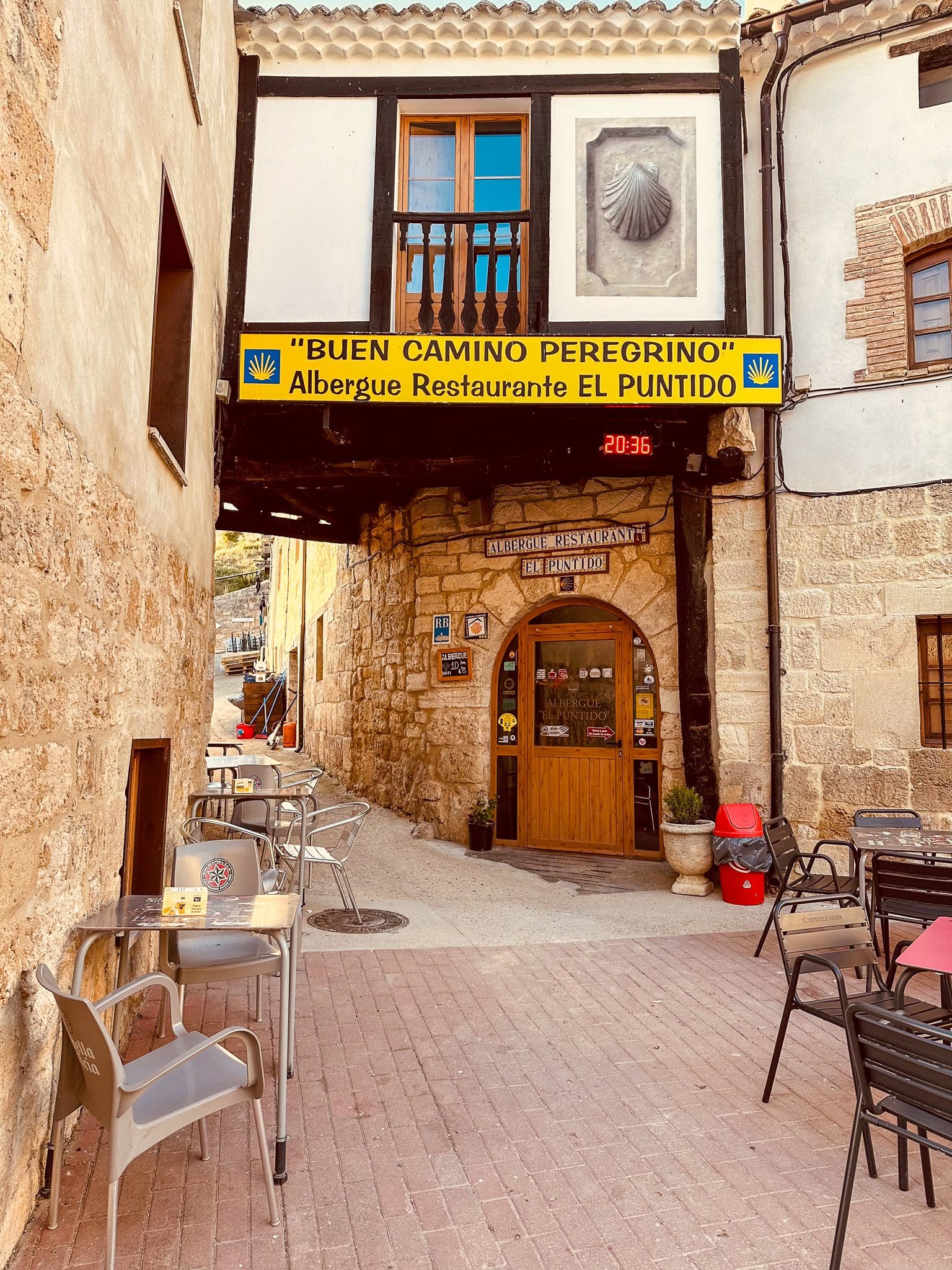
Hontanas is another one of those classic pilgrim villages, and it’s one of my favourite stops on the Camino. Right in the middle of the main street, there’s a small bar, El Puntido, that sells the coldest beer on the whole Camino. Walk in, grab a frosty mug straight from the freezer, and they’ll pull you a pint. Then sit outside in the sun and people-watch as your pilgrim friends straggle into town, dusty and smiling.
The bar doubles as an albergue, so if you have a few beers in the midday sun, you can sneak off for a siesta before the communal meal next door.
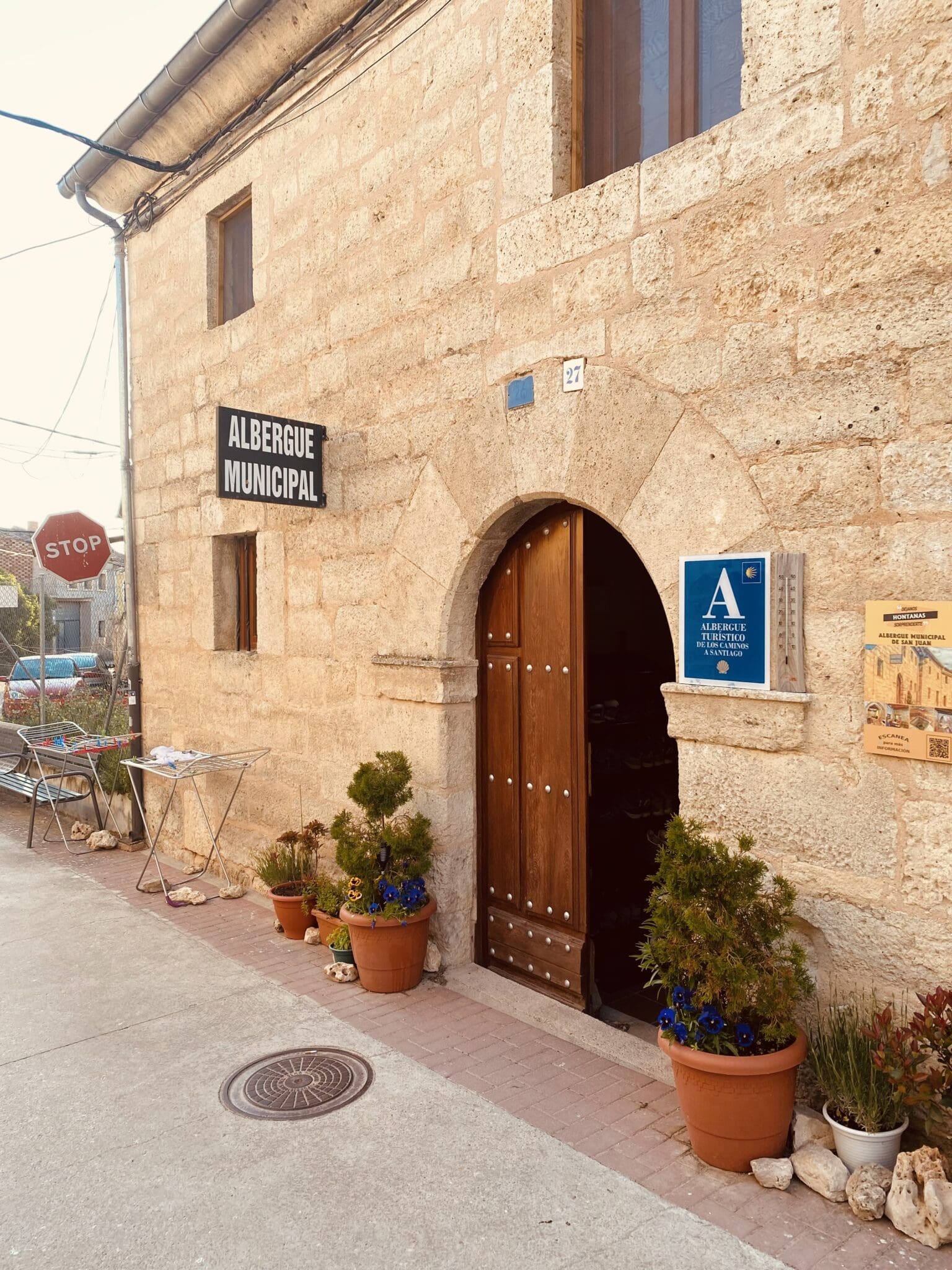
Also on the right as you enter the village is Santa Brígida. They offer both a traditional pilgrim albergue and private rooms, with a slightly more luxurious feel than most. They also have a spa, a real treat after a long day crossing the Meseta. You can soak in the hydrotherapy pool, relax in the sauna, or book a wellness treatment. Definitely, Hontanas is special, the kind of place you could easily spend a few idle days, a village lost in time.
San Antón – The Ruins
452 km (280 miles) to Santiago
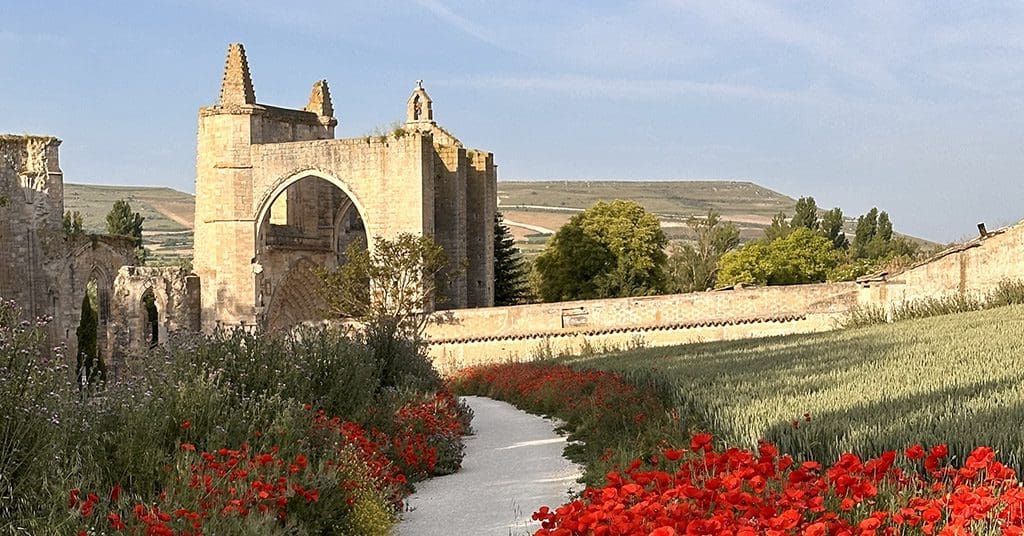
Leaving Hontanas, the Camino continues for about five kilometres to the ruins of San Antón, with the last remaining arch of the church stretching right over the Camino. You walk under it just as medieval pilgrims did.
This former monastery belonged to the Order of Saint Anthony, whose monks, in medieval times, cared for pilgrims suffering from St. Anthony’s Fire, a disease caused by a fungus that contaminated rye and could trigger severe pain, convulsions, and hallucinations. Many sufferers travelled here seeking a cure, believing that prayers and treatment from the monks would heal them. In reality, simply reaching this dry part of Spain may have helped. The fungus responsible for the disease struggled to survive in the local climate, meaning pilgrims were no longer eating contaminated grain and often recovered naturally.
The symbol of the Antonie monks was the blue Tau Cross, a simple T-shaped cross that you can still find carved into the ruins. It is the same cross that later became one of the best-known symbols of the Franciscan Order. The hospitalero, when I stayed here, told me that Saint Francis of Assisi probably passed through San Antón on his way to Santiago around 1214 and adopted the Tau Cross during his visit.

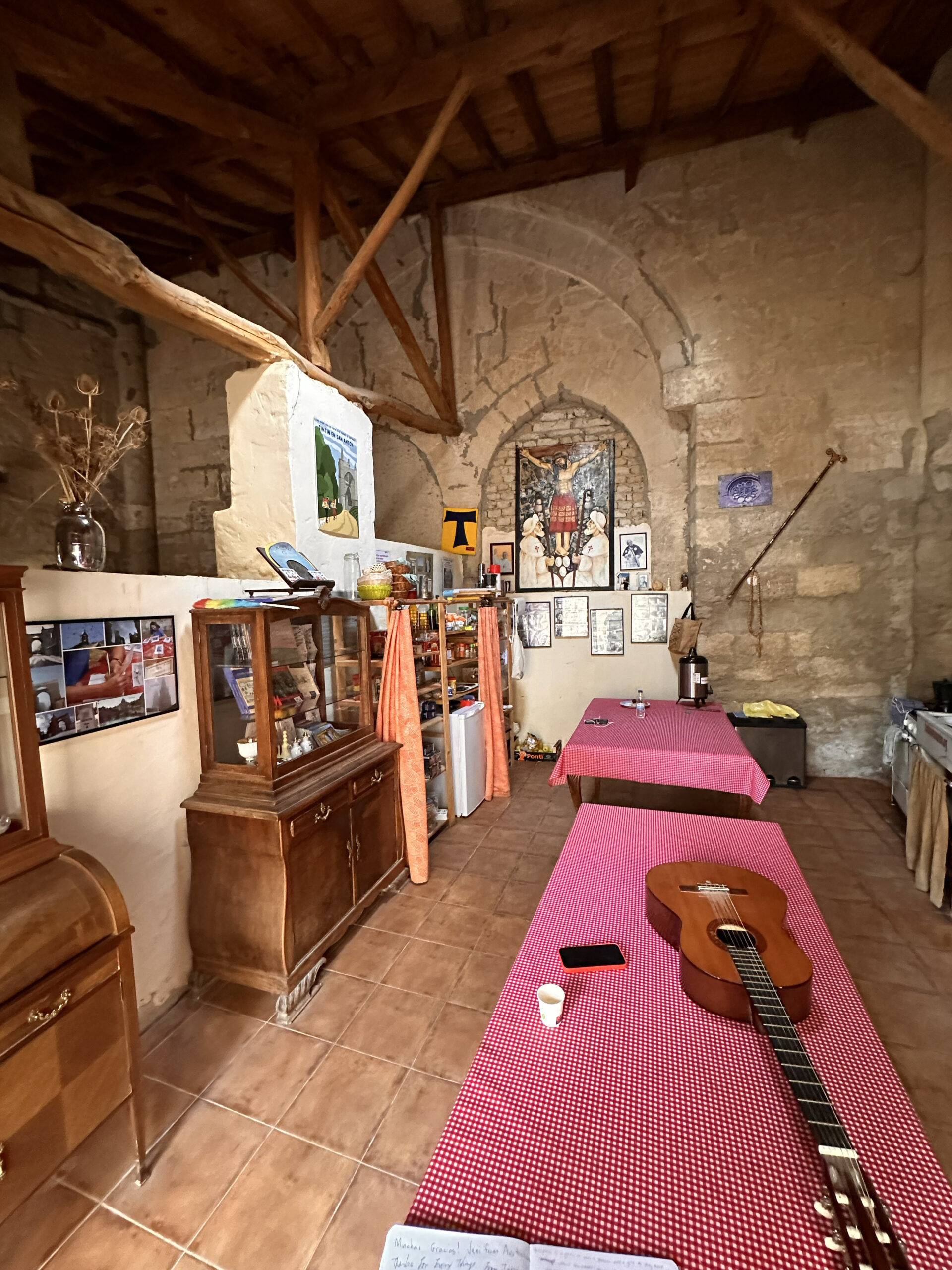
There is a donativo albergue here, and it’s a true Camino treasure. No electricity, no Wi-Fi, just simplicity and a lot of heart. There are twelve beds, a communal meal, and a small team of volunteers who keep the place alive. There is no way to book, no email, no phone number. You simply show up. If the stars align, you get a bed. It could be one of the most memorable nights of your entire Camino.
Castrojeriz
448 km (278 miles) to Santiago
From San Antón, the Camino follows a quiet road into the hill town of Castrojeriz, one of the most strangely shaped villages you will encounter on the Camino. It is essentially one long street hugging the curve of the hill, as if every household wanted its front door to open directly onto the Camino. It stretches for several kilometres but is barely more than a single block wide.
I really like Castrojeriz; it’s just so quiet. The whole town seems to exist in a permanent state of siesta. This stretch of the Camino really is just one incredible village after another. The only real problem is choosing where to lay your head.
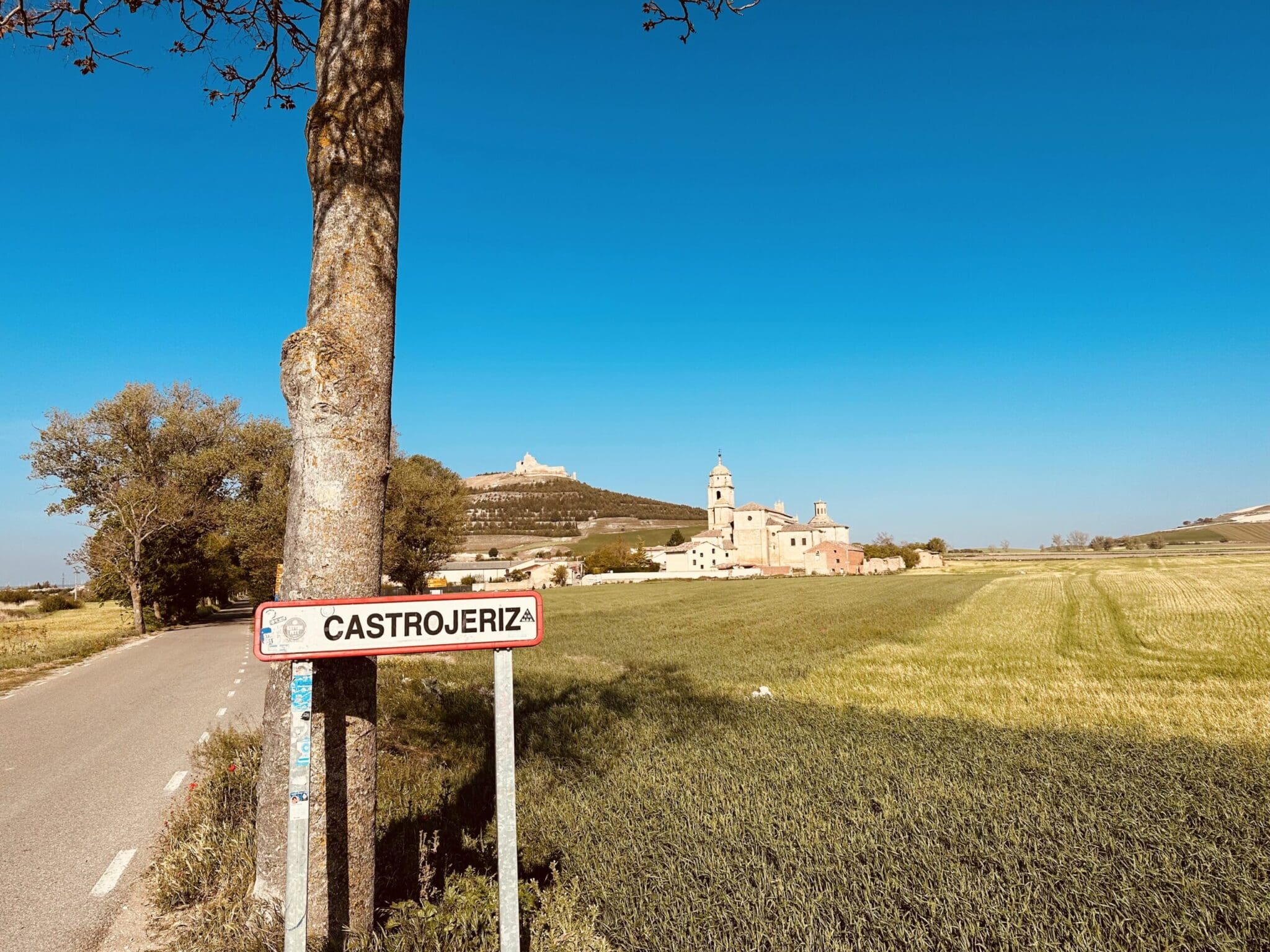

If you’re staying the evening in Castrojeriz, have a quick nap when you arrive, then head up to the ruined hilltop castle behind the town in the late afternoon. It is one of the Camino’s most impressive yet least-visited landmarks. There are a few well-signposted routes up. I took the path just to the right of the tourist office in the centre of town, and it’s only about a 30-minute climb.
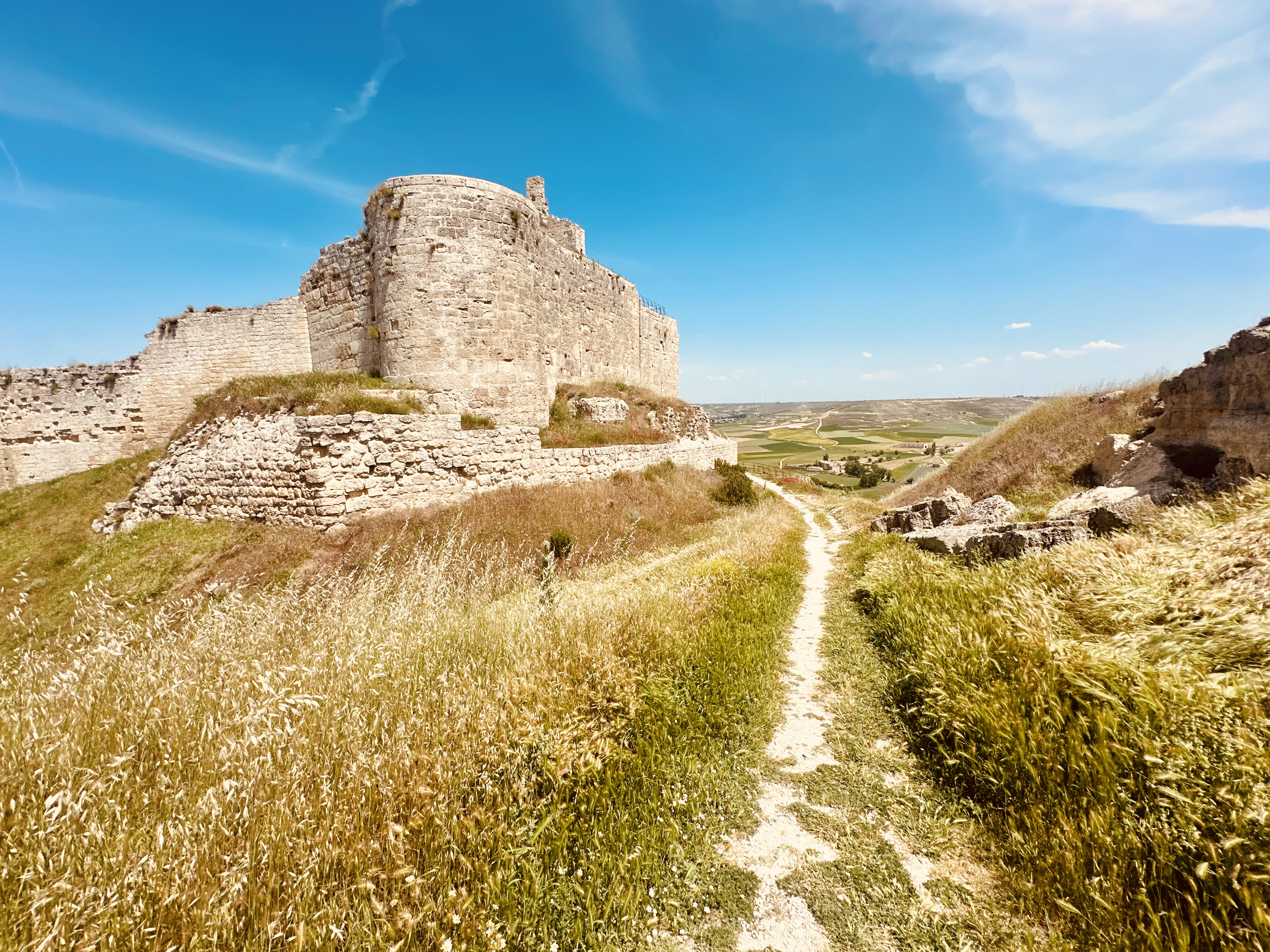
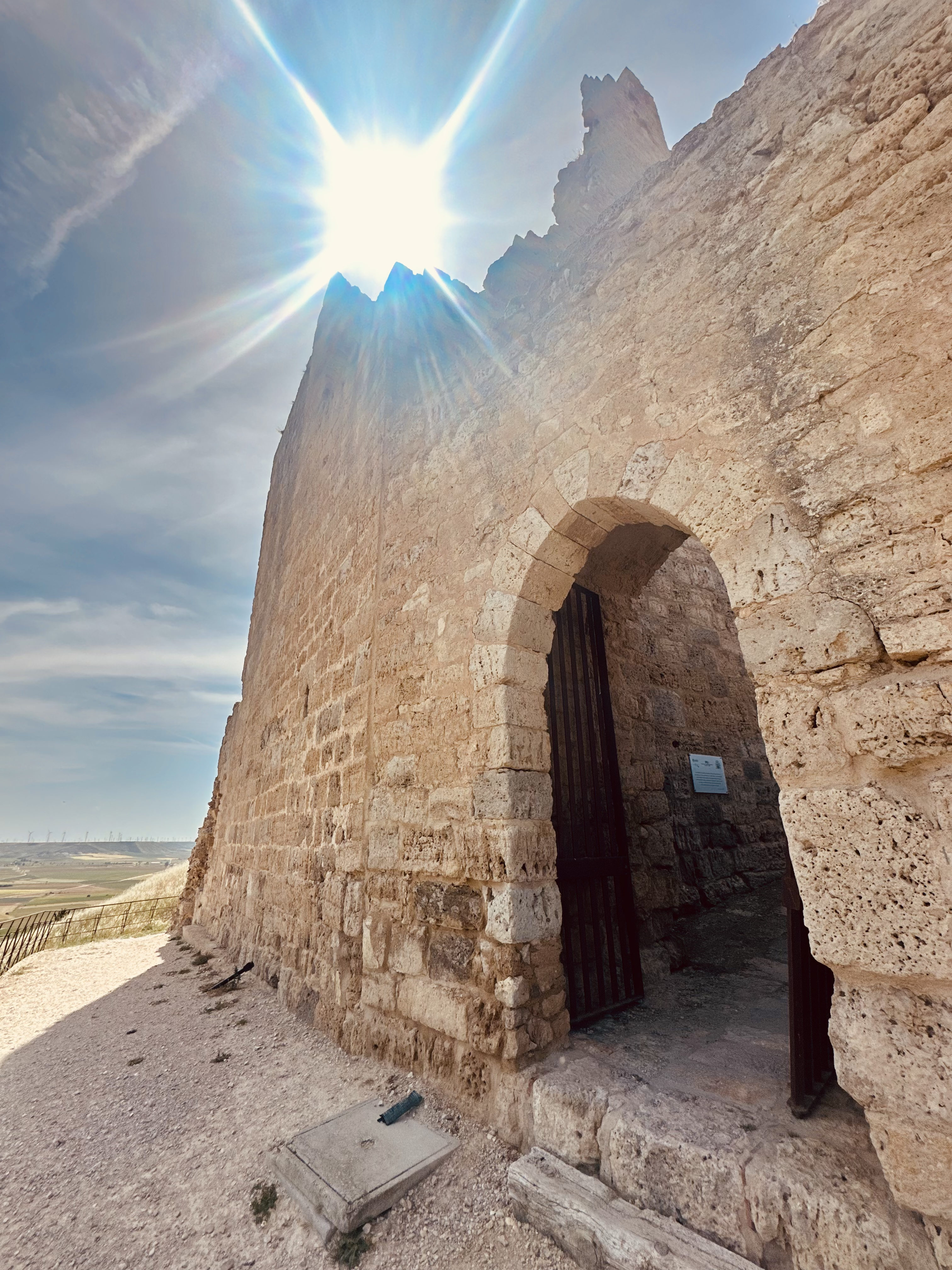
The views on the way up are spectacular. The Meseta stretches to the horizon like a giant patchwork quilt of yellow, green, and brown fields, dotted with flashes of red poppies. And then you reach the castle. Almost anywhere else in the world, this would be a major tourist attraction, complete with coachloads of visitors and souvenir stalls. Here, it’s just a lonely ruined castle, begging to be explored as you did as a kid.
The once fine castle was reduced to the ruins you see today by the great Lisbon earthquake of 1755, even though Lisbon is nearly 400 miles away. As you walk across this part of Spain, you’ll notice the same earthquake being mentioned again and again. Curiosity got the better of me, so I looked into it. After all, what else would you be doing? The earthquake and tsunami killed tens of thousands of people and sent shockwaves across Europe, both literally and intellectually. Many historians see it as a turning point that helped spark the Enlightenment, encouraging people to seek scientific explanations rather than simply accepting disasters as God’s will. It also marked the birth of modern seismology, as governments began systematically studying earthquakes for the first time.
After exploring the castle, head back into town to visit Castrojeriz’s three churches. Then make your way to the peaceful Convent of Santa Clara, home to a community of enclosed Poor Clare nuns. It’s only a 10-minute walk down a country lane. Ring the bell at the entrance, and they will welcome you in to buy their homemade biscuits, cakes, and pastries. It would be a sin to leave without trying the famous Puños de San Francisco, light sponge cakes filled with fresh cream or custard.
On your way out of town, stop at Bar Lagar, named after the old grape press preserved right in the middle of the room. It’s a lovely place for a morning coffee or an evening glass of wine.
There are some great places to sleep in Castrojeriz. My favourite is Espacio Interior. It’s more of a peaceful retreat than just a bed for the night. Created by the artist and yogini Nía, it offers simple accommodation, a small art studio, meditation, and a calm, welcoming atmosphere. Inspired by the Japanese philosophy of wabi-sabi, every detail encourages you to slow down and unwind after the long stretches of the Meseta. With room for just six guests and delicious vegan dinners, it’s one of the unique places I’ve stayed on the Camino.


Also in Castrojeriz, the Albergue de Peregrinos San Esteban occupies a beautifully restored convent, with peaceful cloisters and simple accommodation. Albergue Ultreia is cosy and welcoming, with a lovely garden and friendly hosts, while Albergue Rosalía is well known for its excellent pilgrim dinner.
Ermita de San Nicolás
440 km (273 miles) to Santiago
Leaving Castrojeriz, the Camino throws a surprise: Alto de Mostelares. It’s a short, steep climb right out of town. Just after leaving Castrojeriz, Alto de Mostelares appears without much warning. It’s about 1km and a very steep climb of about 12%. It is tough, but the view from the top is one of the best on the Camino. Rolling fields as far as the eye can see. The descent on the other side is steep and rocky, so watch your step.
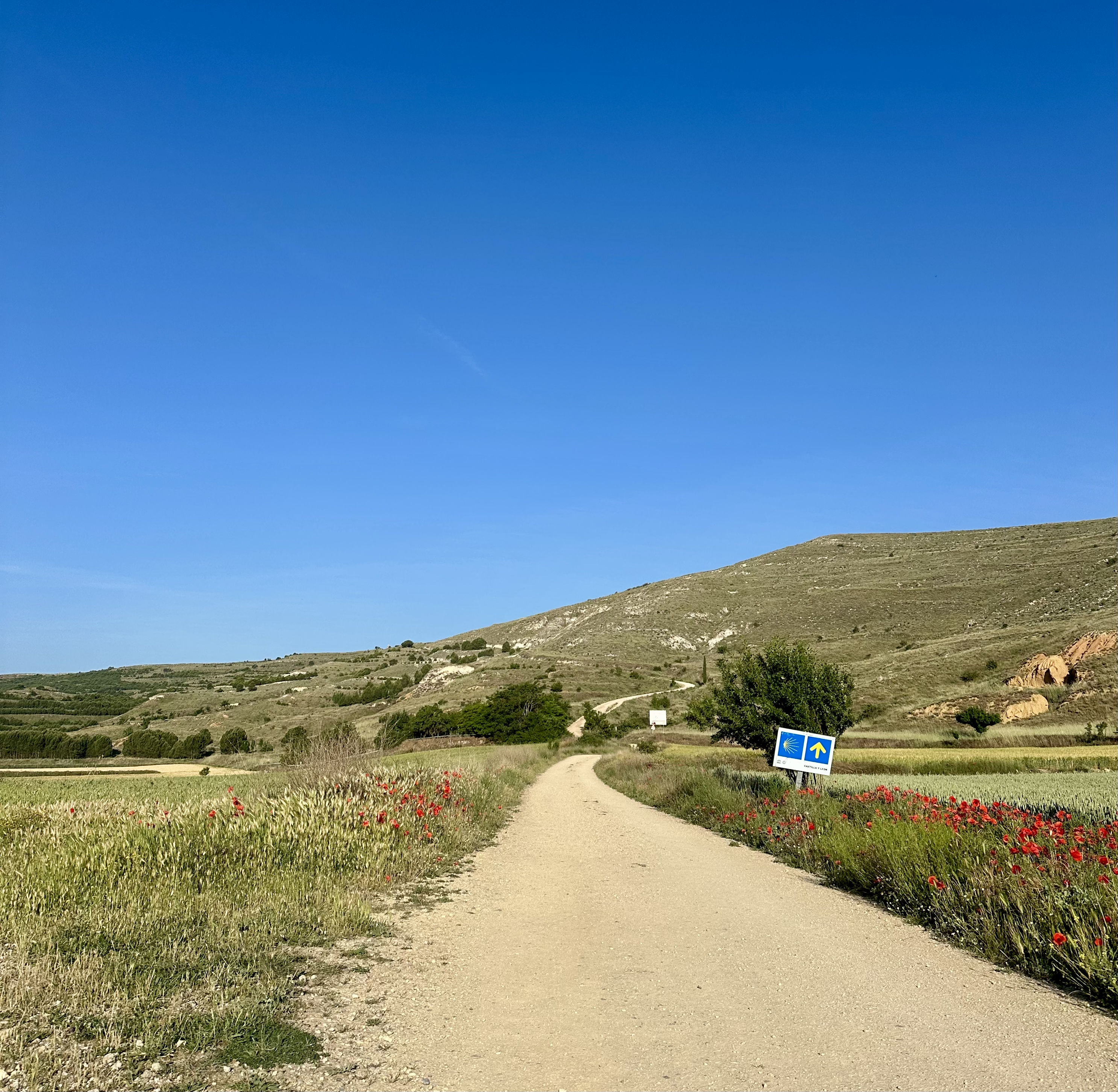

The trail soon flattens out again, and you’re back out in the wide-open countryside. After a few kilometres, you’ll come to a little-used detour that branches off to the right. It adds a couple of kilometres to your day, but for a few hours you’ll have the Camino almost entirely to yourself.
The detour passes through the tiny village of Itero del Castillo, home to a quiet municipal albergue and a small village bar. I’ve never stayed here, but it feels like the kind of village where everyday Spanish village life takes centre stage, rather than a constant stream of international pilgrims.
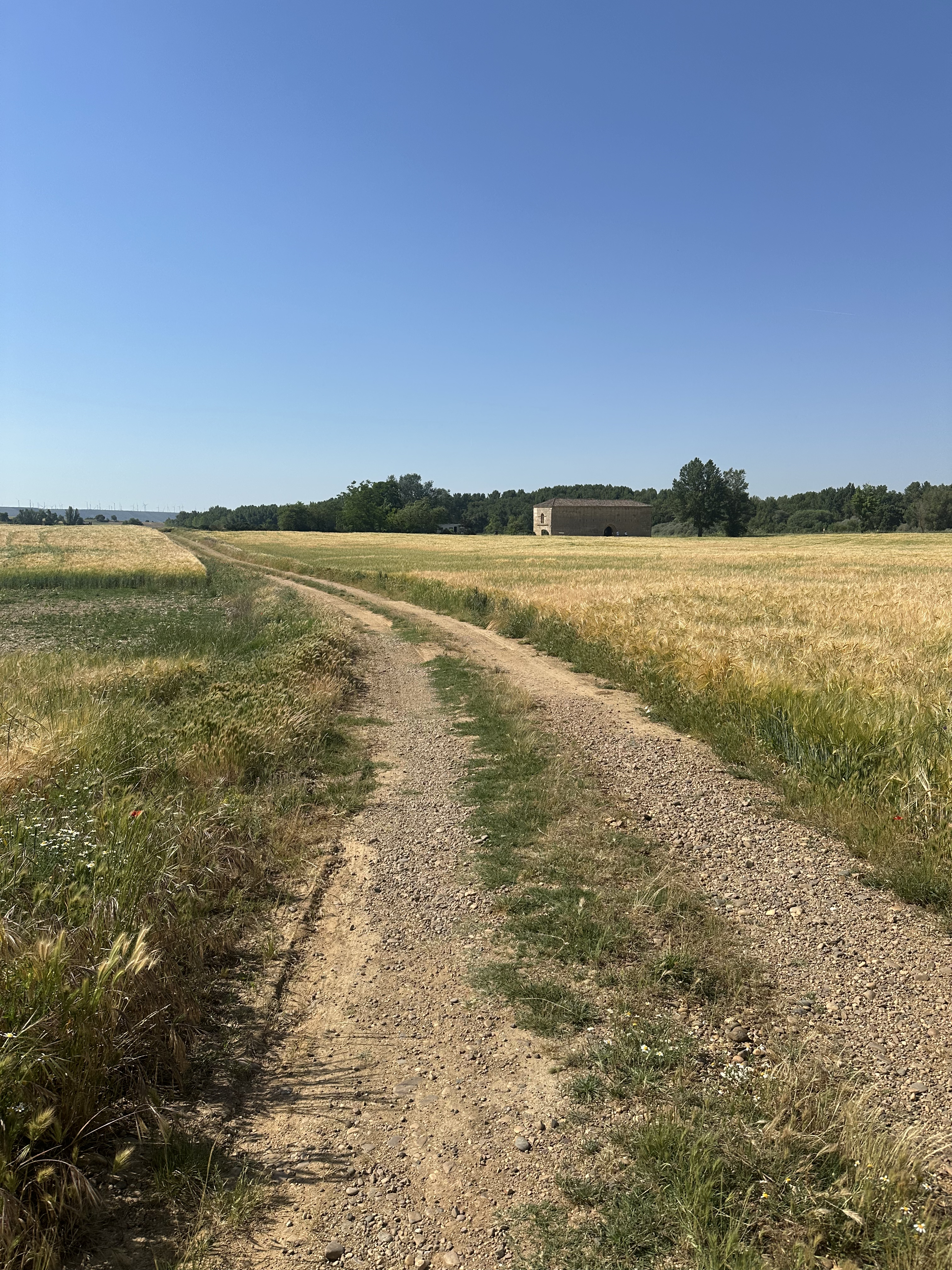
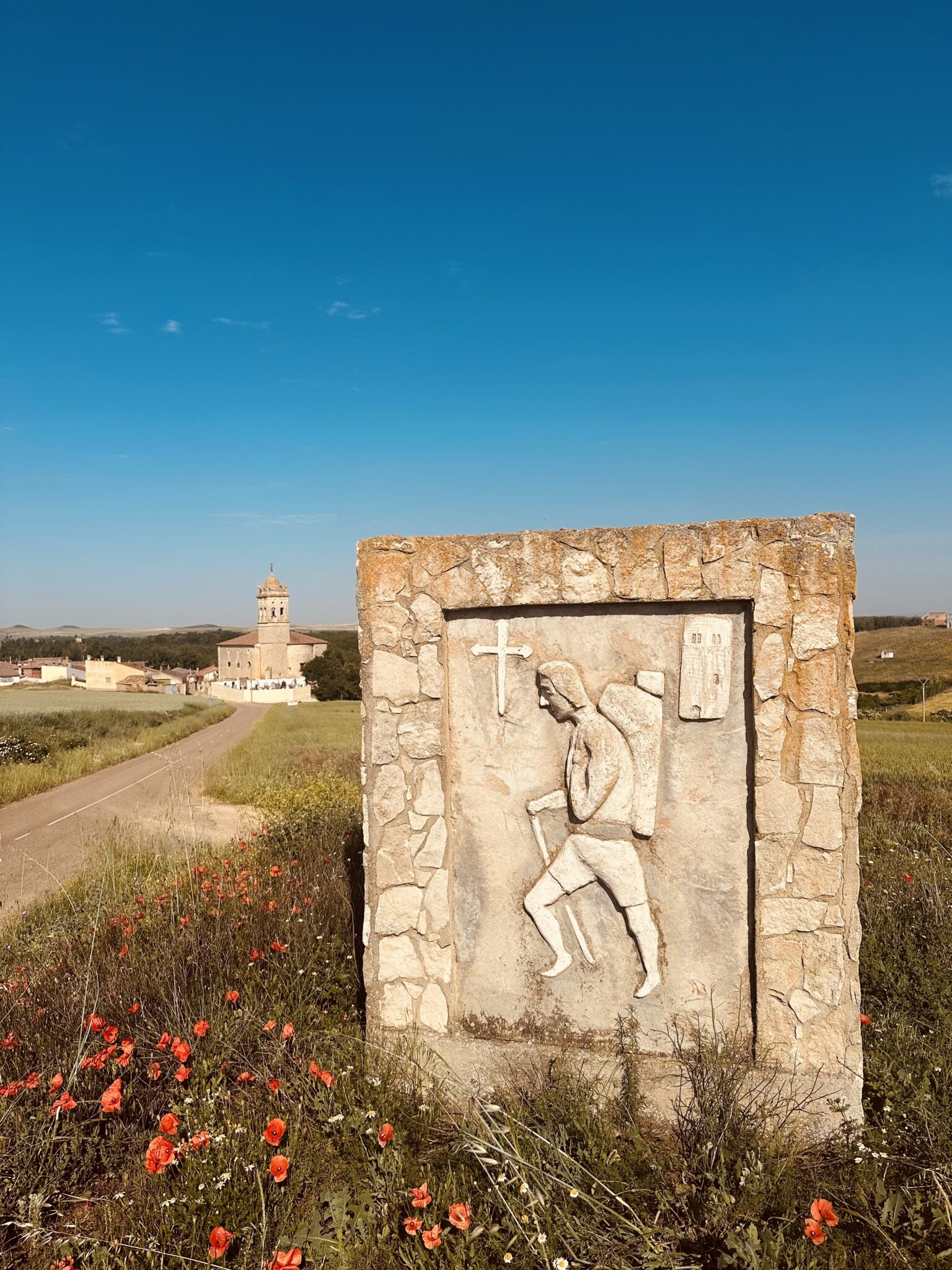
The route rejoins the main Camino just before the Ermita de San Nicolás, a beautifully restored 13th-century chapel beside the old stone bridge over the Río Pisuerga.
The Ermita has been converted into a donativo albergue, run by Italian volunteers, and it’s one of the most special places to stay on the entire Camino. There’s no electricity, no Wi-Fi, just candlelight at night, simple bunks, and a home-cooked meal shared around a long wooden table. In the evening, they also hold a small foot-washing ceremony, an ancient pilgrim ritual that’s deeply moving to experience. It’s the kind of place that strips everything back to the basics and reminds you what the Camino is really about: community, simplicity, and a bit of soul.

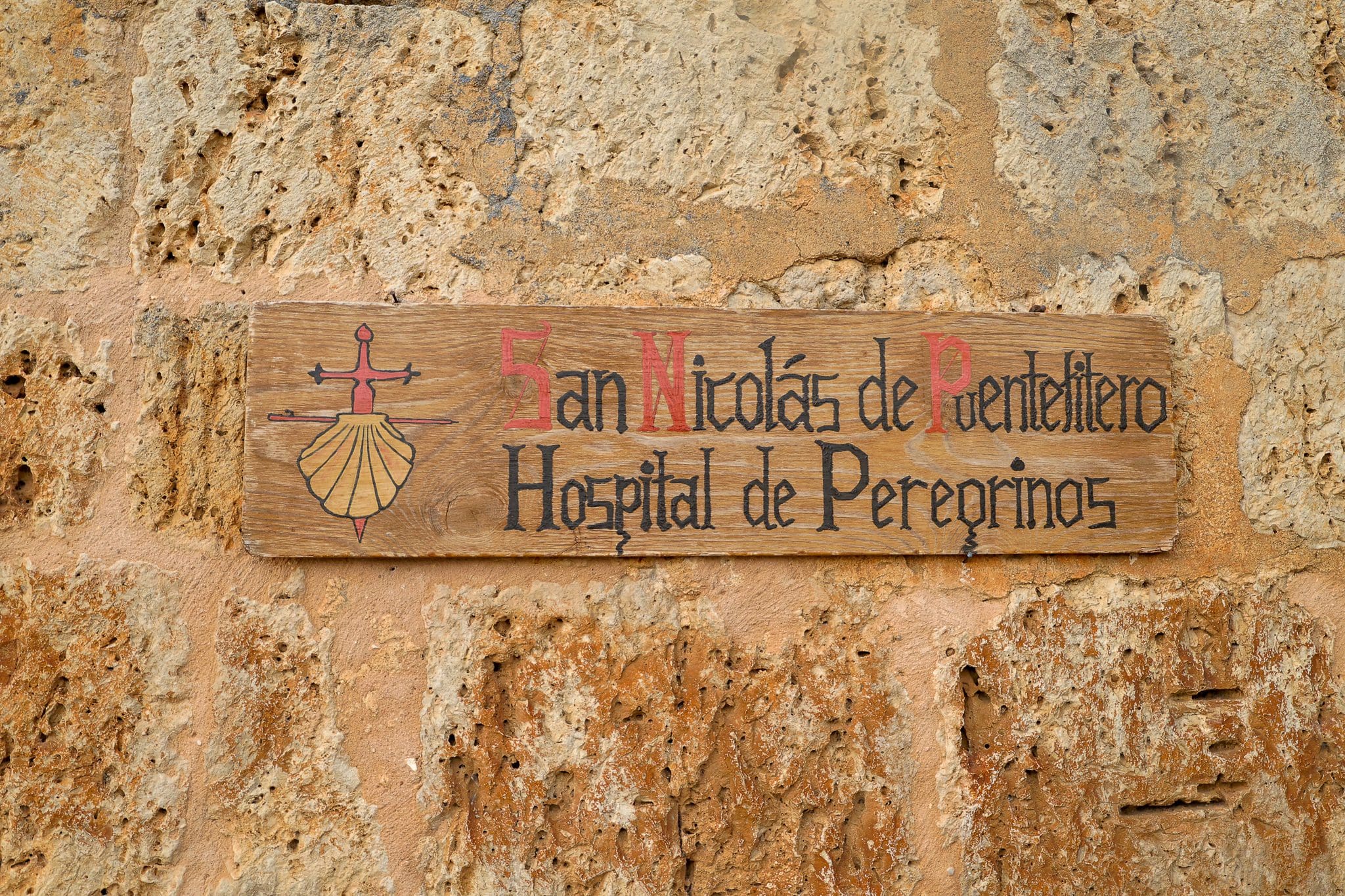
If there’s space, it’s absolutely worth staying. A peaceful end to the day, with the river flowing nearby and stars overhead. One of those Camino nights you won’t forget.


Itero de la Vega
435 km (270 miles) to Santiago
Leaving the Ermita de San Nicolás, you cross the Puente Fitero, a long, elegant stone bridge built by monks in the 11th century. It spans the Río Pisuerga and marks your entrance into the province of Palencia.
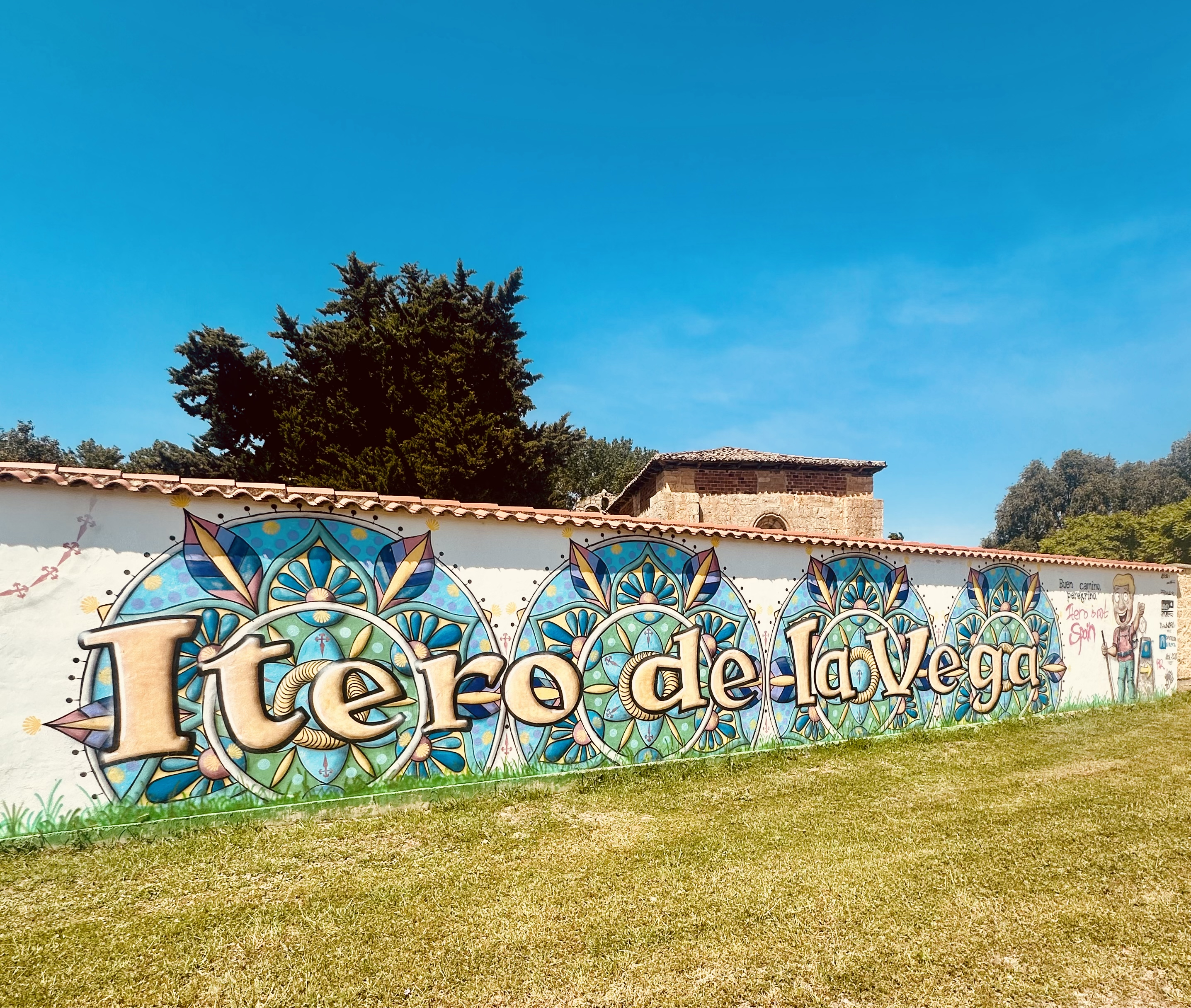
Itero de la Vega is a tiny, peaceful village with a bar, a small church, and an albergue, Hogar del Peregrino.
Boadilla del Camino
429 km (267 miles) to Santiago
From there, it’s another 8 km to Boadilla del Camino, along dusty farm tracks through open wheat fields, flat, vast, and classic Meseta walking. Boadilla del Camino is a small, working farm village with not much to speak of, but it is home to one of the best albergues on the Camino: Albergue En El Camino. From the outside, it looks fairly plain, but step through the gates, and you’ll find a real oasis.
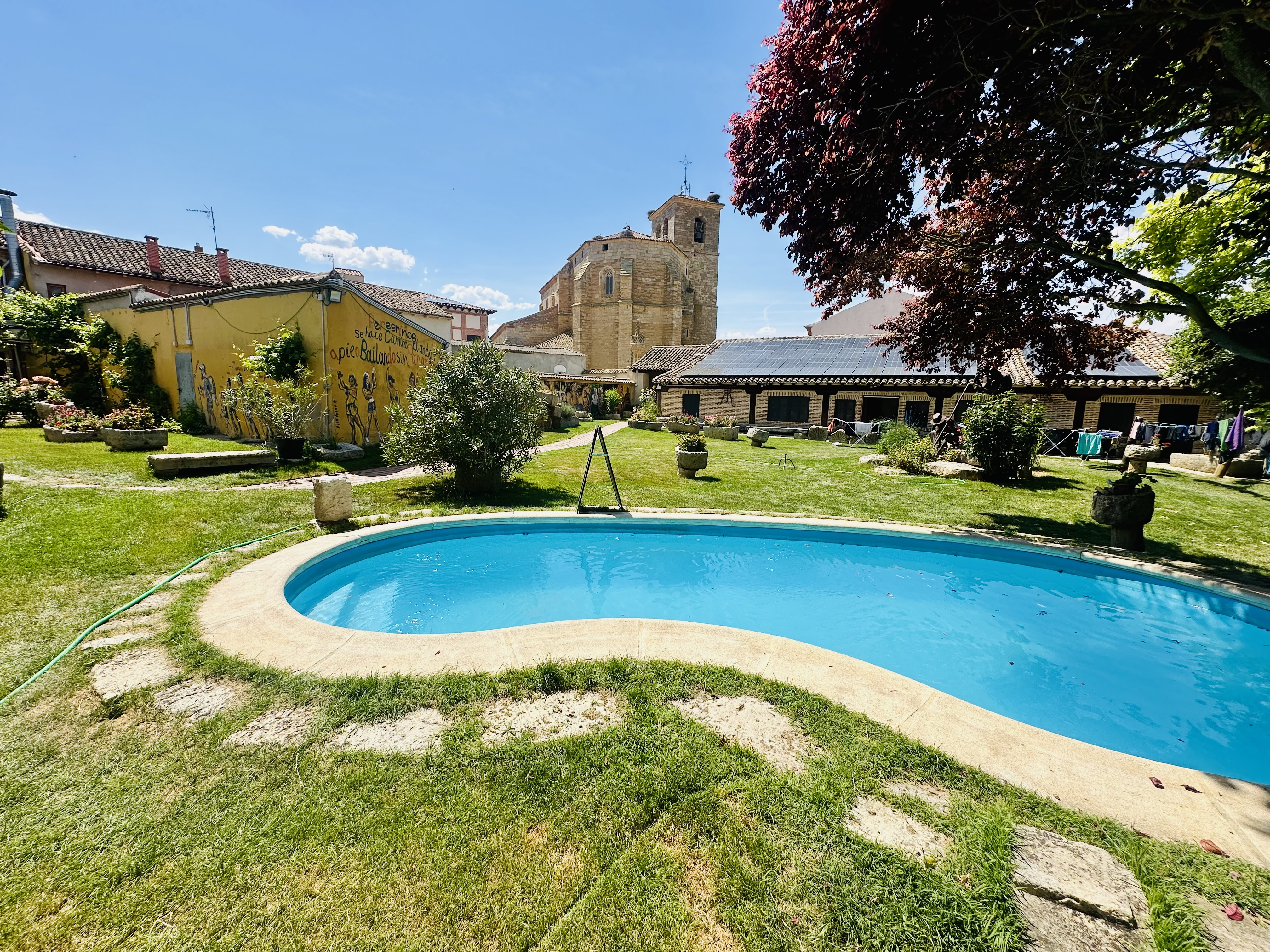
Inside, there’s a large garden with hammocks and a small pool, giving the whole place a wonderfully relaxed feel. The communal dinner is excellent, and Eduardo and his family’s genuine hospitality make it feel more like a retreat than just a place to sleep. It’s the perfect spot to end the day, put your feet up, and properly recharge.

Frómista
424 km (263 miles) to Santiago
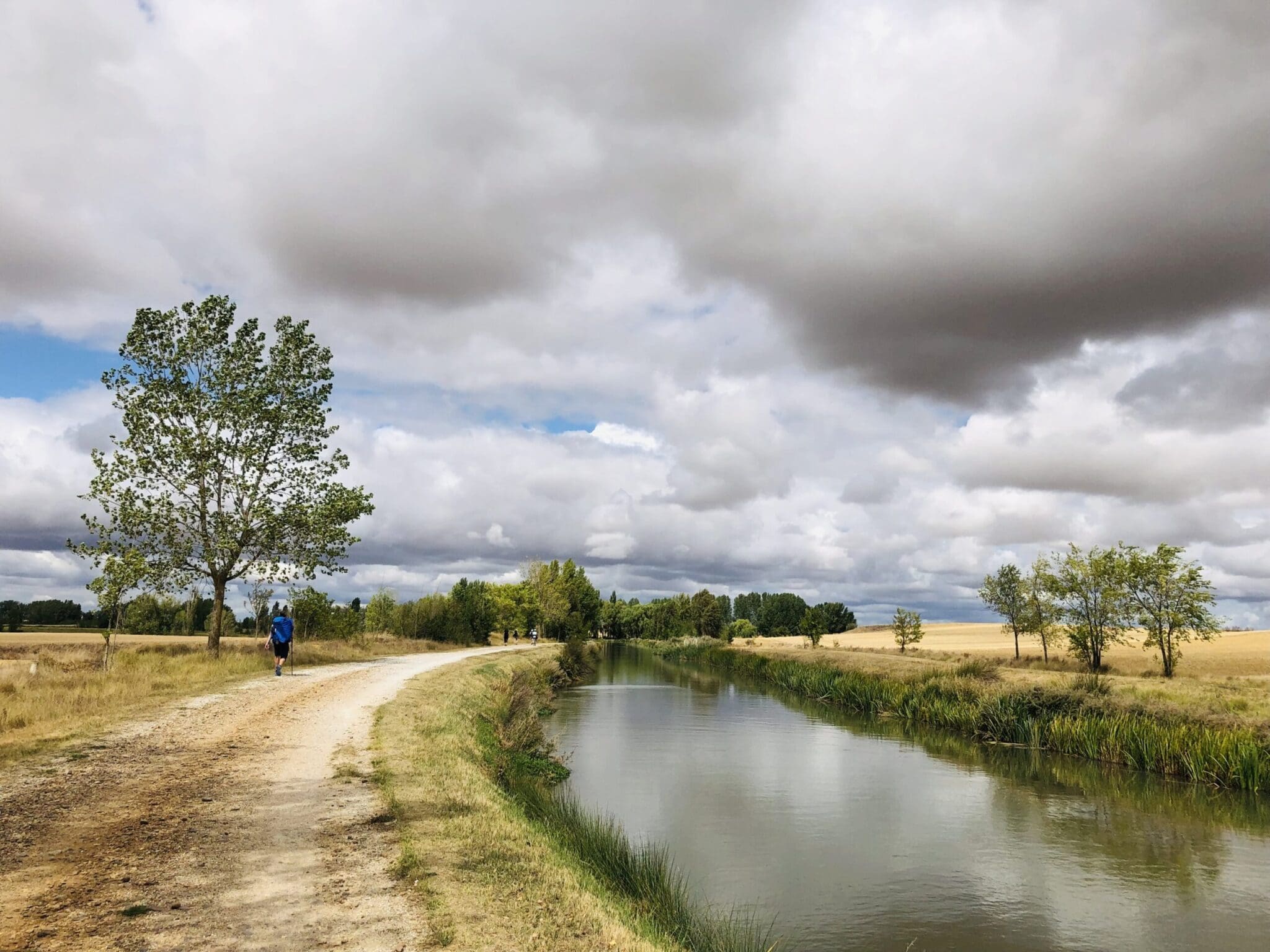
Leaving Boadilla del Camino, the path runs straight and easy, following the old towpath of the Canal de Castilla. It’s a very peaceful stretch, just you, the water, the trees, and the crunch of your boots on gravel. The canal was built in the 18th century to transport grain. You’ll likely see herons, ducks, and the occasional angler. If the sun’s up, the trees along the edge offer just enough shade to keep things comfortable. There’s also apparently a boat service from a jetty along the canal that will carry you to Frómista, though I have never seen it running.

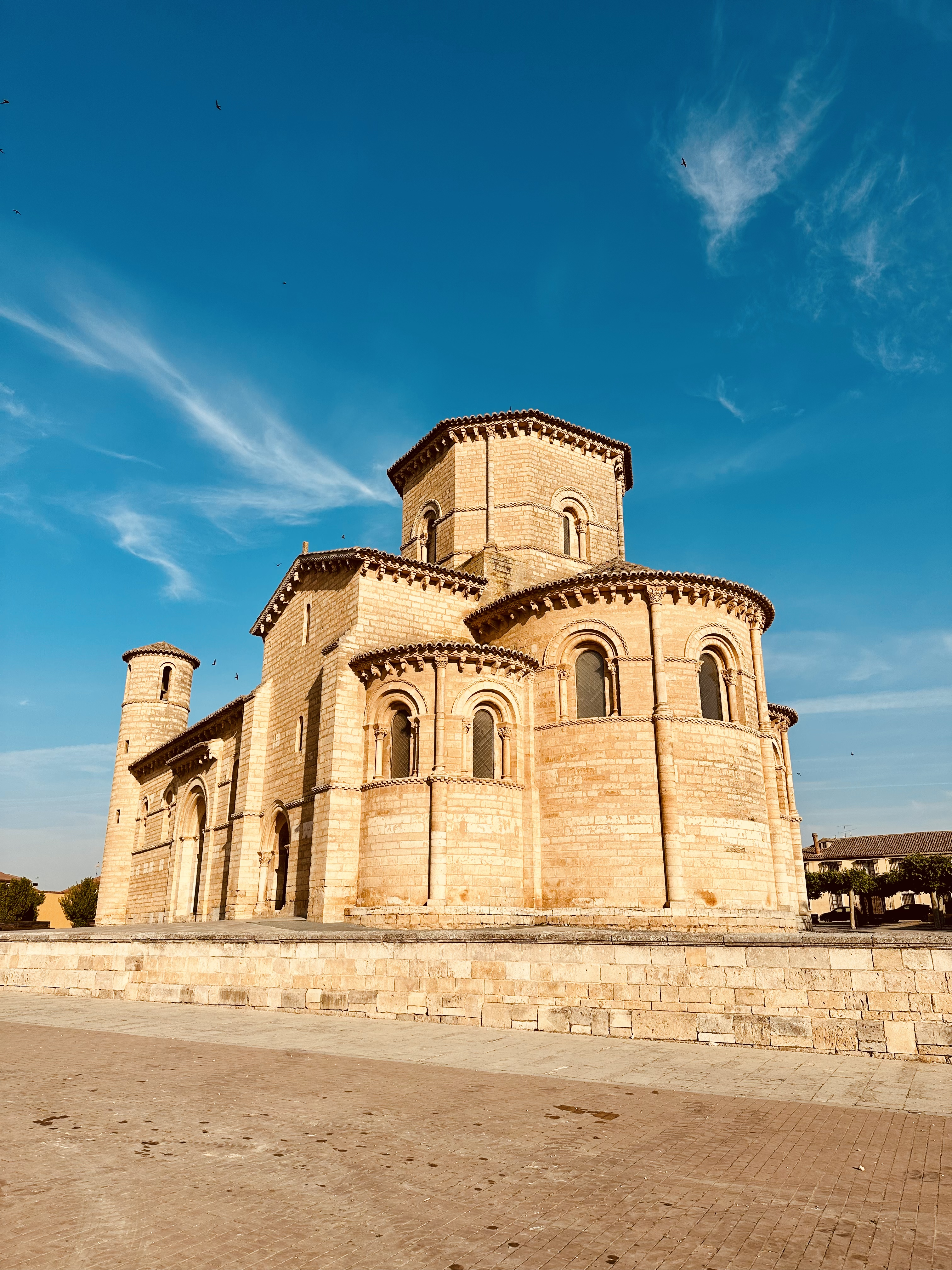
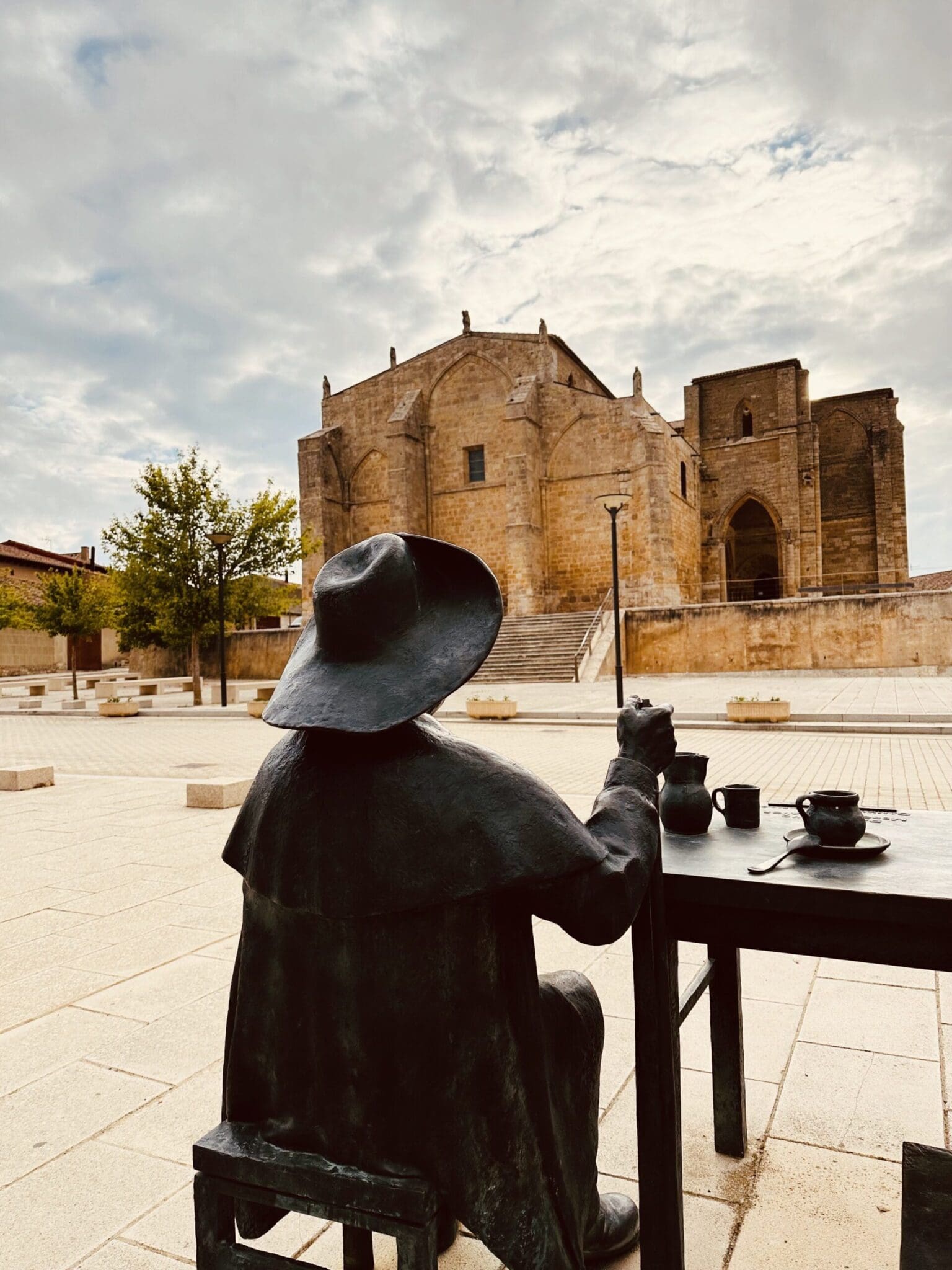
Either way, after 6 km, you will arrive in Frómista. It’s a small town with Roman roots and a significant pilgrim presence. The standout here is the magnificent Iglesia de San Martín, built in 1066. It’s one of the finest examples of pure Romanesque architecture in Spain. Perfectly proportioned, clean lines, beautiful stone carvings, and those iconic rounded arches.

Frómista has a few places to sleep. There’s a fairly large municipal albergue, and Albergue Luz de Frómista, which has been run by Patrick from Germany and Palma from Hungary since they took over at the end of June 2025, is always popular and has a good vibe.
Villalcázar de Sirga
410 km (255 miles) to Santiago
Leaving Frómista, most pilgrims take the official Camino route, an arrow-straight path that runs right alongside the road. This stretch is probably the reason some people say the Meseta is boring. Long, straight and hot.
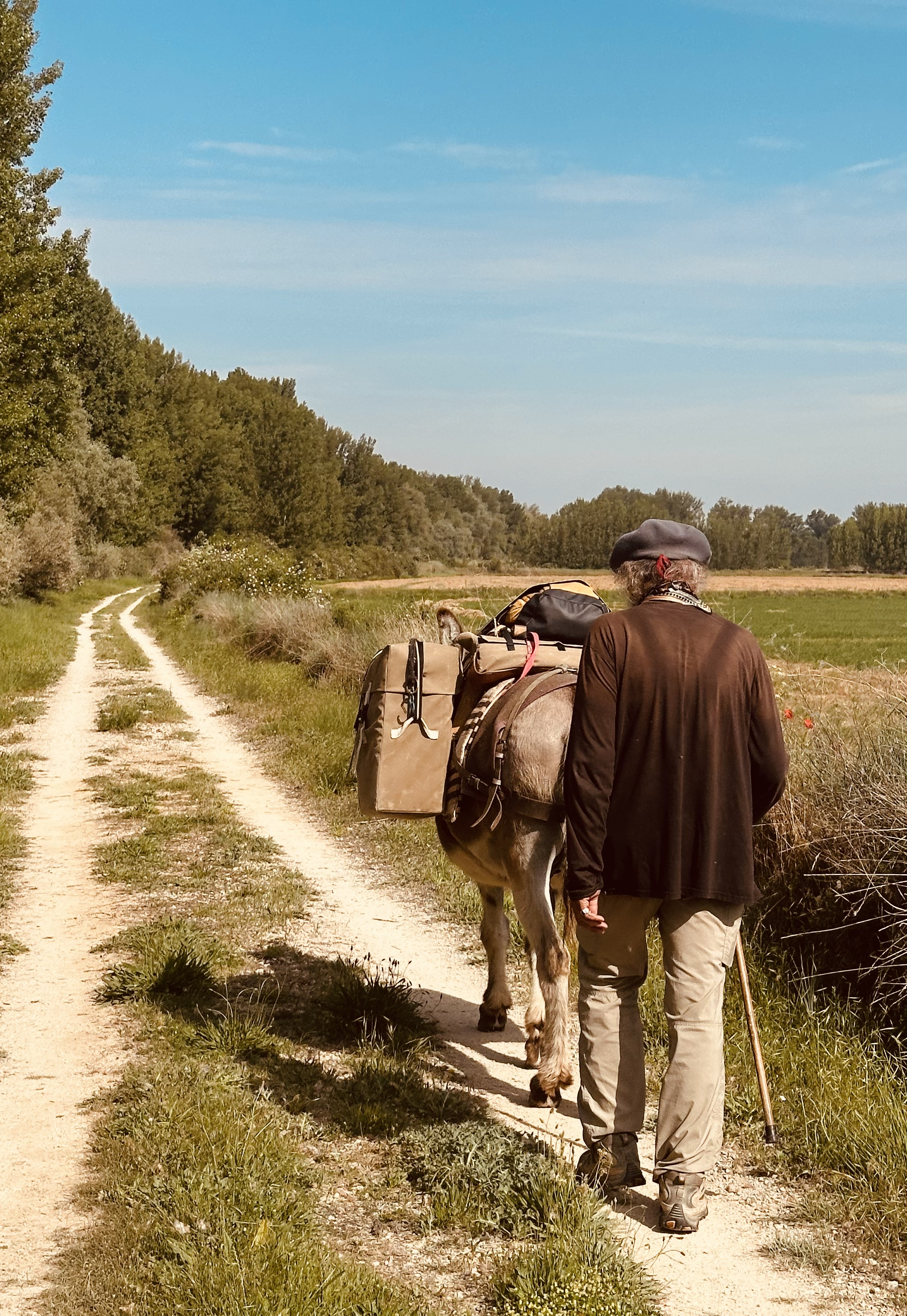
But you don’t have to take that route. Instead, head for the river path, a quieter, more peaceful option that follows the Río Ucieza. You’ll find the turnoff just past the main road out of Frómista. Look for a small sign pointing right, just before the Camino veers left toward the road. The river path runs more or less parallel, but trades tarmac and trucks for trees and birdsong. You’ll walk shaded stretches beside the water, pass through groves and farmland, and occasionally catch a glimpse of the road, where you’re glad not to be.

After around 9 km, you reach Villacázar de Sirga, a small but striking village with a big surprise in the centre: the Iglesia de Santa María la Blanca. It’s a massive stone church, more like a fortress. Built by the Knights Templar in the 13th century, it was once a major pilgrimage site in its own right. The carvings around the entrance are incredible, and the atmosphere inside feels ancient and still.
Next to the church, will find the Mesón Los Templarios. The Payo family has run this traditional Castilian restaurant for over 60 years, welcoming generations of pilgrims and travellers. Its founder, Pablo Payo, became such a well-known figure on the Camino that he was awarded the honorary title of Mesonero Mayor del Camino de Santiago (Chief Innkeeper of the Camino), and today the family proudly continues that tradition. It’s worth staying in Villalcázar de Sirga just to eat here. The thick stone walls, wooden beams, and medieval touches create an atmosphere that feels unchanged by time. The focus here is on hearty Castilian cooking, with favourites including wood-fired roast lechazo (milk-fed lamb), homemade morcilla, chorizo, cecina and local sheep’s cheese, all served in generous portions.
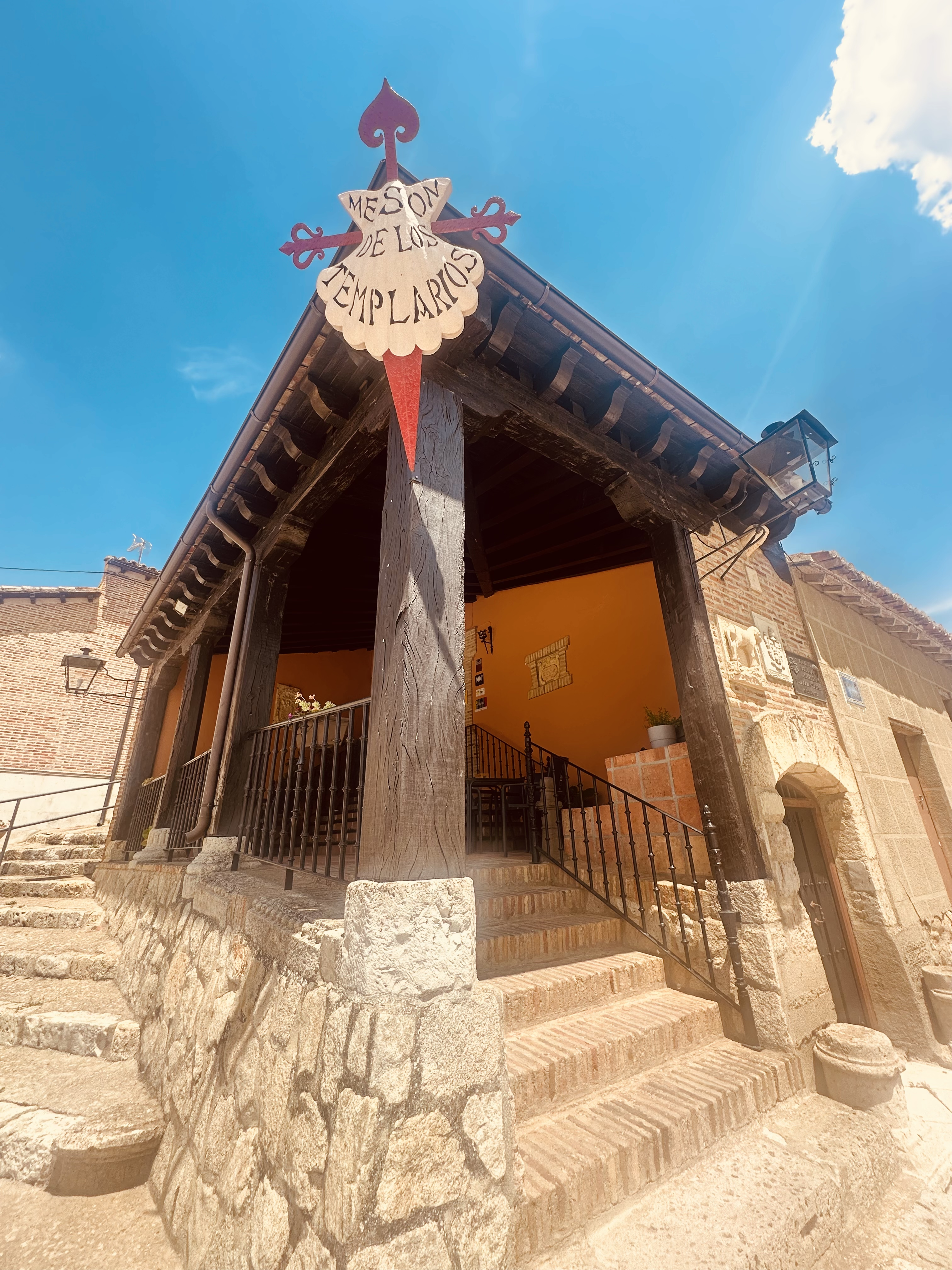
There are two good albergues in Villalcázar de Sirga. Albergue de Peregrinos Casa del Peregrino sits just off the main square and has a welcoming, traditional feel, stone walls, a warm dining area, and good food. Albergue Don Camino is a bit more modern, with clean rooms and a relaxed courtyard.

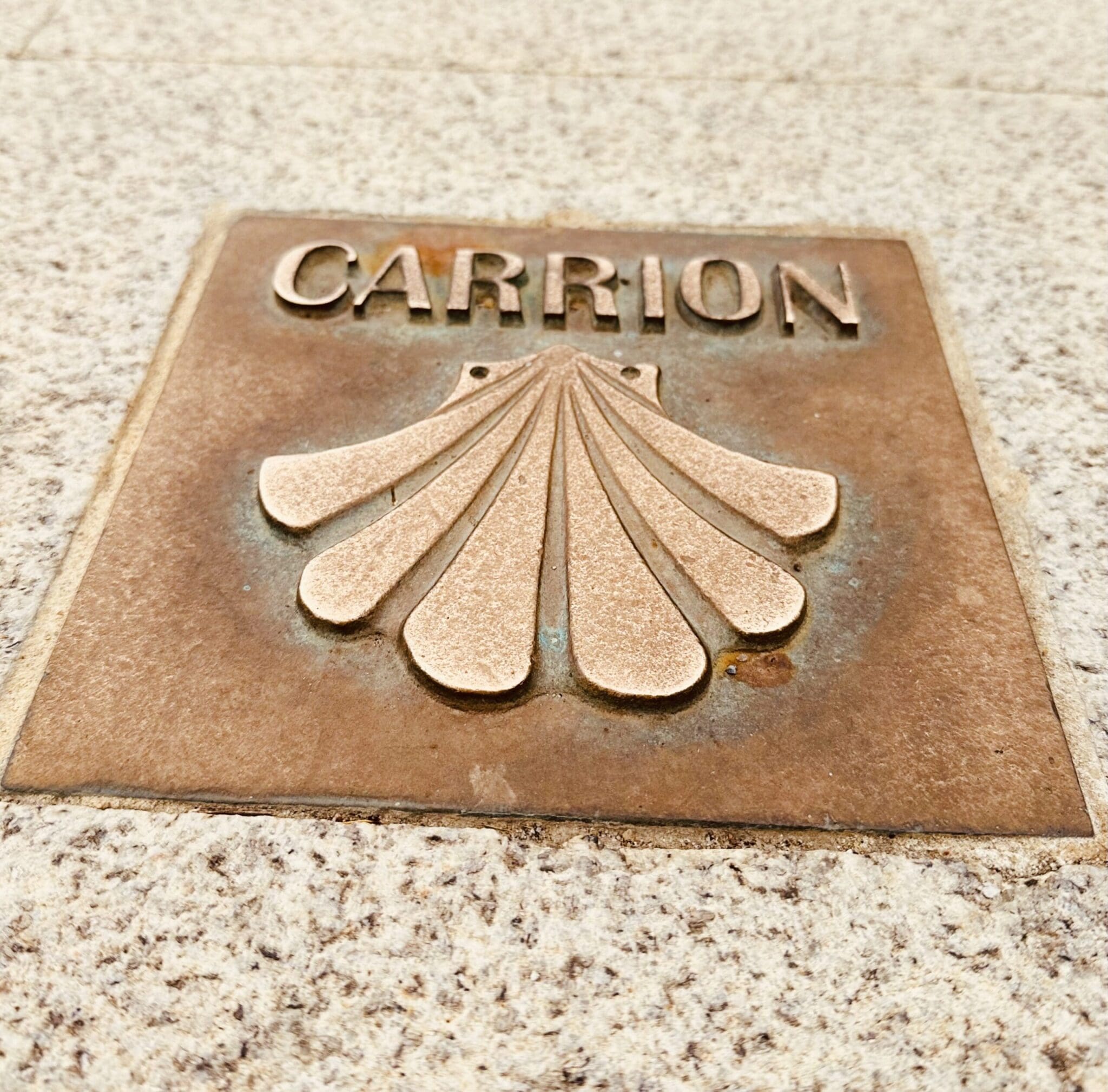
Carrión de los Condes
405 km (252 miles) to Santiago
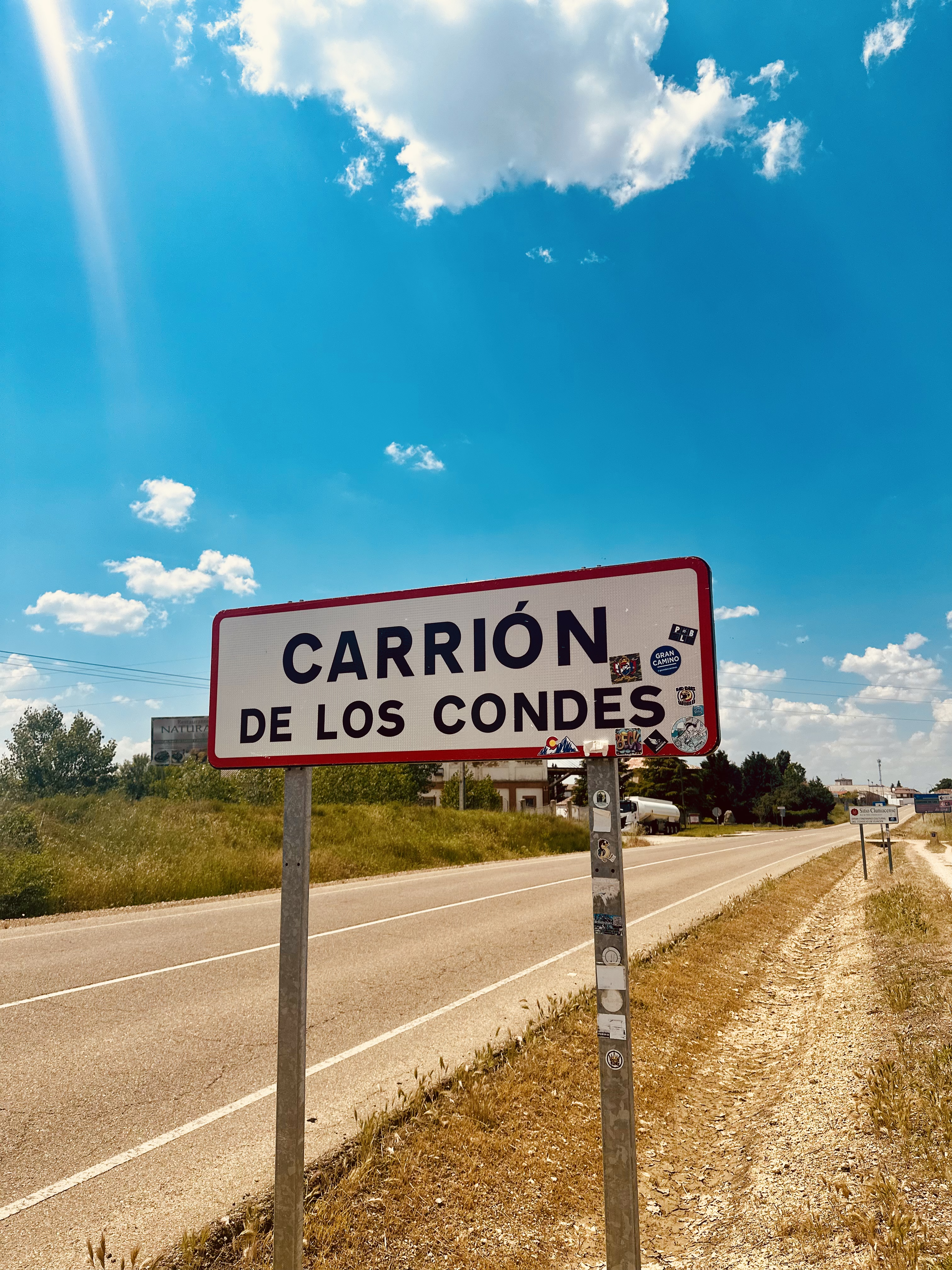
Leaving Villalcázar de Sirga, it’s a straight 6 km walk to Carrión de los Condes. The path is flat and easy, mainly along the roadside. Carrión is the biggest town you’ve reached since Burgos, and it fills up quickly. Ahead is the infamous 17 km stretch with no services, so many pilgrims spend the night here before setting out early the following morning.
If there’s one thing that makes Carrión special, it’s the Albergue Parroquial Santa María. Run by the Augustinian Sisters, it has become one of the Camino’s most memorable places to stay. It’s looked after by a remarkably young community of nuns who are incredibly warm and kind. Try to arrive before 5:30 pm so you can join Evening Vespers, followed by the famous 6 pm sing-along, where pilgrims from around the world squeeze into the entrance hall to sing together. Hymn sheets are handed out, and pilgrims are encouraged to sing songs from their own countries too. Prepare for at least one person to murder a rendition of Hallelujah. Then, at 7 pm, you are invited to join the nuns to celebrate evening Mass at the adjoining church.

If you have a little time in Carrión, it’s worth visiting the Museo de Arte Sacro de Santiago, housed inside the old Church of Santiago. It has an impressive collection of medieval religious art, including sculptures, paintings, and ornate altarpieces, and the entrance fee is very modest.
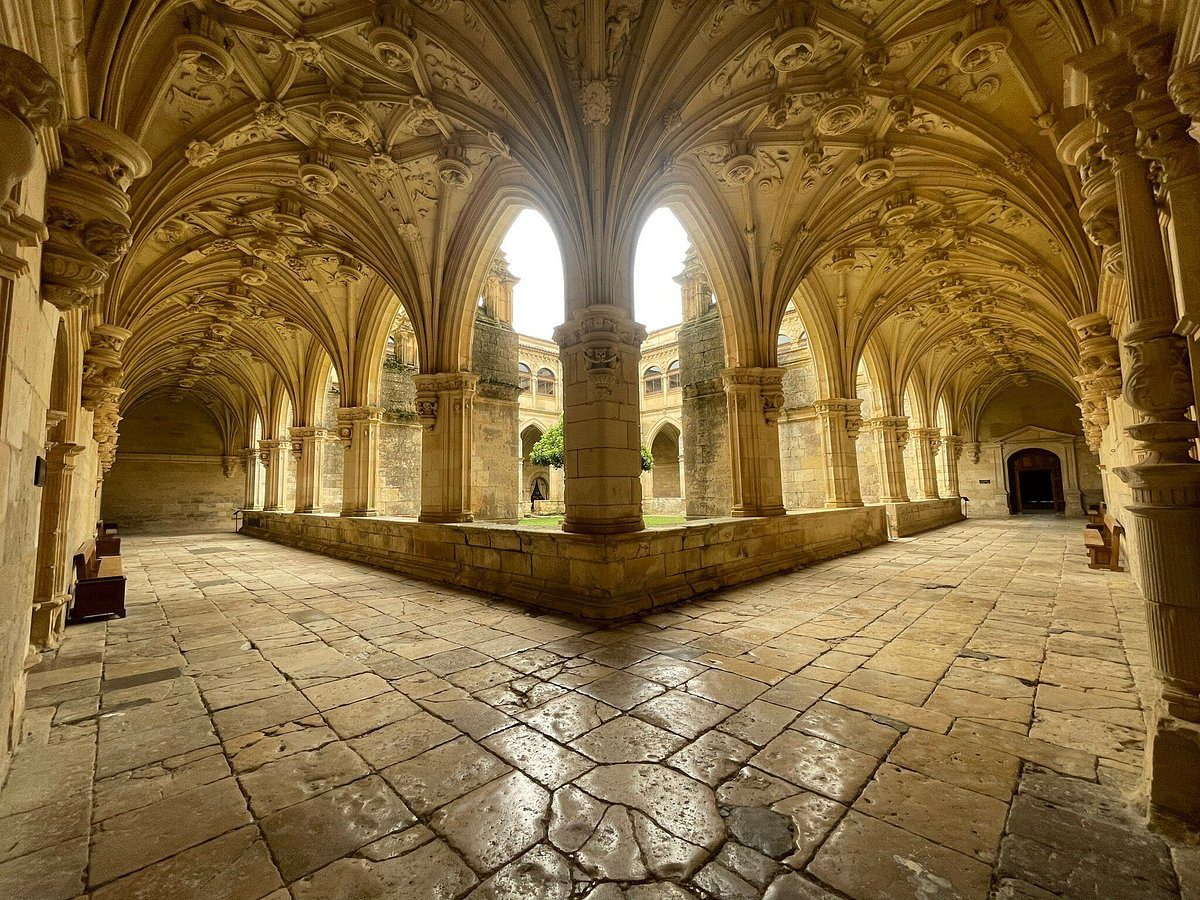
You could also take the 10-minute walk out of town to the Monastery of San Zoilo. Although it’s now a hotel, visitors are welcome to admire its beautiful 16th-century Renaissance cloister. For centuries, it was one of the Camino’s great pilgrim hospitals, caring for travellers on their way to Santiago.
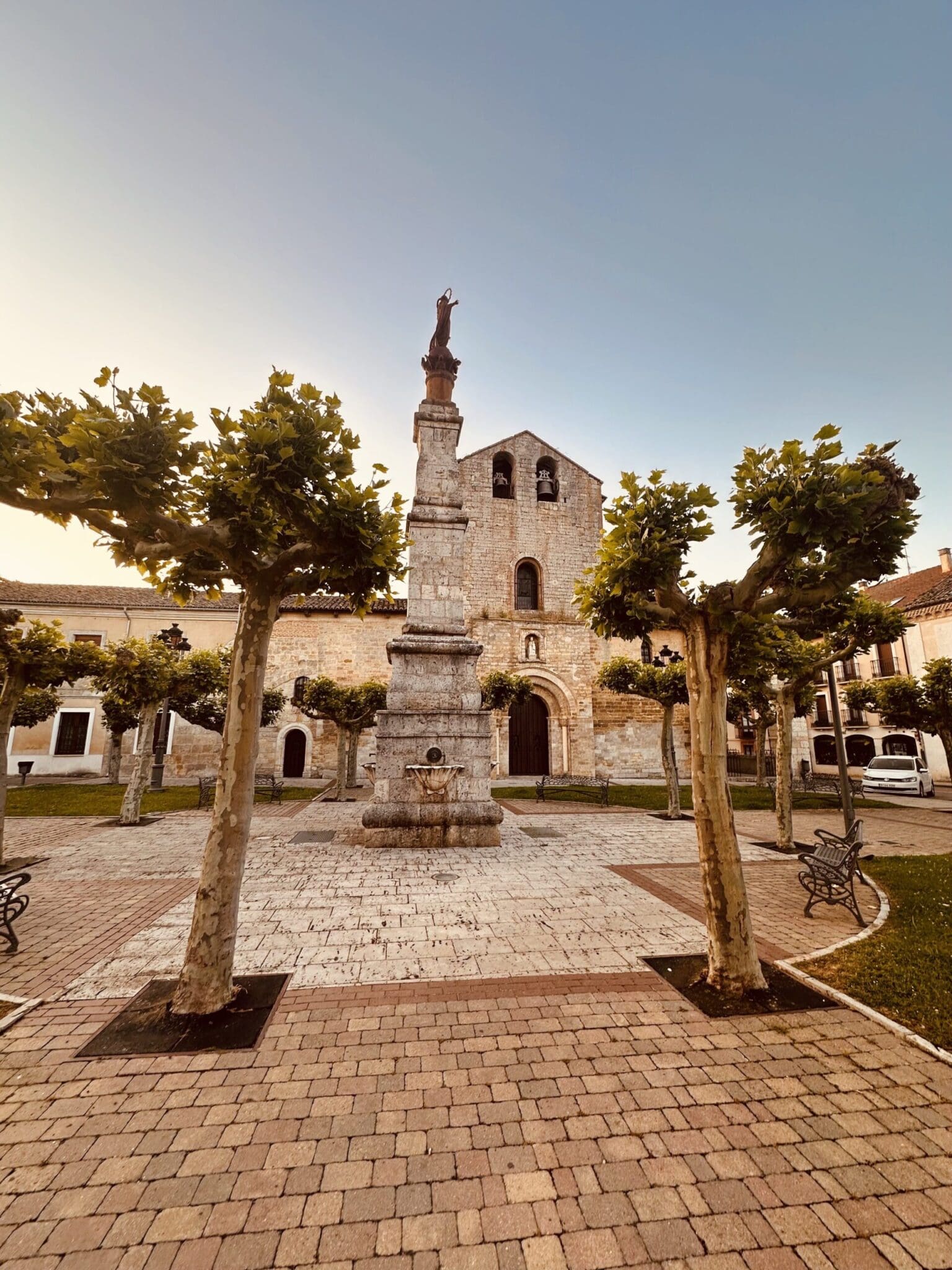
Or just grab a beer in the Plaza Mayor and watch the world go by. Someone told me it was one of the few main squares in Spain still controversially named after Franco, but I couldn’t find a single sign saying anything other than Plaza Mayor. Then again, maybe that’s why every town in Spain seems to have a Plaza Mayor.
Even though Carrión is one of the busiest overnight stops on the Camino, I’ve always found a bed easily without booking ahead. There are two other main albergues in Carion. Just as you enter town, you will pass Monasterio de Santa Clara, where you can choose between the albergue or simple private rooms, and Albergue Espíritu Santo, another long-time favourite with pilgrims. If you’re after a little more comfort, Carrión also has plenty of hotels. The standout is the aforementioned Monastery of San Zoilo. The four-star hotel, steeped in history, is only around €100 a night and might be worth the splurge.



Thank you!