
Section 8
Astorga to Ponferrada

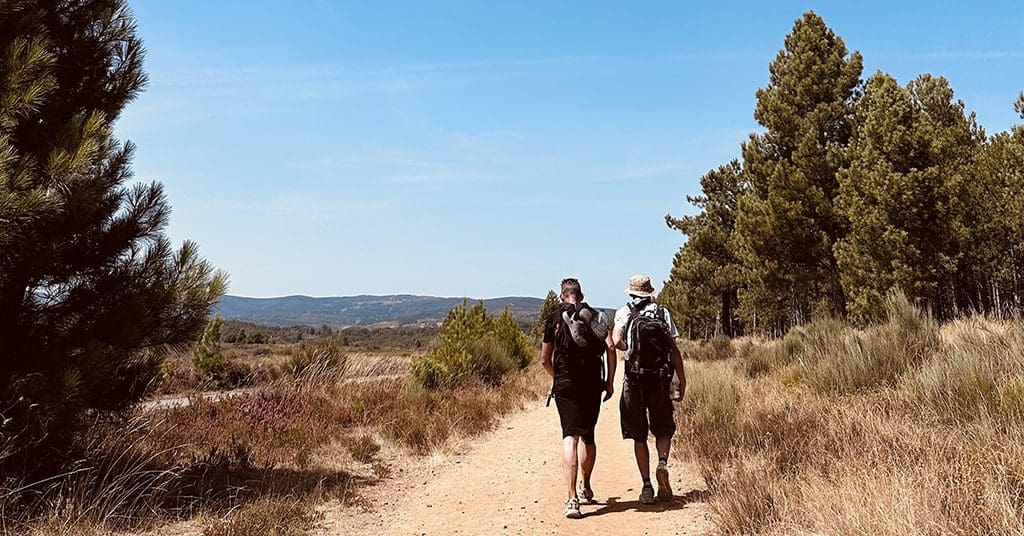
After days of walking across the flat Meseta, the road climbs back into the mountains. The distance from Astorga to Ponferrada is about 53 km (33 miles). Highlights along this stretch include stumbling across a wonderfully out-of-place cowboy bar, sipping tea at an English garden party, overnighting in remote hilltop hamlets, the deeply personal moment of leaving your stone at the Cruz de Ferro, a refreshing swim in the river at Molinaseca, and finally exploring a formidable Templar castle in Ponferrada.

Astorga
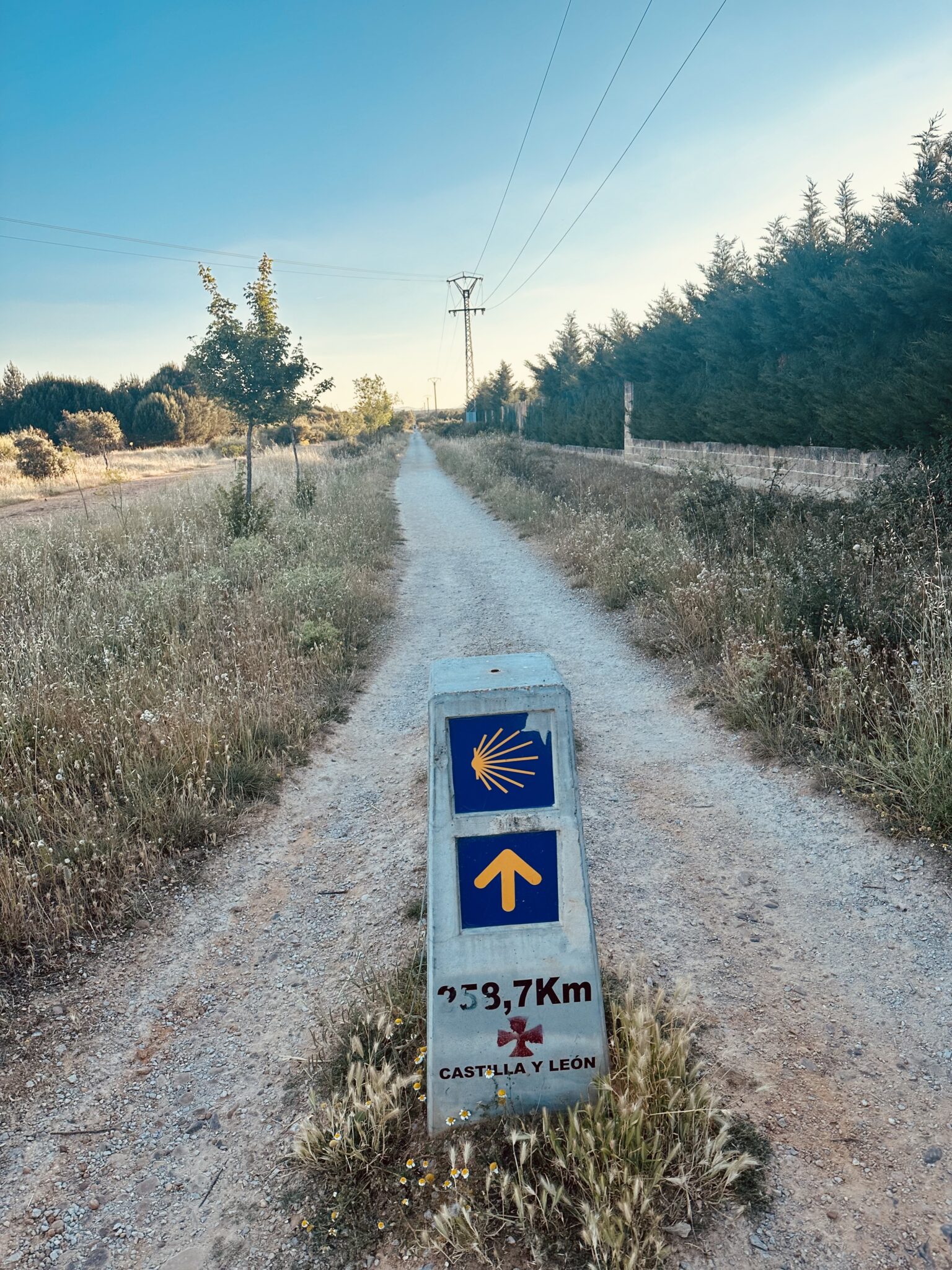
259 km (161 miles) to Santiago
From Astorga, you’ll likely notice the Camino becoming a little busier. Many new pilgrims join here, often Spanish walkers, as Astorga is a popular starting point for shorter Caminos. Some pilgrims have also come north from Seville along the Via de la Plata, merging with the Camino Francés at this point
Murias de Rechivaldo
255 km (158 miles) to Santiago
After about 4 km of easy, flat walking, you arrive in Murias de Rechivaldo, a picturesque Maragato village of traditional stone houses with colourful doors and window frames.
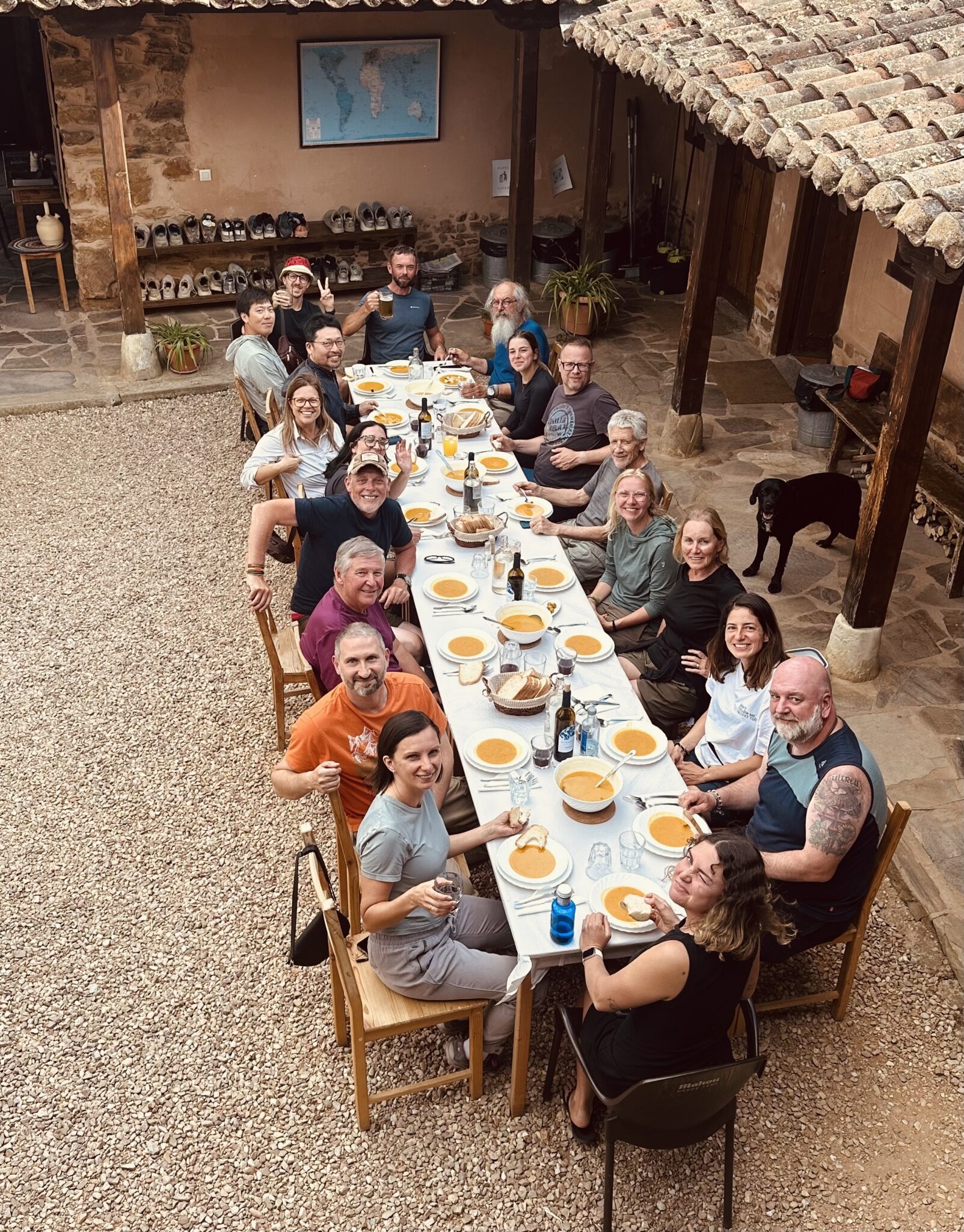
Here you’ll find the truly wonderful Albergue Las Águedas, set in a beautifully restored farmhouse. There’s a large walled garden with hammocks out back, a small library, and a wonderfully relaxed atmosphere. Juan, who runs the albergue, is a superb chef, preparing excellent vegetarian meals, especially his delicious pumpkin soup and vegetable paella. Much of the produce comes straight from the albergue’s own garden. Dinner is served at a long communal table in the courtyard.
Castrillo de los Polvazares
253 km (157 miles) to Santiago
If you have time, there’s a minor detour to Castrillo de los Polvazares that adds just 700 metres to your day, and it’s well worth it. The Maragato village, which has been beautifully restored, is known for its cobbled streets, stone houses, and rich local traditions. If you have not tried a Maragato meal yet, this is a great place to do it. A couple of restaurants here serve the full traditional version, like Mesón Juan Andrés or Casa Coscolo. It’s a seriously hearty lunch, so don’t plan on doing much walking afterwards.


Santa Catalina de Somoza
250 km (155 miles) to Santiago
Continue on to Santa Catalina de Somoza, the only town or village on the entire Camino Francés named after a female saint, Saint Catherine of Alexandria, the patron saint of philosophers.


It’s also home to another one of my favourite albergues, La Bohème. It’s a funky donativo run by David from France; it’s just magic. David has created such a warm and welcoming space with so many thoughtful touches. Dinner is a wonderful communal vegan meal served out in the garden, under fruit trees and vines.


The fridge is stocked with beer and juice, and there’s always plenty of wine going around. We had a fantastic risotto the night I stayed. Just a heads-up, La Bohème is closed on weekends, but when it’s open, you can really feel the love. David takes great pride in looking after his guests.


There are also a couple of other fine albergues in the village.
El Ganso
246 km (153 miles) to Santiago


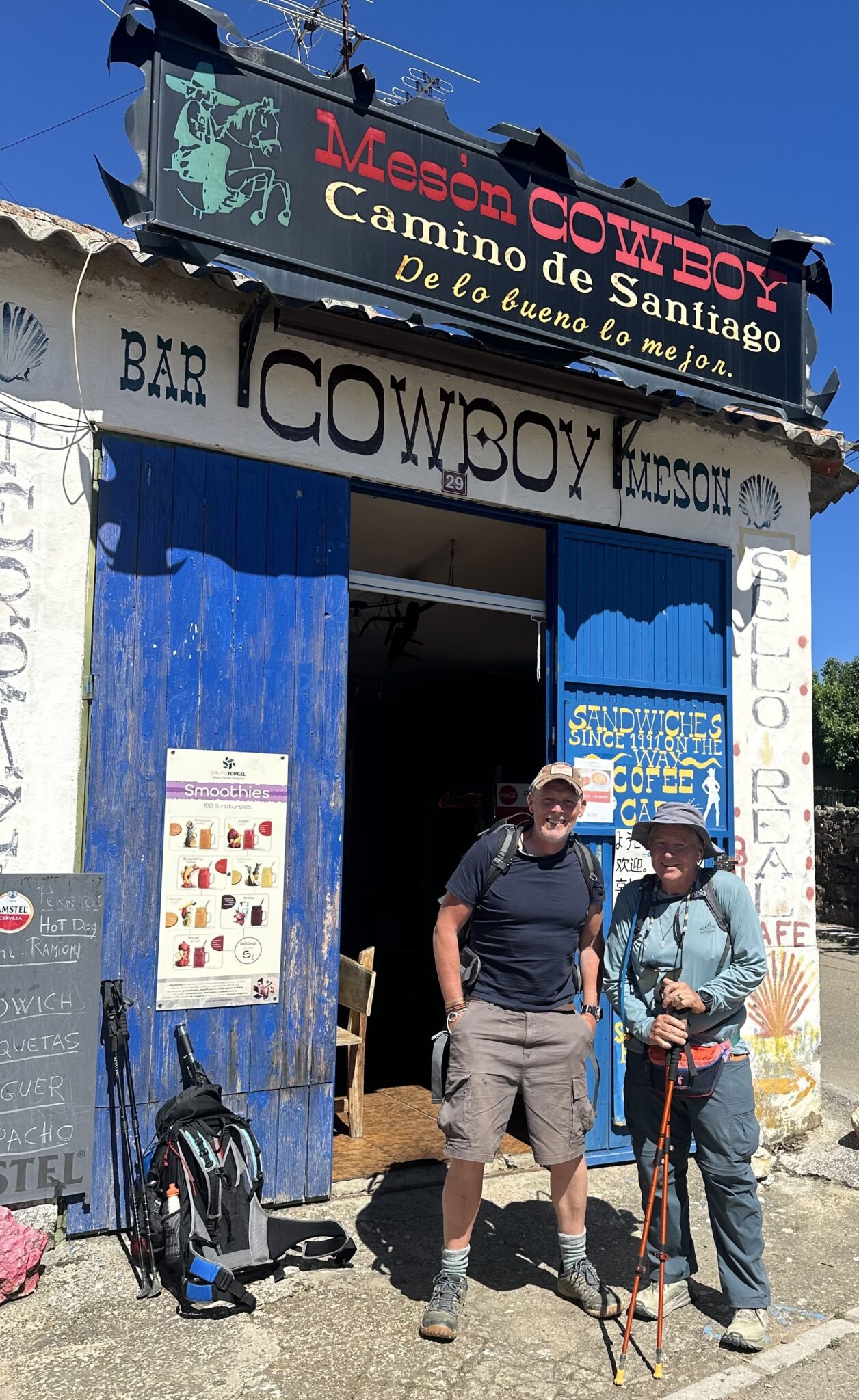
After a gentle 4 km climb, you roll into El Ganso, best known for its wonderfully quirky Cowboy Bar. In the middle of this sleepy stone village, you’ll find a full-blown Wild West saloon, with wooden beams, cowboy hats, old signs, and country music spilling out the door. It’s the perfect place to stop for a cold beer, and if you arrive in the afternoon, you’ll often find a giant pan of paella cooking outside.

.
Rabanal del Camino
237 km (148 miles) to Santiago
The walk from El Ganso to Rabanal del Camino is about 6.5 km, winding through open countryside with a steady 150-metre climb as you head into the foothills of the Montes de León.
Rabanal is another classic village with a long history as a staging post for pilgrims, especially with the big mountain climb ahead. It’s beautiful, full of cobbled streets, old stone houses, and a peaceful, timeless atmosphere.
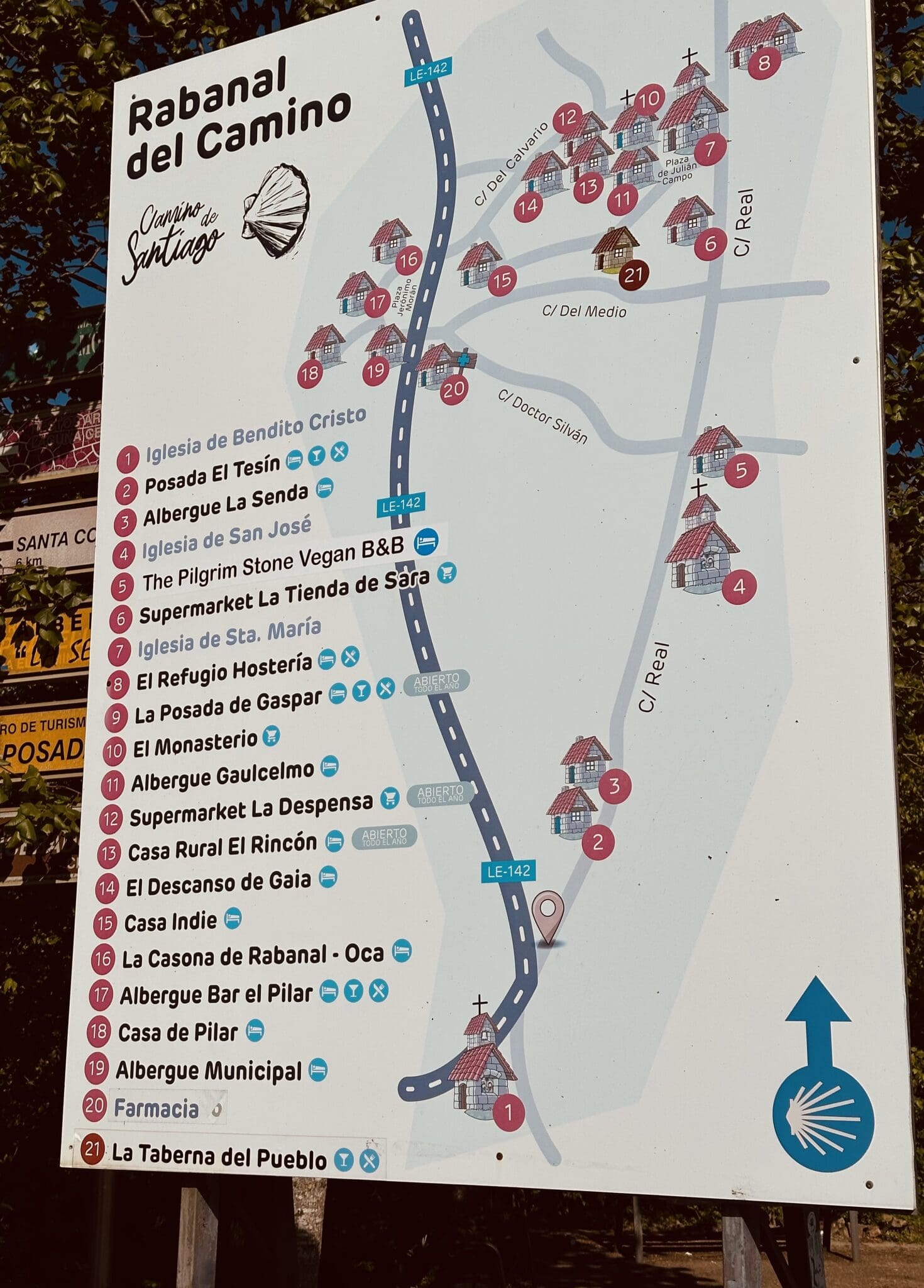
The village is home to the Benedictine monastery of San Salvador del Monte Irago, where a handful of monks invite pilgrims to join them for Mass each evening at 7 pm, accompanied by Gregorian chant. Pilgrims who want a deeper experience can stay for a few days in the monastery’s Pilgrim House. It’s not a typical albergue but a true monastic community that opens its doors to those walking to Santiago. The community requires a minimum stay of two nights. Pilgrims are encouraged to contribute what they can to support the community, although there’s no set charge. Booking ahead is not an option here. You simply turn up and speak to the hospitalero or one of the monks. The Pilgrim House welcomes walkers from early May until around mid-October.


There are plenty of good albergues in Rabanal, but my favourite is the donativo Refugio Gaucelmo, right beside the monastery. Run by the British Confraternity of Saint James, it has a warm, welcoming atmosphere. In the afternoon, volunteers serve tea in the garden, a little taste of England in the heart of Spain. When I stayed there, one of the monastery’s monks joined us and gave a moving pilgrim’s blessing.


Foncebadón
234 km (145 miles) to Santiago
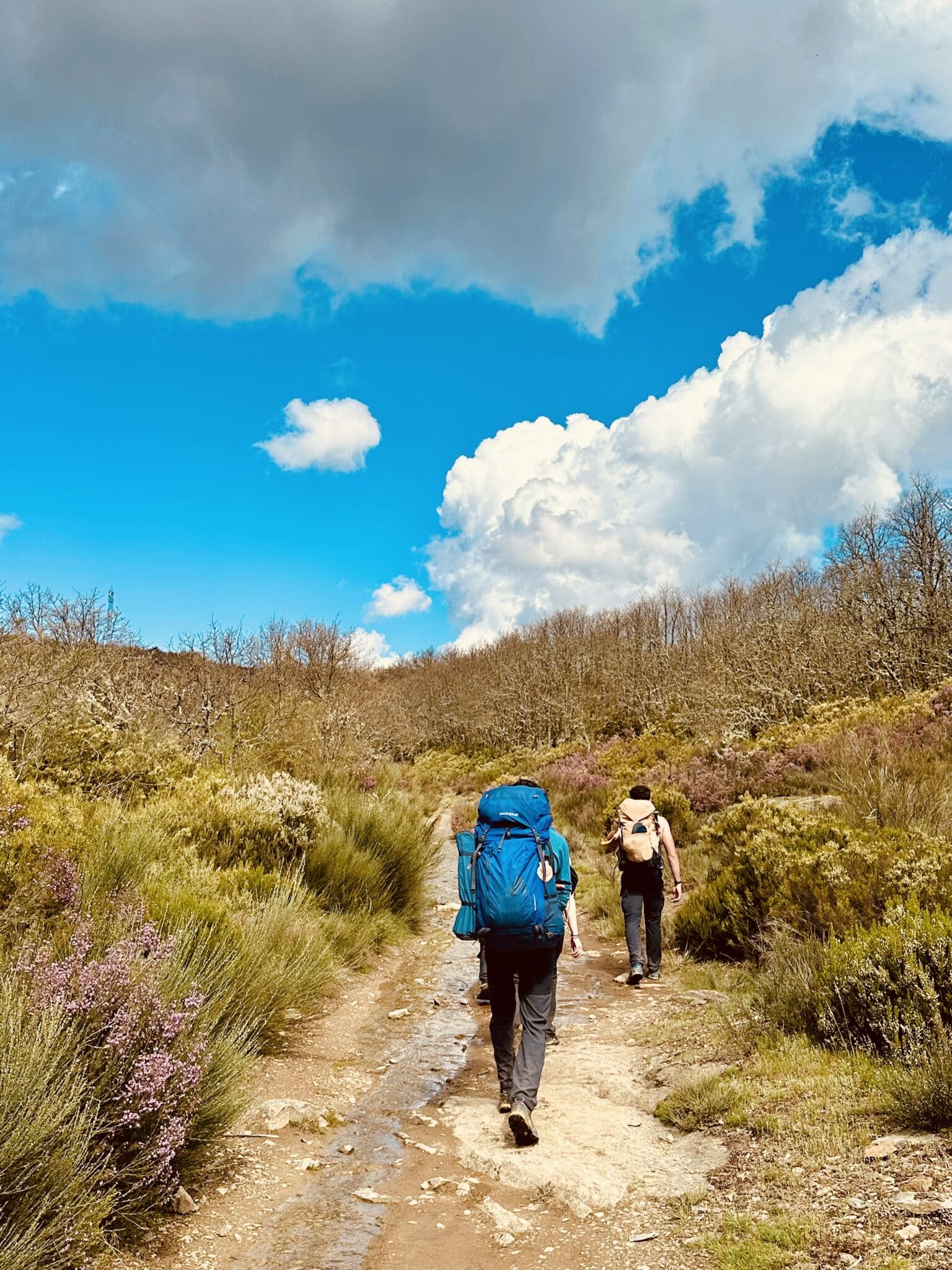

After Rabanal del Camino, the climb becomes steeper, and you continue for another 5 km until you arrive at Foncebadón, a mountain-top village famously portrayed by both Paulo Coelho in his book The Pilgrimage and Shirley MacLaine in The Camino: A Journey of the Spirit. In both books, it was described as eerie, lonely, and abandoned, with crumbling stone ruins and feral dogs.
In recent years, though, Foncebadón has undergone a remarkable revival. Many of its once-abandoned homes have been lovingly restored into albergues, and the place has a cool vibe these days.


Two of the best albergues greet you as you enter the village. On your left, you’ll find Albergue Monte Irago, renowned for its delicious communal meals and warm hospitality. Just across the road stands the charming El Convento de Foncebadón, which has stunning mountain views, if there is no fog.


Near the top of the village, you’ll also find the wonderful donativo Albergue Parroquial Domus Dei. It traces its roots to a 12th-century hermit named Gaucelmo, who looked at one of the Camino’s most remote and dangerous mountain passes and decided that someone ought to be there to help. He built a monastery and a pilgrim hospital on the spot. Like all the donativo albergues, it is a simple place, no frills but full of soul.


Foncebadón has become increasingly popular among pilgrims, not only for its beautiful setting but also because it’s only a short walk to the Cruz de Ferro. Stay here, and you can be standing at the cross at first light, before the crowds arrive. Book ahead during peak season.
Cruz de Ferro
232 km (144 miles) to Santiago
Traditionally, pilgrims carry a small stone from home and leave it here. The stone represents a burden, a worry, a memory, or something they want to let go of. Some write names on their stones; others just hold them quietly for a moment before placing them down. There is no ceremony, no queue, no rules, just a very personal pause on your journey. It is not grand or ornate, but it is hard not to feel the weight of all the footsteps and stories that have passed this exact spot for nearly a thousand years.


From Foncebadón, it is only about 2 km to Cruz de Ferro, the highest point on the Camino Francés at 1,504 m. Cruz de Ferro is one of the most symbolic and meaningful places on the entire Camino. It is simply an iron cross atop a tall wooden pole, standing on a massive pile of stones in a windy, forlorn spot.
El Acebo
223 km (139 miles) to Santiago
After Cruz de Ferro, the path begins to descend. This stretch always feels very quiet, with a slightly sombre atmosphere as many pilgrims are still lost in reflection. At first, it is rocky and uneven, so watch your step.
On the way down, you will pass through the tiny hamlet of Manjarín. For years, it was home to a quirky pilgrim shelter run by Tomás Martínez, who would be dressed in full crusader-style regalia. He sadly passed away in 2026, but the flags still hang outside. It would be lovely to see the place brought back to life for the next generation of walkers.


From there, the trail drops steadily through open hills and pine forests, with wide views stretching across the valleys below. As you descend toward El Acebo, the path becomes rocky and steep in places, requiring a bit of care underfoot. Then, suddenly, the village comes into view, clinging to the hillside.
El Acebo is an enchanting mountain village and another one of my favourite places to call it a day on the Camino. The views stretch out across the valley below, and the village is full of character, with stone houses and rickety wooden balconies hanging out over the narrow road.
Just as you enter the village on the left, you will see the magical little rustic hotel La Rosa del Agua, run by a young couple, David and Suzanne. Even if you are not staying overnight, it is well worth stopping for lunch. Suzanne makes unforgettable lemon and carrot cakes.
There are a few other nice places in the village to stay. Albergue Mesón El Acebo is a cosy, traditional stop with a rustic interior, an attached restaurant, and a lovely terrace where pilgrims linger.


There is also a lovely donativo, Albergue Parroquial Apóstol Santiago, full of heart and real Camino spirit.
Finally, at the far end of the village, you come to Albergue La Casa del Peregrino, a larger, modern option. It can feel a little soulless compared to the smaller places, but it does have a pool, a restaurant, and a big deck with sweeping views over the valley.


Molinaseca
215 km (134 miles) to Santiago
The walk from El Acebo to Molinaseca is mostly downhill and can be tough on the knees. Early on, the path is really rocky and uneven, so you’ll want to take your time and watch your step. You pass through the small village of Riego de Ambrós (which has a nice municipal albergue). As you get closer to Molinaseca, the trail becomes less rocky and winds gently down through cool, shaded woodland. Then, almost out of nowhere, the town of Molinaseca reveals itself below you. Molinaseca is just lovely. A plaque on the way into town proudly announces that it is one of the prettiest villages in Spain, and the village thoroughly deserves this.
To enter the town, you cross a beautiful old stone bridge. In summer, they dam the river here, turning it into a big natural swimming pool. After a long, hot day on the trail, it is very hard not to dive straight in before even crossing into town.

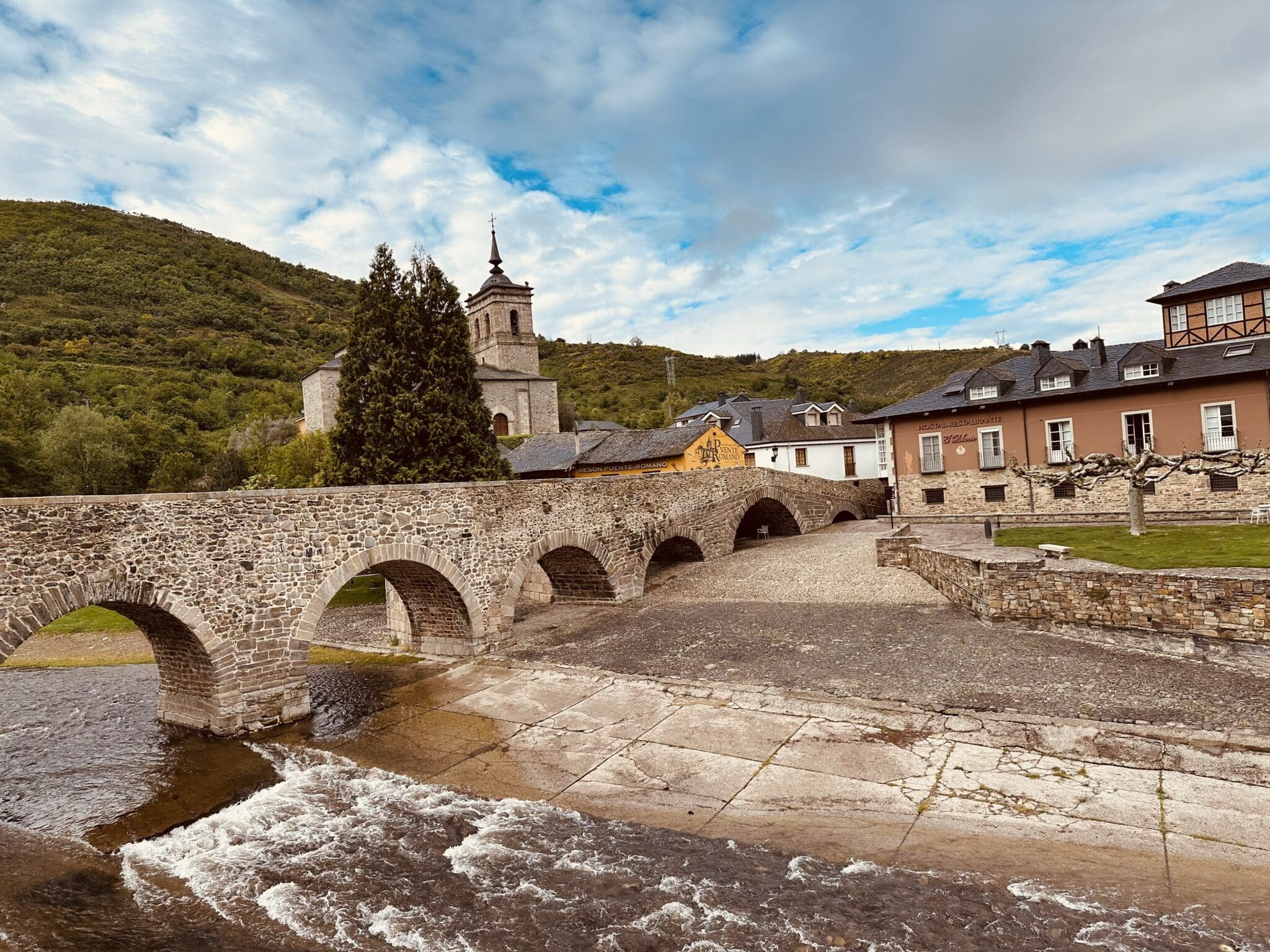
After your dip, wander onto the main street, which is full of life. Molinaseca is a gorgeous little town, full of old stone houses, narrow streets, and lively cafés. The terraces along the main street are perfect for sitting out with a cold drink and just watching the world drift by.
There are a few albergues in the town. My favourite is Albergue Santa Marina, on the right-hand side just as you leave. Alfredo, a veteran pilgrim, runs it.


Ponferrada
207 km (129 miles) to Santiago
It’s about a 7 km walk from Molinaseca to Ponferrada, mostly along sidewalks. About 3 kilometres after Molinaseca, the Camino splits. It’s kind of six of one, half a dozen of the other for which path you take; they’re very similar. I usually go left, down through the tiny village of Campo, and then back up into the city of Ponferrada.
Ponferrada is one of the bigger cities on the Camino, with about 65,000 people. The big highlight is the Templar Castle, and look, I’m from Ireland, where you trip over castles every five minutes, so usually I don’t get too excited. But this one’s different. It’s massive and looks like something straight out of a Lego set with its chunky towers and thick stone walls. It’s definitely worth exploring.
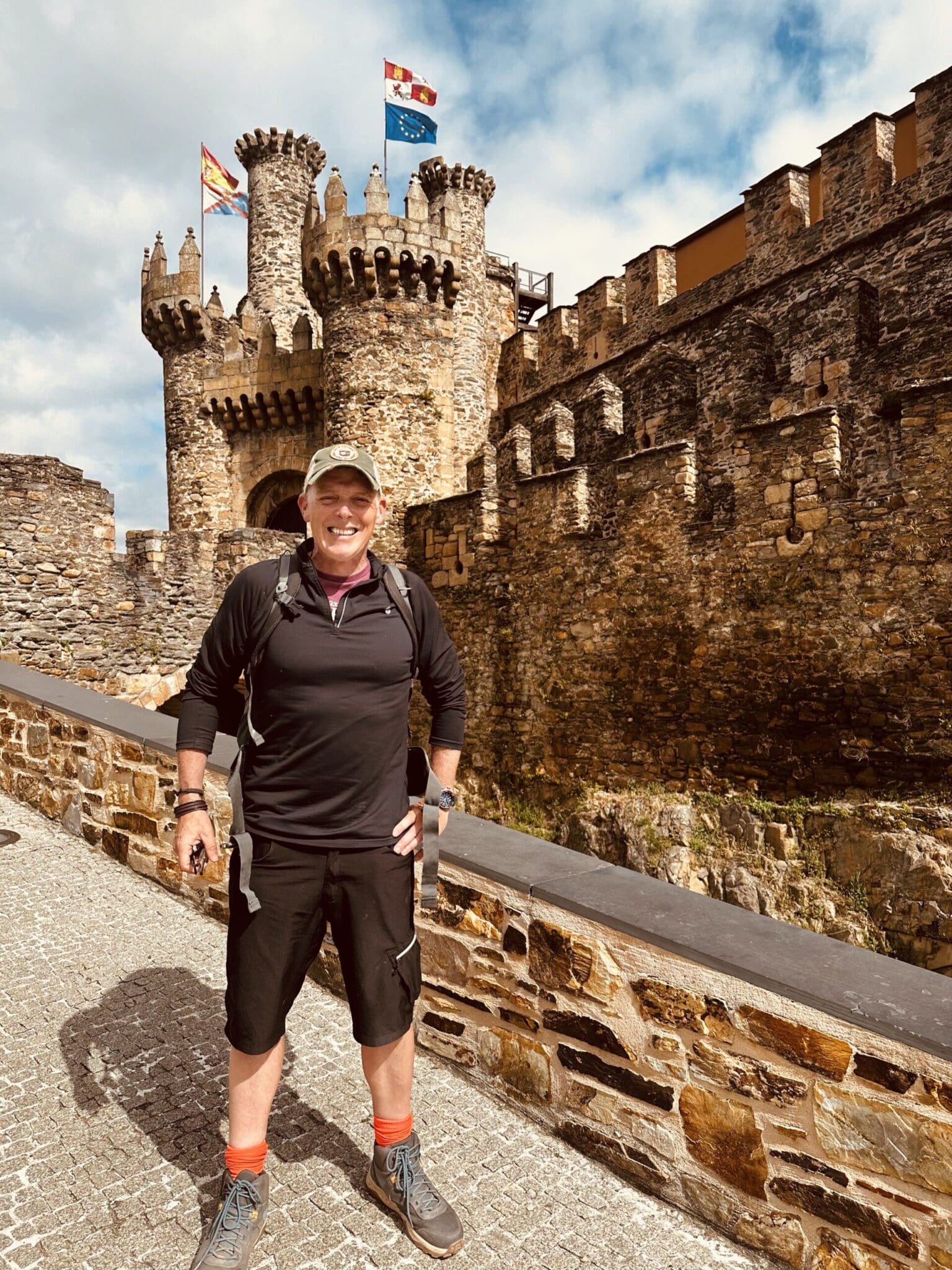

Every year around the first full moon of summer, the festival Noche Templaria transforms Ponferrada into a medieval city. The streets come alive with market stalls, music, fire shows, jousting, and locals dressed as knights and nobles. The highlight is the spectacular Night of the Ark and the Grail procession, where thousands escort the Holy Grail and the Ark of the Covenant through torch-lit streets to the castle, followed by the ceremonial knighting of new Templar knights. Part history, part theatre, it is spectacular and slightly otherworldly.
You might see some participants wearing pointed hoods that may seem unsettling today, but they’ve been part of Spanish religious tradition since the Middle Ages, symbolising penance and humility.


There are plenty of places to stay in Ponferrada. Two worth mentioning are Albergue Parroquial San Nicolás de Flüe, a simple, donation-based albergue for pilgrims with a peaceful garden and evening blessings and Albergue Guiana, a very modern hostel with dorms, private rooms, Wi-Fi, a kitchen, and even a sauna. I stayed there once while cycling the Camino, and they have a great bike workshop in the basement.


Thank you, will enjoy closer reading as I go along. Any advice about biking around from Astorga to Molinesca? Description indicates downhill not good for even walking a bike.
Hi Kim, the stretch from Astorga to Molinaseca is pretty tough on a bike if you stick to the Camino path. You could always take the road instead. The part from El Acebo down to Molinaseca is especially tricky, in some spots you won’t even be able to push the bike and will have to carry it, unless you’re a really experienced technical mountain biker