


The Camino Finisterre, sometimes called the Camino to the Sea, is a beautiful extension of the Camino de Santiago. It takes about three days to walk, or four if you prefer an easier pace. I absolutely love this route. After the big finish in Santiago, it feels like the perfect way to unwind and let everything sink in. You walk through areas full of Celtic culture, peaceful forests, rows of old hórreos, fields of corn and sunflowers, quiet country paths, and small farms. The whole route follows an ancient pre-Christian pilgrim path, tracking the Milky Way to the Atlantic coast and the end of the known world. Some walkers head to Finisterre, others split off and follow the path to Muxía, while many choose to walk to one and then continue on to the other. The Camino Finisterre even has its own official certificate that you can pick up at the tourist office or municipal albergue in Finisterre. So let’s get started on this magnificent route.

Santiago
5 KM to Finisterre
Leaving Santiago is simple. Stand in the main square facing the cathedral, then turn around so it’s behind you. Walk across the square and leave the square opposite from where you entered, with the Parador on your right, and head down the steps at Rúa das Hortas. After a few hundred yards, veer left and you’ll see the familiar yellow arrows.


As with so many cities on the Camino, the way out of Santiago feels so much calmer and more peaceful than the way in; there are no long stretches of industrial suburbs to pass through, no airport to circle. Instead, you will find yourself walking on shaded country trails almost immediately. After about half an hour, you reach a lovely viewpoint where you can look back over Santiago, with the cathedral glowing in the morning light.
Ventosa
605 km (376 miles) to Santiago
The walk from Santiago to Ventosa is the perfect way to start the Camino Finisterre. You leave the city behind surprisingly fast, passing through quiet suburbs before joining peaceful forest paths. Along the way, you’ll pass through a few tiny hamlets and spot plenty of traditional hórreos. There’s a bit of a climb up to Aguapesada, but it’s steady rather than steep, and after that you descend into Ventosa, a small, sleepy village.


Just off to the left as you enter the vialage, you’ll see A Casa do Boi, a lovely café and albergue; it’s the perfect place for a morning coffee. It’s also a popular stop for walkers doing shorter stages, and I even met a few pilgrims who stayed there instead of Santiago, choosing to collect their credential in the city and then continue on to spend the night in this quiet little spot.
Ponte Maceira
605 km (376 miles) to Santiago
The walk from Ventosa to Ponte Maceira is a lovely stretch through quiet forest paths and rolling countryside, passing small farms and streams. You’ll find a nice little stop called Café 79km along the way, great for a coffee.


As you approach Ponte Maceira, the view opens up and you see the river Tambre and its stunning medieval bridge. It’s easy to see why it’s considered one of Spain’s prettiest villages, with old stone houses, watermills, and a peaceful, timeless feel.

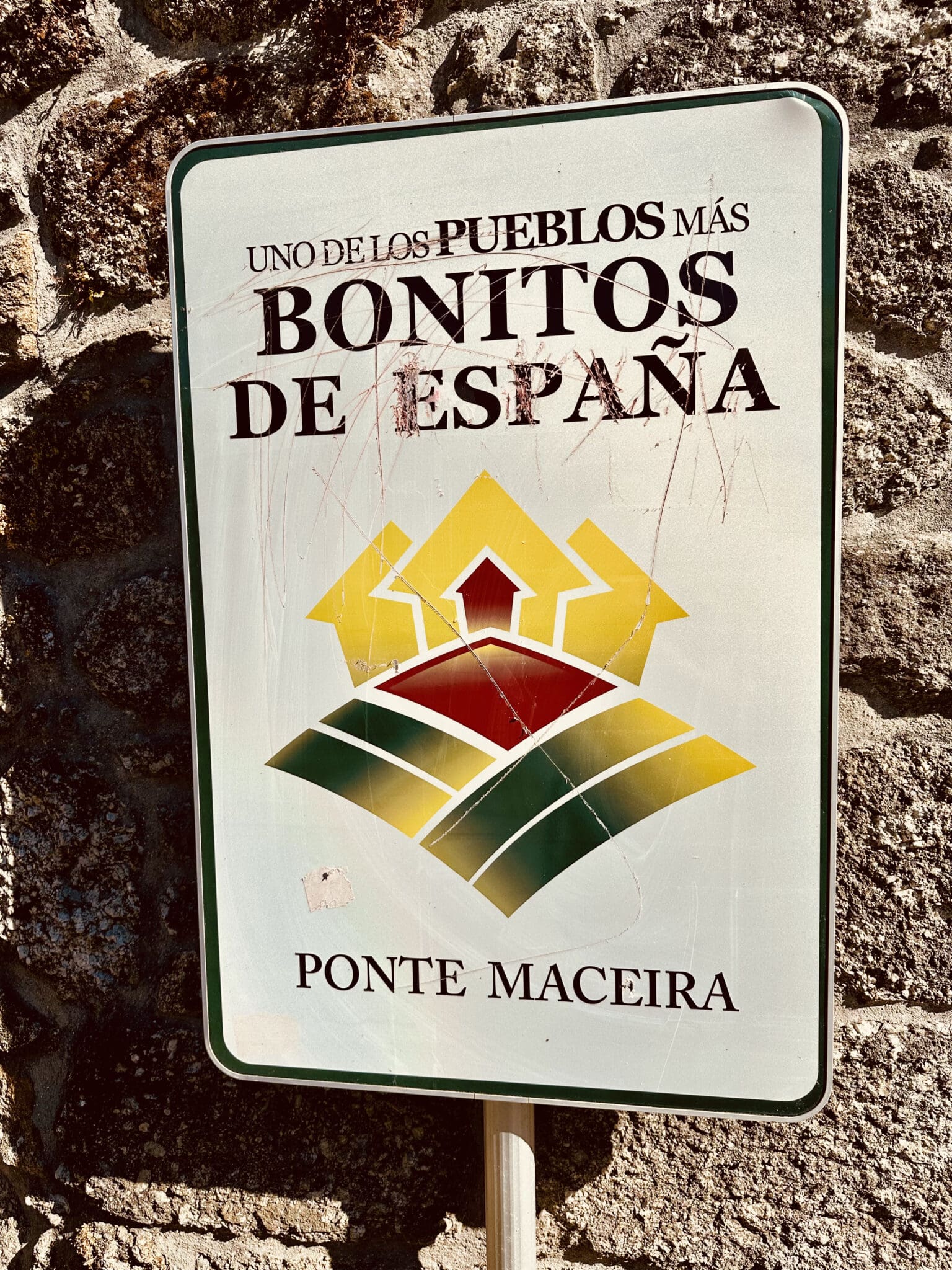
Right by the bridge, there’s a restaurant with a terrace overlooking the river, perfect for a cold drink or a proper Galician meal while you take in the view. Crossing that bridge into the village feels like walking straight into a postcard.
Negreira
605 km (376 miles) to Santiago
Leaving Ponte Maceira, the path follows the river for a bit before climbing gently toward Negreira. It’s a pleasant walk, passing through shaded lanes and open countryside with the occasional farmhouse and barking dog in the distance.
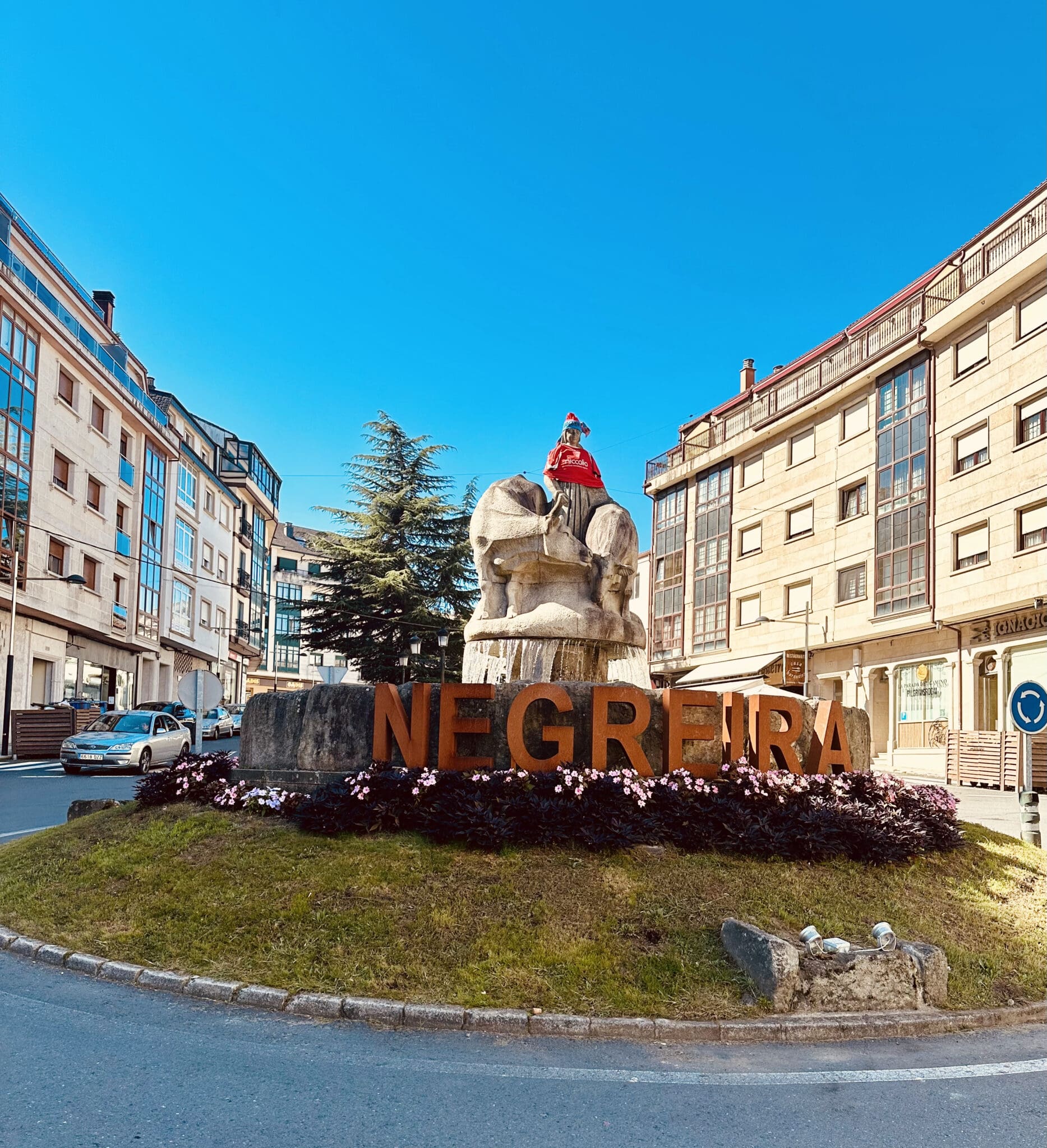
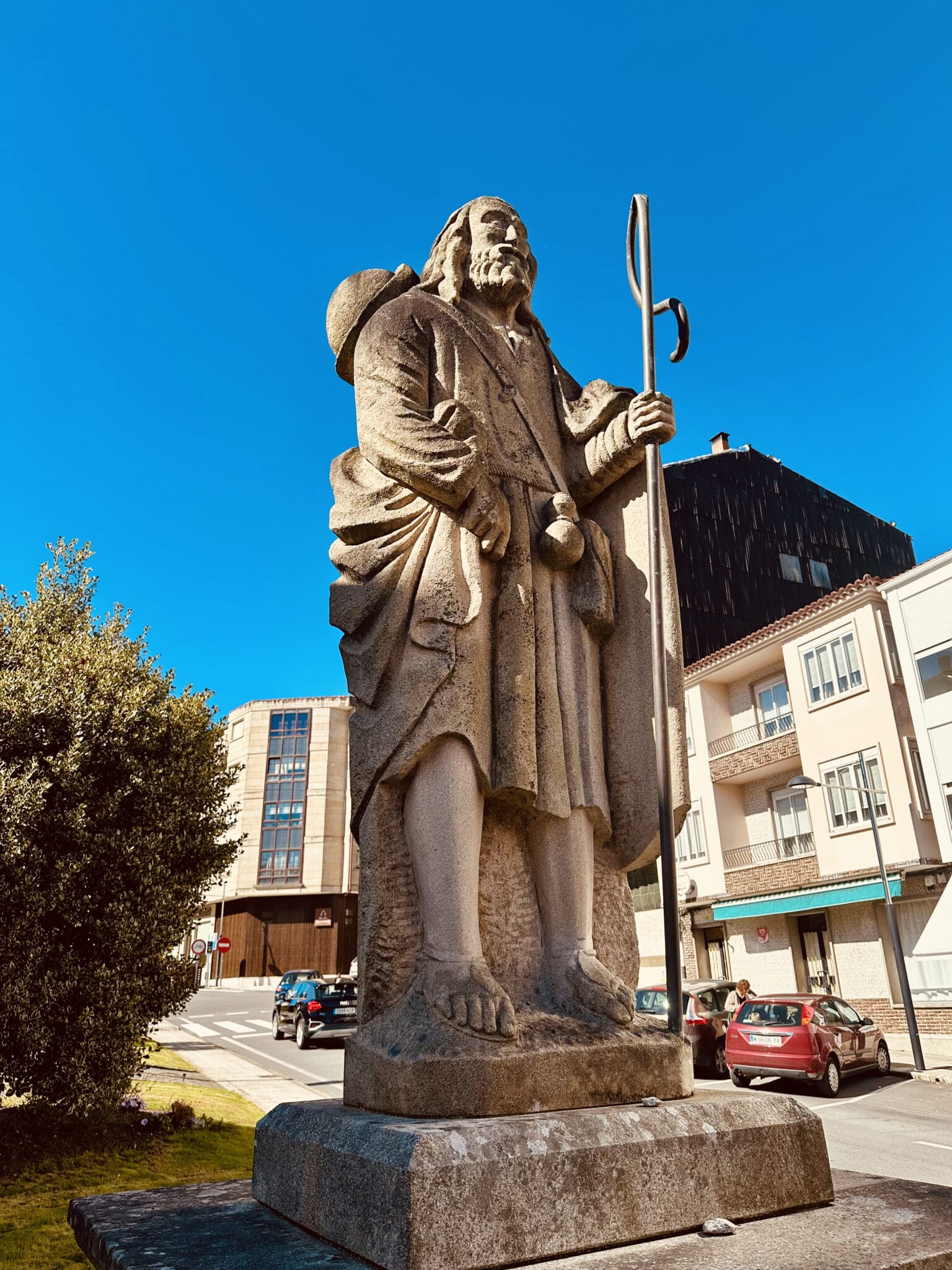
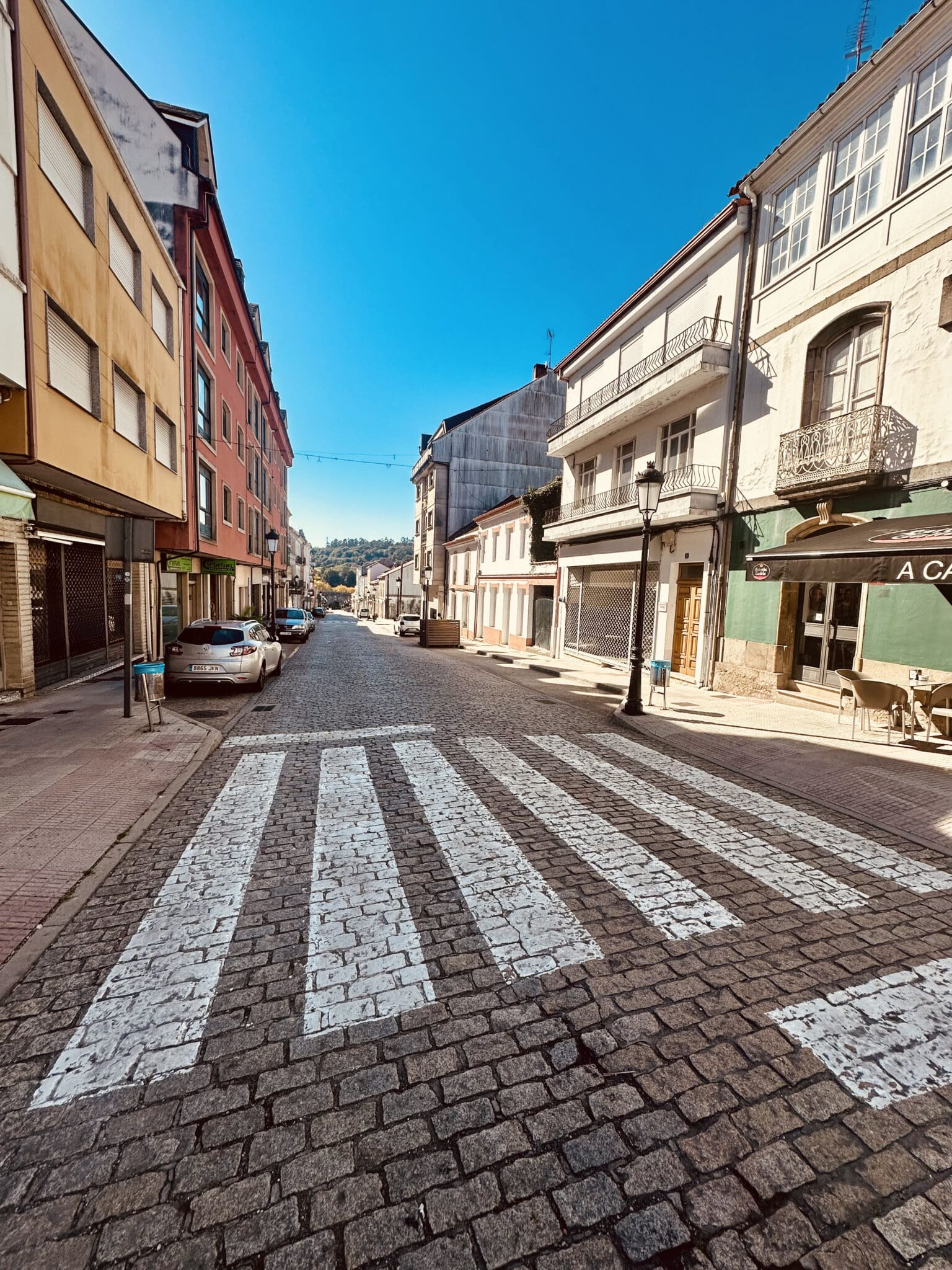
Negreira is a decent-sized, busy little town. It’s nice enough, a bit nondescript, though it does get a brief mention in Hemingway’s For Whom the Bell Tolls, which I love as a little fact. The town is really popular with pilgrims since it’s about 22 km from Santiago, making it a natural first-night stop. You’ll find plenty of albergues here, and it’s a good place to grab supplies or take out some cash, as it’s the only proper town you’ll pass through for the next few days.
A Pena
605 km (376 miles) to Santiago
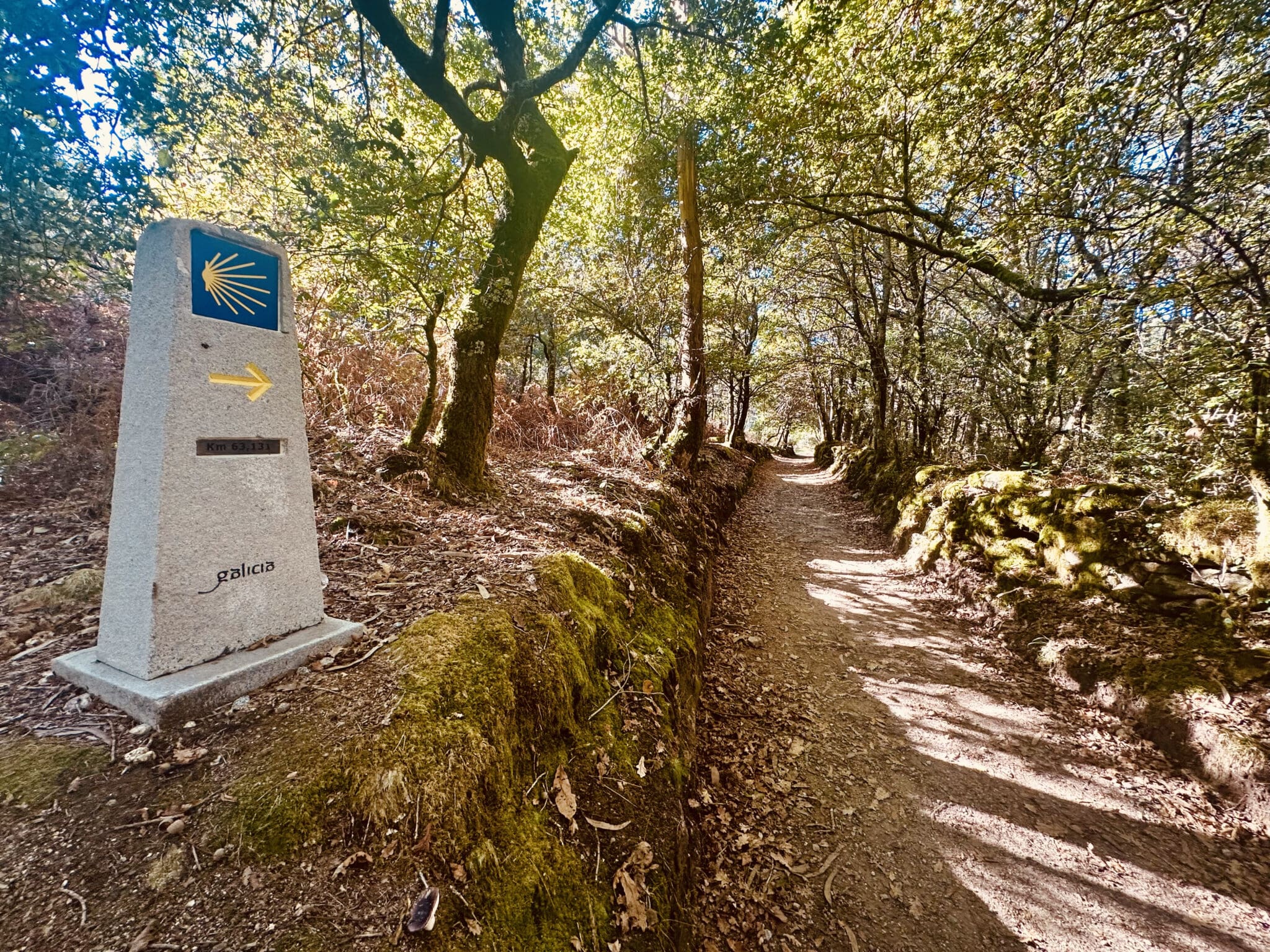
However, I always prefer the smaller villages and hamlets on the Camino, and even a town like Negreira, with its few traffic lights, can feel a bit too busy for me. So instead, I pressed on through the woods to the lovely little hamlet of A Pena. The walk from Negreira to A Pena is about 8 km.
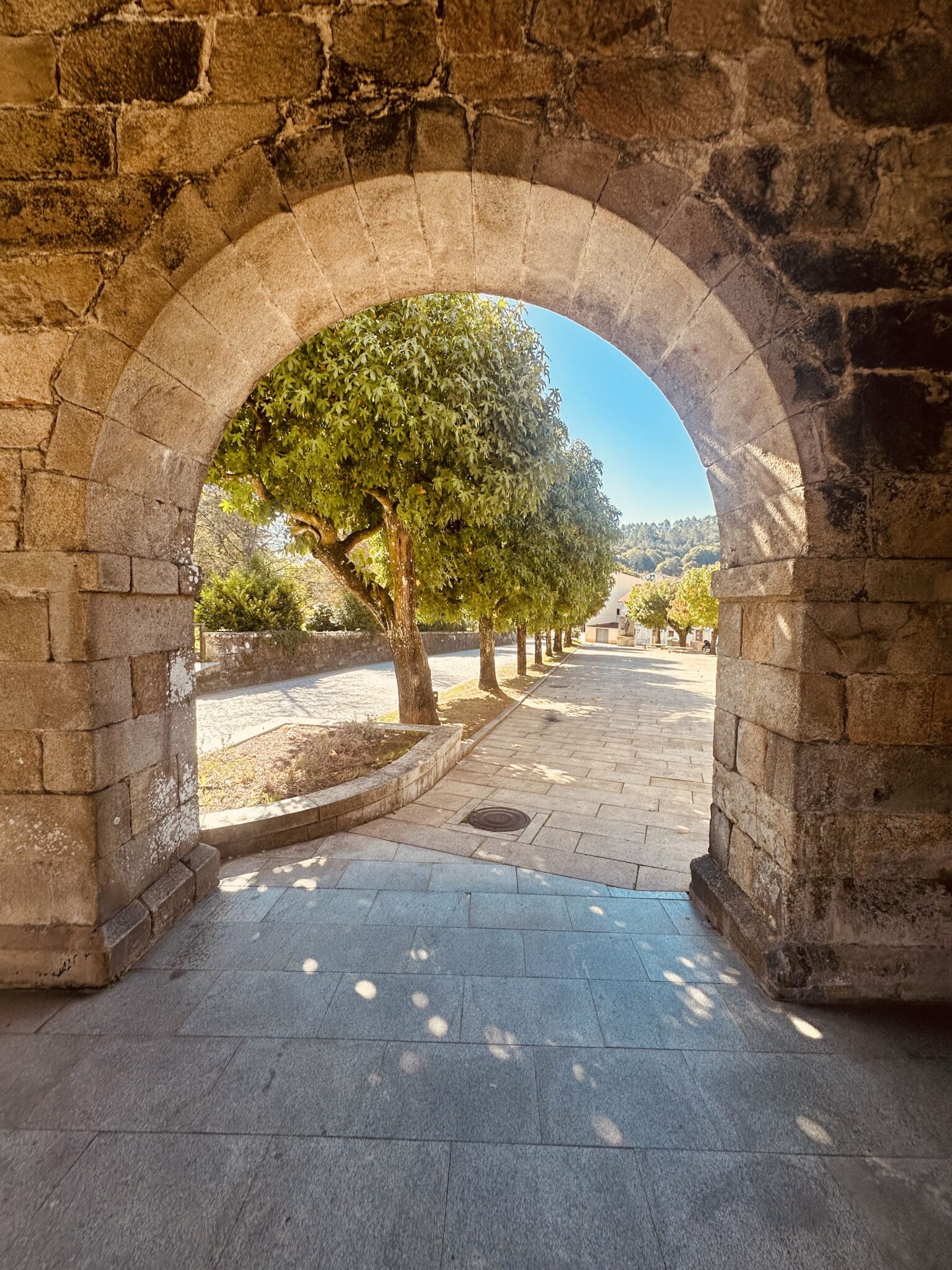
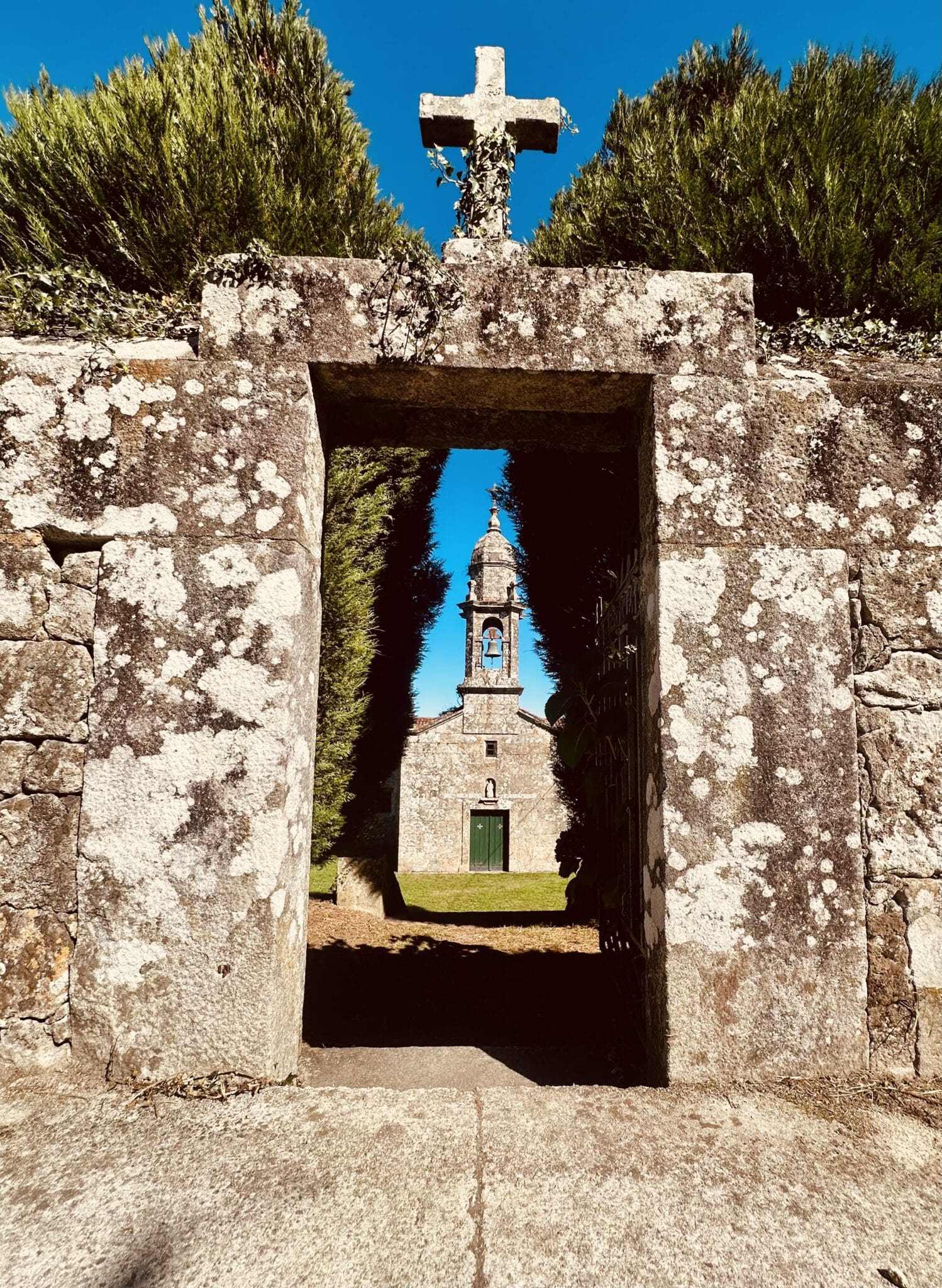
You leave town through the old archway of the Pazo de Cotón and pass the church of San Julián after about a kilometer. From there, the path climbs gently through quiet lanes and stretches of forest. As the noise of Negreira fades, you wander through farmland and small hamlets like San Mamede before reaching A Pena.
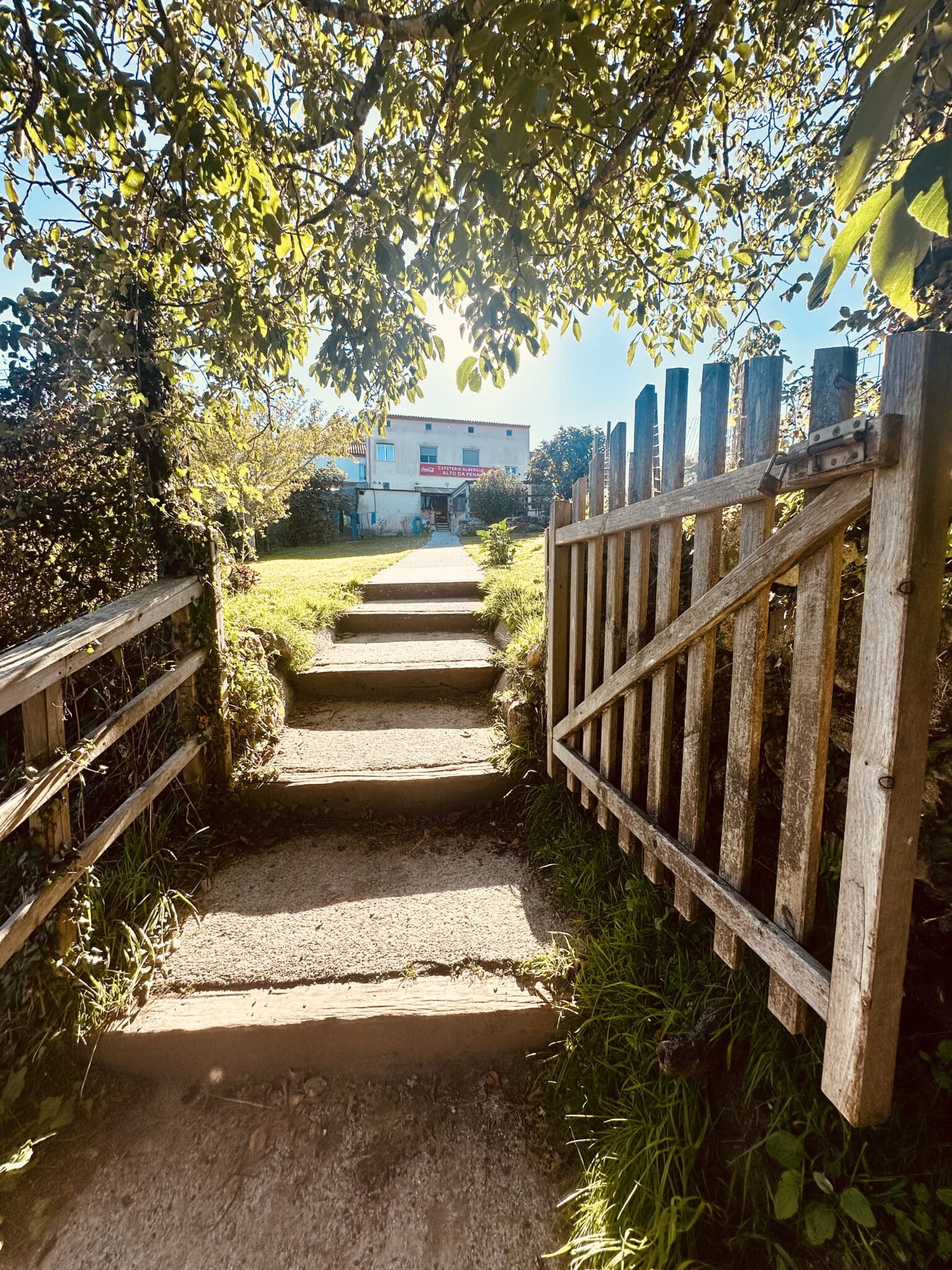
The Albergue A Pena suddenly appears on your left through a little gate. I almost missed it at first. I wandered up the path and found this lovely, rustic place surrounded by fields, with that unmistakable smell of the countryside. In the morning, you’ll hear roosters crowing and the world waking up slowly around you.

They served a wonderful communal dinner: lentil and chorizo soup to start, followed by a hearty pasta dish and plenty of wine. It was full of cheer, laughter, and that warm Camino camaraderie. I chose this place over the other albergue in town because of the communal meal, but I later learned they’re actually run by the same owners, and everyone from both joined for dinner. This is definitely one of my favorite places to stay.
Santa Mariña
47.5 KM to Finisterre
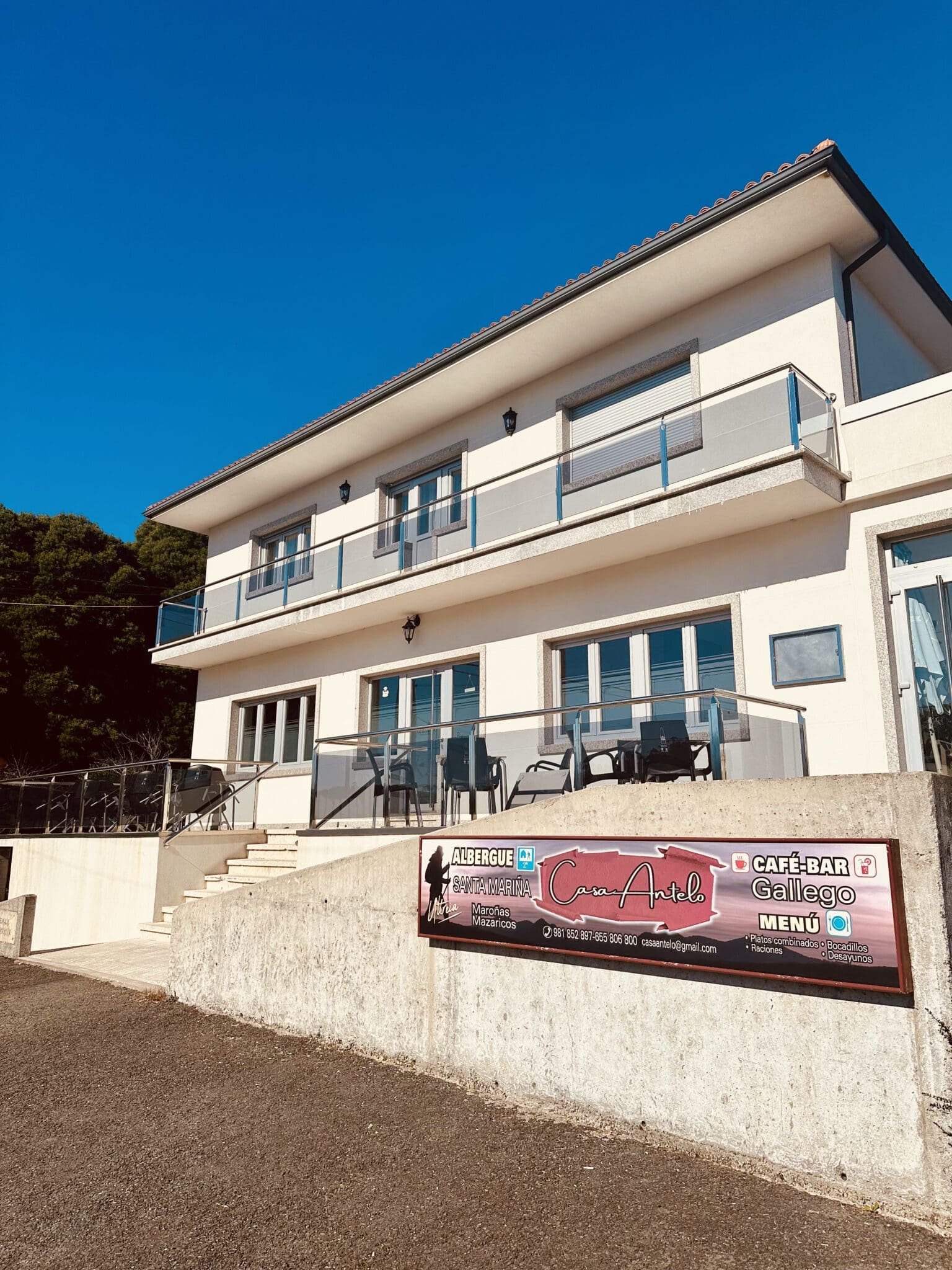
Continue on forest tracks and quiet country roads for about 4 km to Vilaserío. There’s a lovely albergue here called Casa Vella, with hammocks swinging in the garden, flowers everywhere, and a relaxed, hippy vibe. It looks like a great place to stay. From there, keep going another 5 or 6 km to Santa Marina, where you’ll find a small café called Casa Pepe, which also has an albergue. Not far beyond here, you’ll pass Albergue Santa María. This place gets excellent reviews, especially for its communal meal; the only thing going against it is that it sits along a fairly busy road.

Olveiroa
35 KM to Finisterre
Continue on and at around the 45 km mark to Finisterre, the road splits in two; the main path continues to the right, and the complementary route heads left. We decided to stick with the main trail.


At first, I was a bit worried that maybe the complementary route was created to avoid a busy road or less scenic stretch, but there was no need to worry. The main path was beautiful, though a little demanding in parts as you climb up Monte Aro. It’s a steep hill, the highest point (1300 ft) on the Camino Finisterre, with a viewing platform at the top.

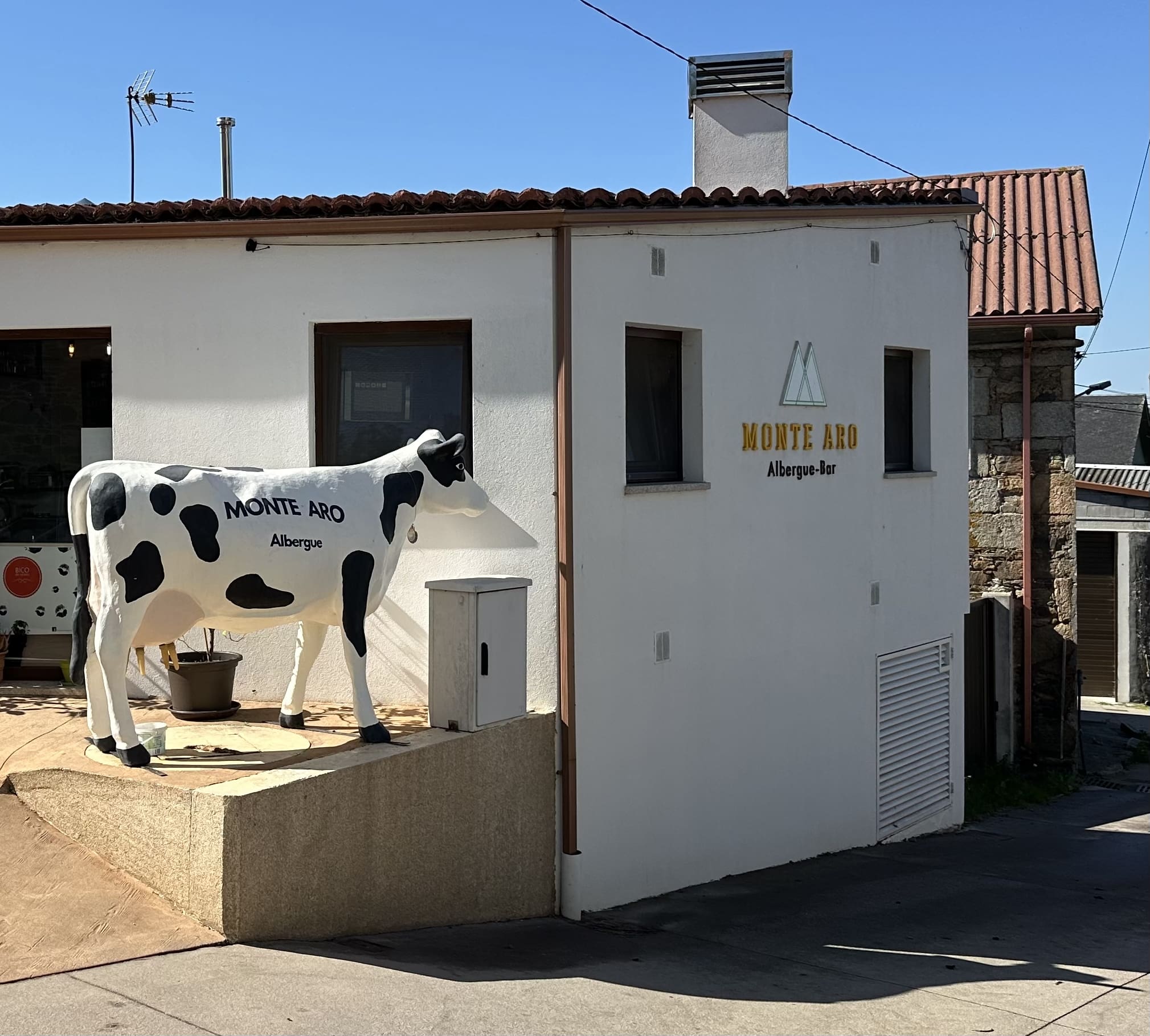
After descending from Monte Aro you will pass through a number of small hamlets, including Lago, where you will find the highly recommended buzzing Albergue Monte Aro.
Eventually, you reach Olveiroa, a small village of a few hundred people with a decent-looking municipal albergue and a handful of bars and cafés. It’s a good place to stop, but we decided to keep going, tempted by the stories of a magical little hamlet just beyond.

Logoso
31 KM to Finisterre
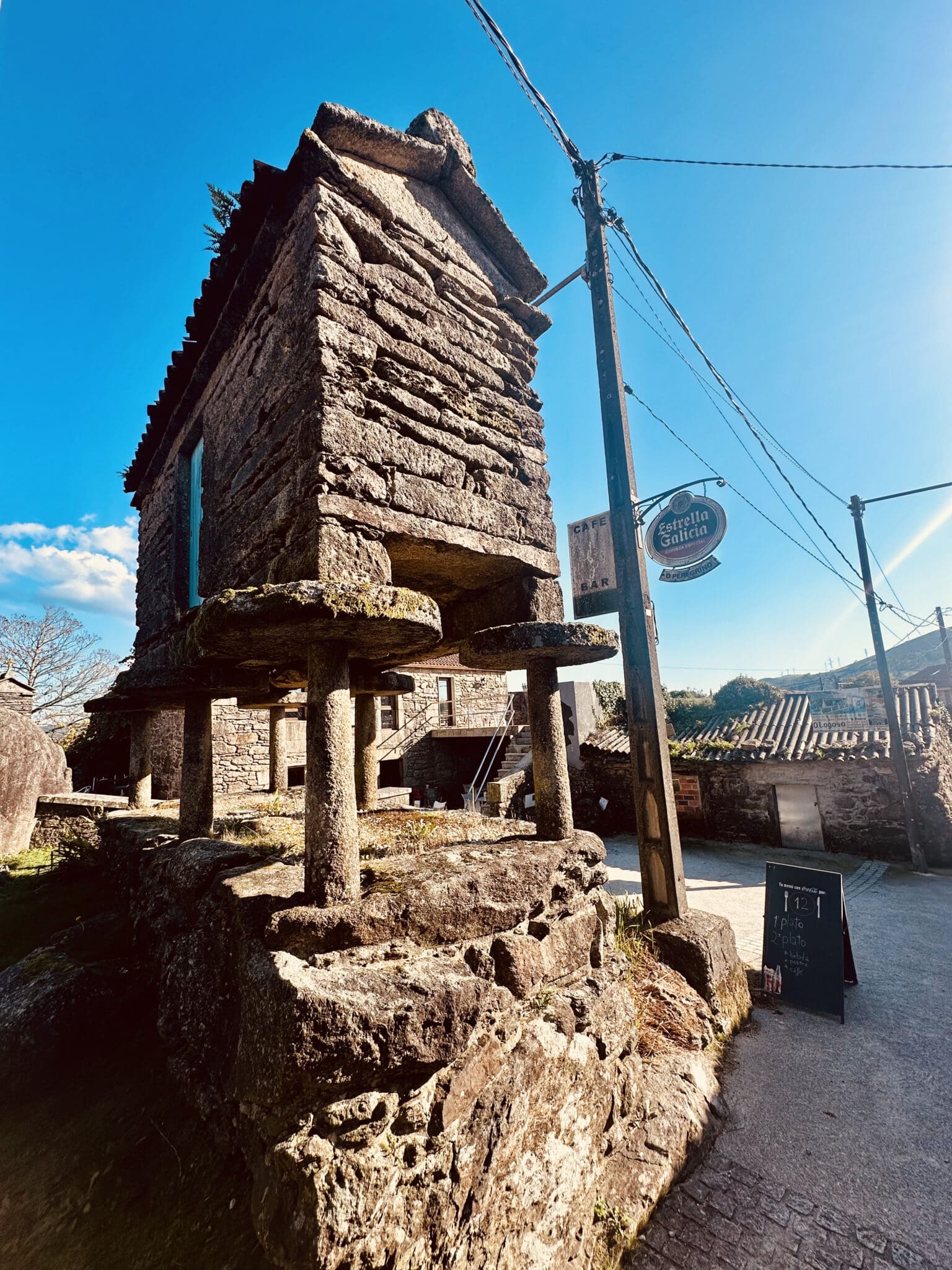
It’s only a few kilometers past Olveiroa to one of my favorite places to stay on the Camino Finisterre, Logoso. It’s a bit of a climb to get there, but totally worth it. The albergue is family-run, lively, and full of character. The whole hamlet is just a handful of houses, but it has such a warm, welcoming atmosphere. About 500 meters after the albergue, there’s a well-signposted spot in the river that’s perfect for dipping your feet or even a quick swim before dinner.
This is definitely one of those places I’d highly recommend staying at.

The Great Divide
29 KM to Finisterre
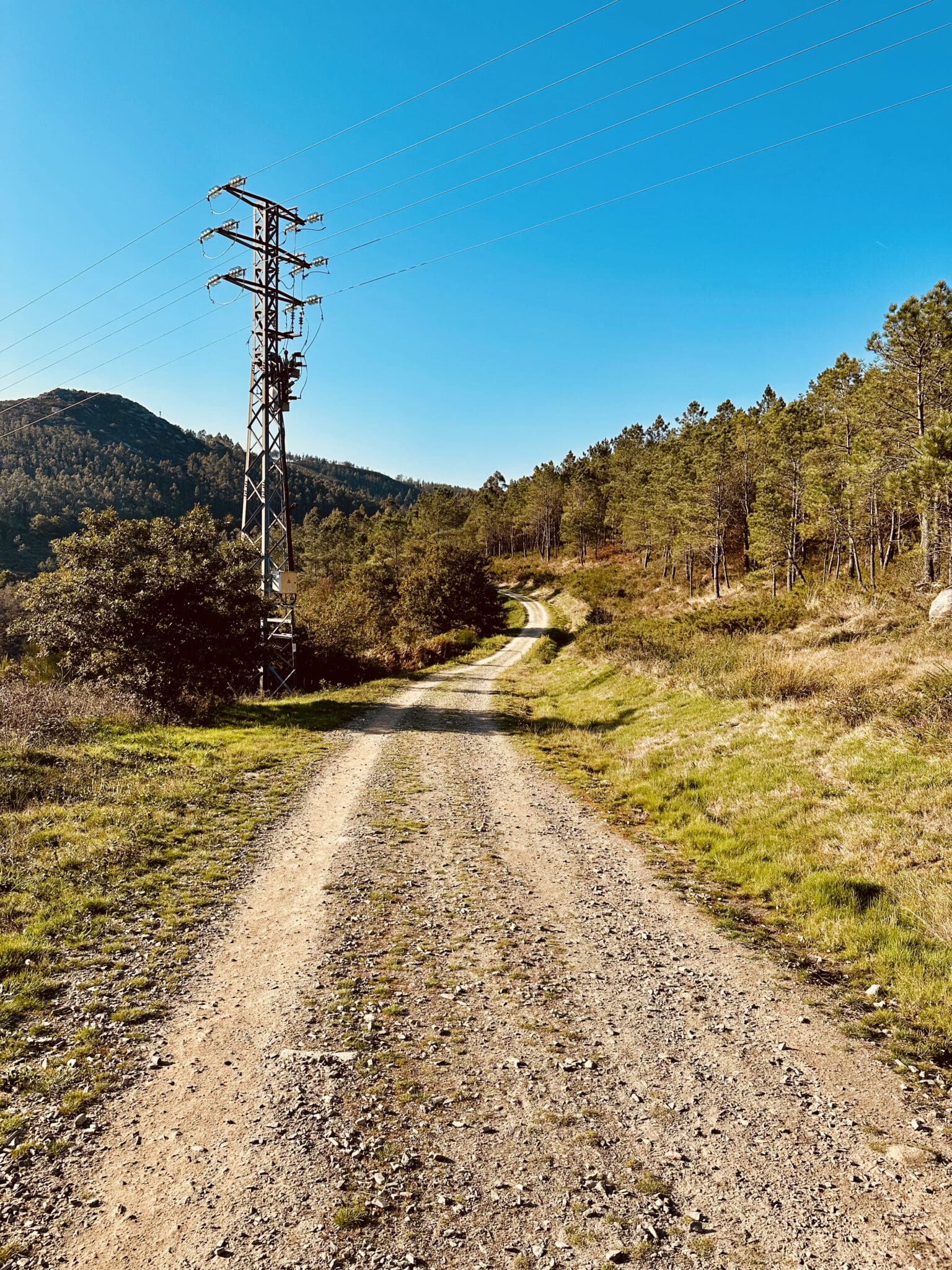
A few kilometers after Logoso, you’ll come to a roundabout that’s known among pilgrims as the Great Divide. This is where the Camino splits; left takes you to Finisterre and right leads you to Muxía.
The Finisterre route is by far the most popular; probably 90% of walkers go that way. It brings you down through the town of Cee, and finally on to Finisterre with its iconic lighthouse and incredible sunsets.
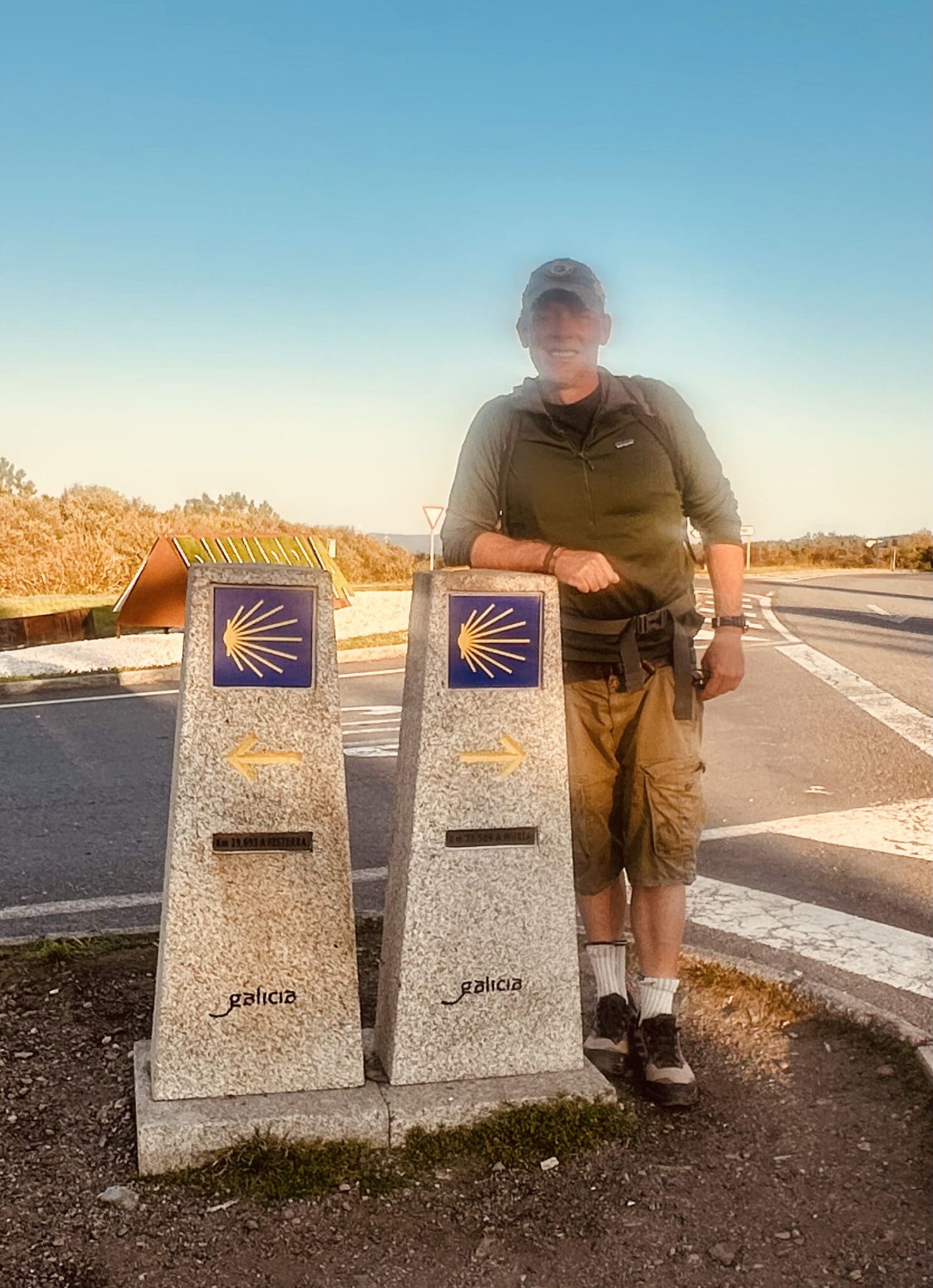

And if you’re after a quieter, more reflective final day, the Muxía route is pure magic too. It finishes at the beautiful church of Nosa Señora da Barca, perched on the rocks facing the wild Atlantic, next stop, Boston!
It’s hard to choose between them. If you have the time, the best option is to walk to both—Finisterre first, then continue to Muxía. You won’t regret it.
Muxía Option – Dumbria
22 KM to Finisterre
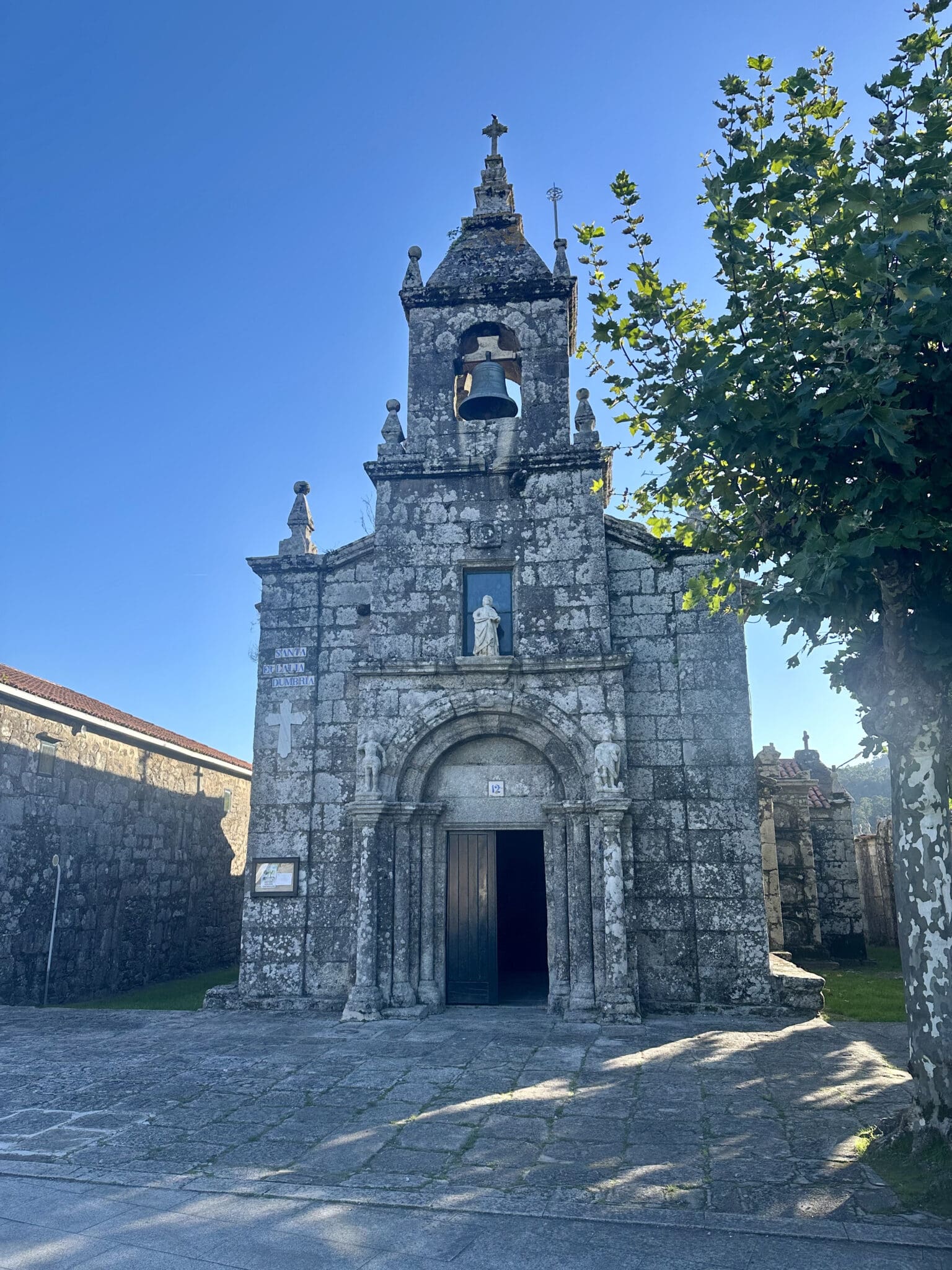
So let’s start with the quieter Muxía route. At the roundabout, take the right option and follow the road toward Dumbría. Dumbría is a small, pleasant little village with a fairly big municipal albergue, a couple of cafés, and a nice church where I went to Sunday Mass.
Muxía
0 KM to Muxía
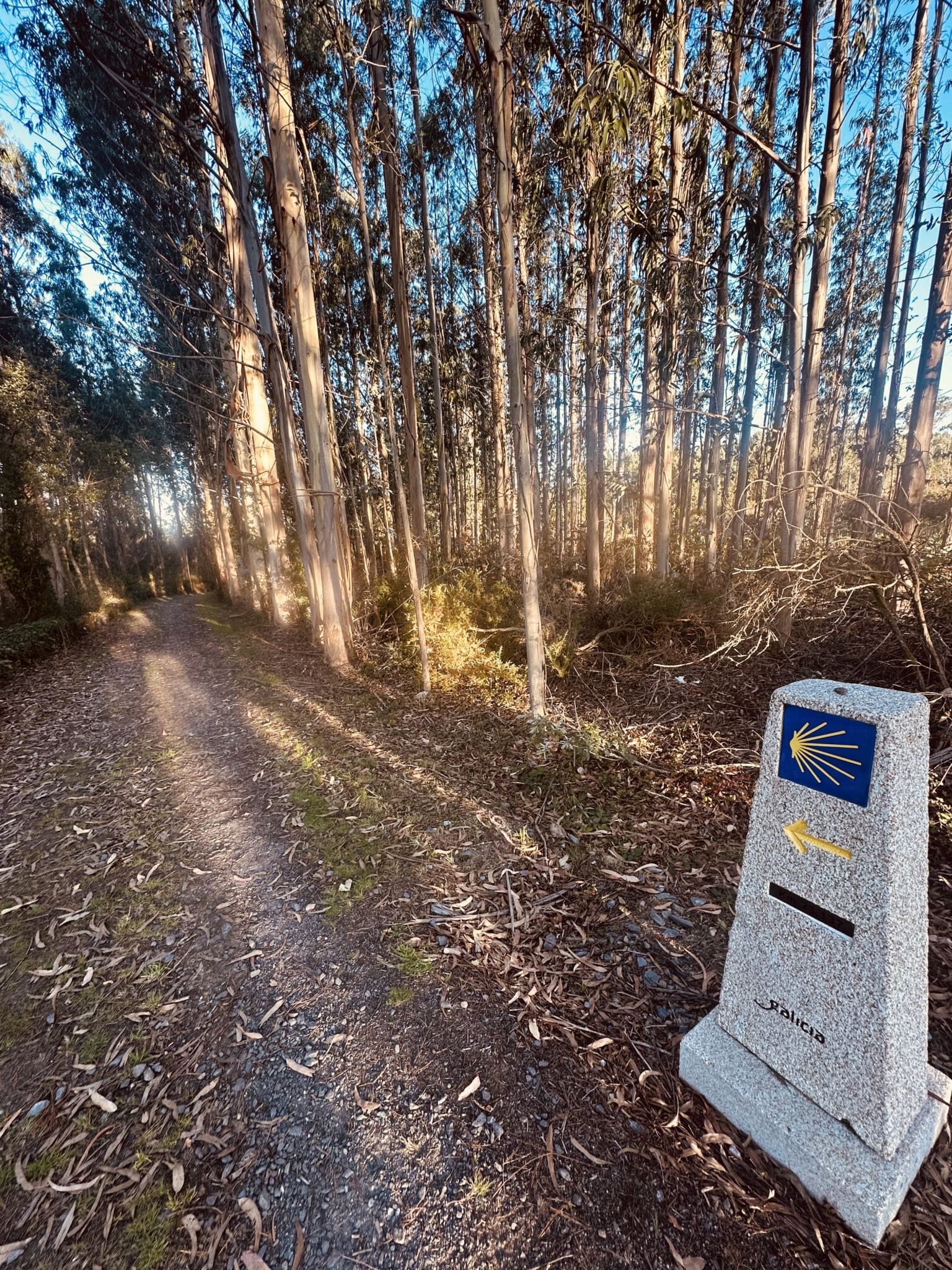
The walk from Dumbría to Muxía is very quiet and peaceful. It starts off through shady woodland and country tracks, gently descending toward the coast. You pass through a few small hamlets, some with cafés where you can stop for a break. Along the way, you’ll also come across the longest hórreo on the entire Camino. By this stage, we’d all become a bit obsessed with hórreos, so seeing the biggest one felt oddly exciting!


After a few hours, the trees begin to thin out and, about 7 km before Muxía, you suddenly catch your first glimpse of the sea. There have been two moments on the Camino when the view brought a tear to my eye. The first was on Monte do Gozo, when I first saw the spires of the Cathedral in the distance, sharing the same experience Christian pilgrims have had for over a thousand years. The second was here, seeing the Atlantic for the first time, knowing that for even longer, Celtic and Roman pilgrims reached this very same spot, and I was sharing that same mix of excitement and gratitude they must have felt, as they first met the end of the earth.
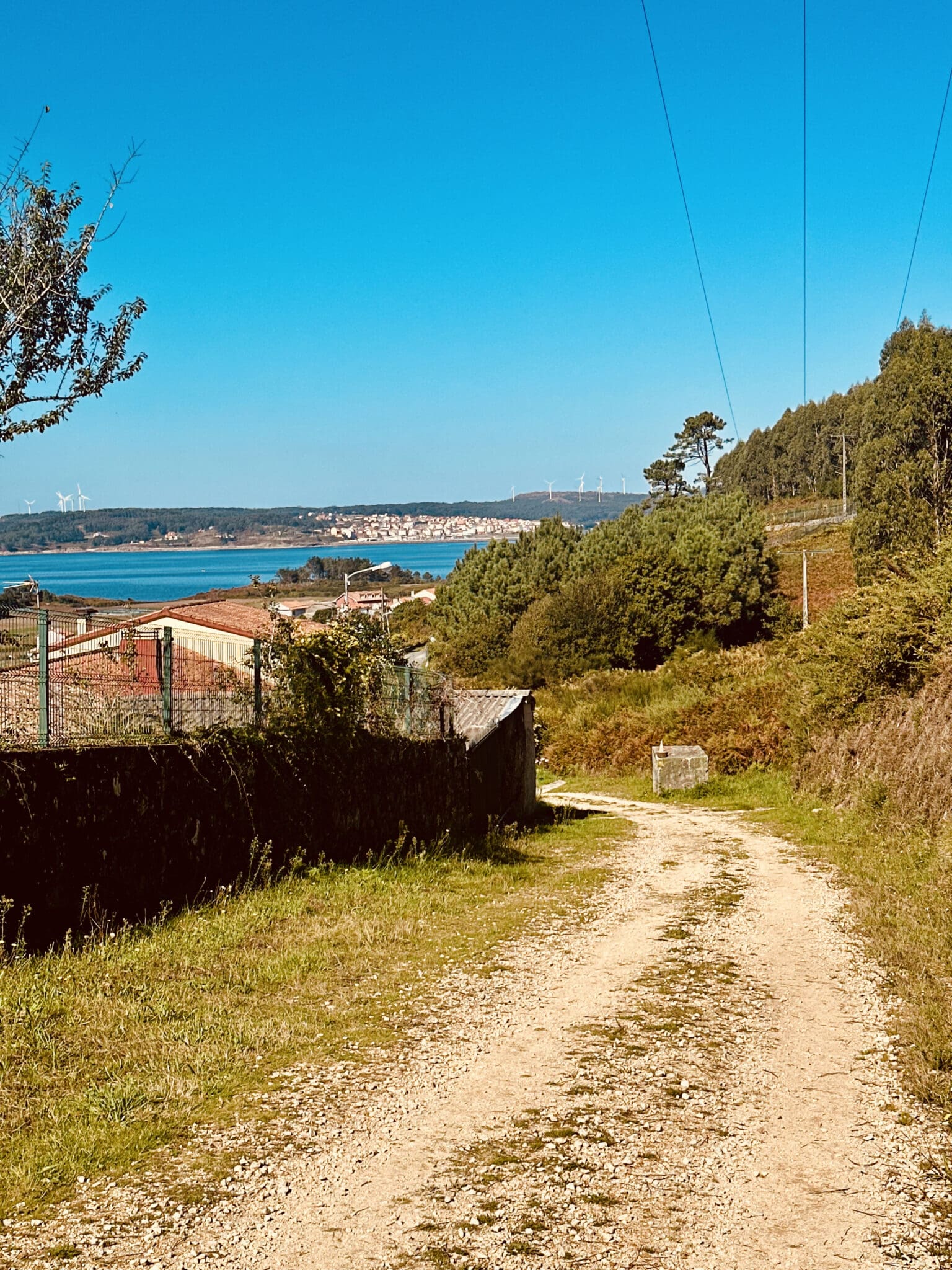

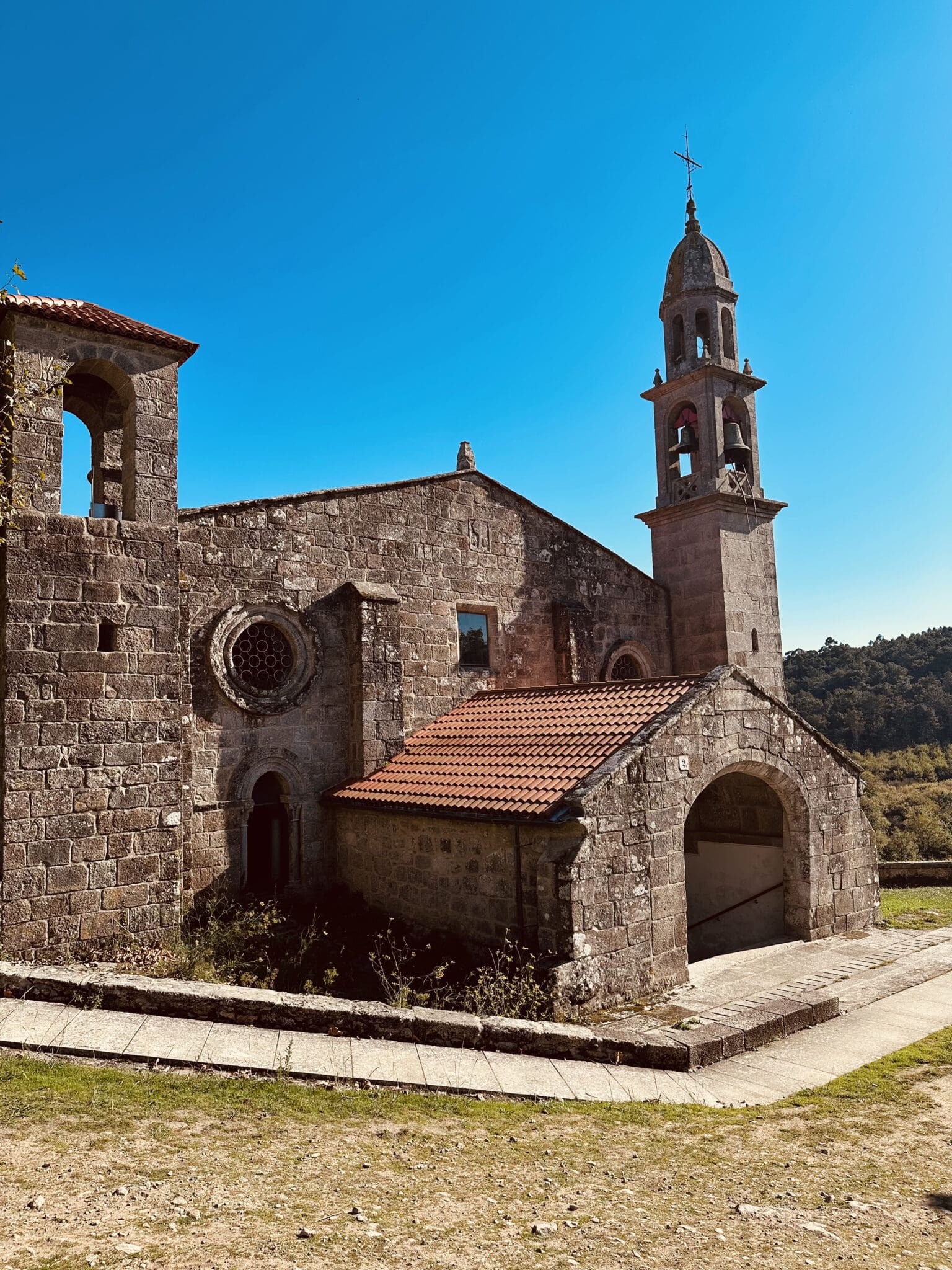
Even though you can see the sea, there’s still about 7 km more hiking to go before reaching Muxía. The path rolls up and down a few small hills, and a few kilometers before town, you’ll pass the 12th-century Monastery of San Julián de Moraime. We took a few minutes to explore it and were fascinated to learn that it was sacked and burned to the ground by Vikings in the 10th and 11th centuries. Funny, I’d never really connected the Vikings with Spain, but I guess their reach was far and wide. After that, it’s a gentle final descent before you walk along the wooden boardwalks leading right into Muxía.
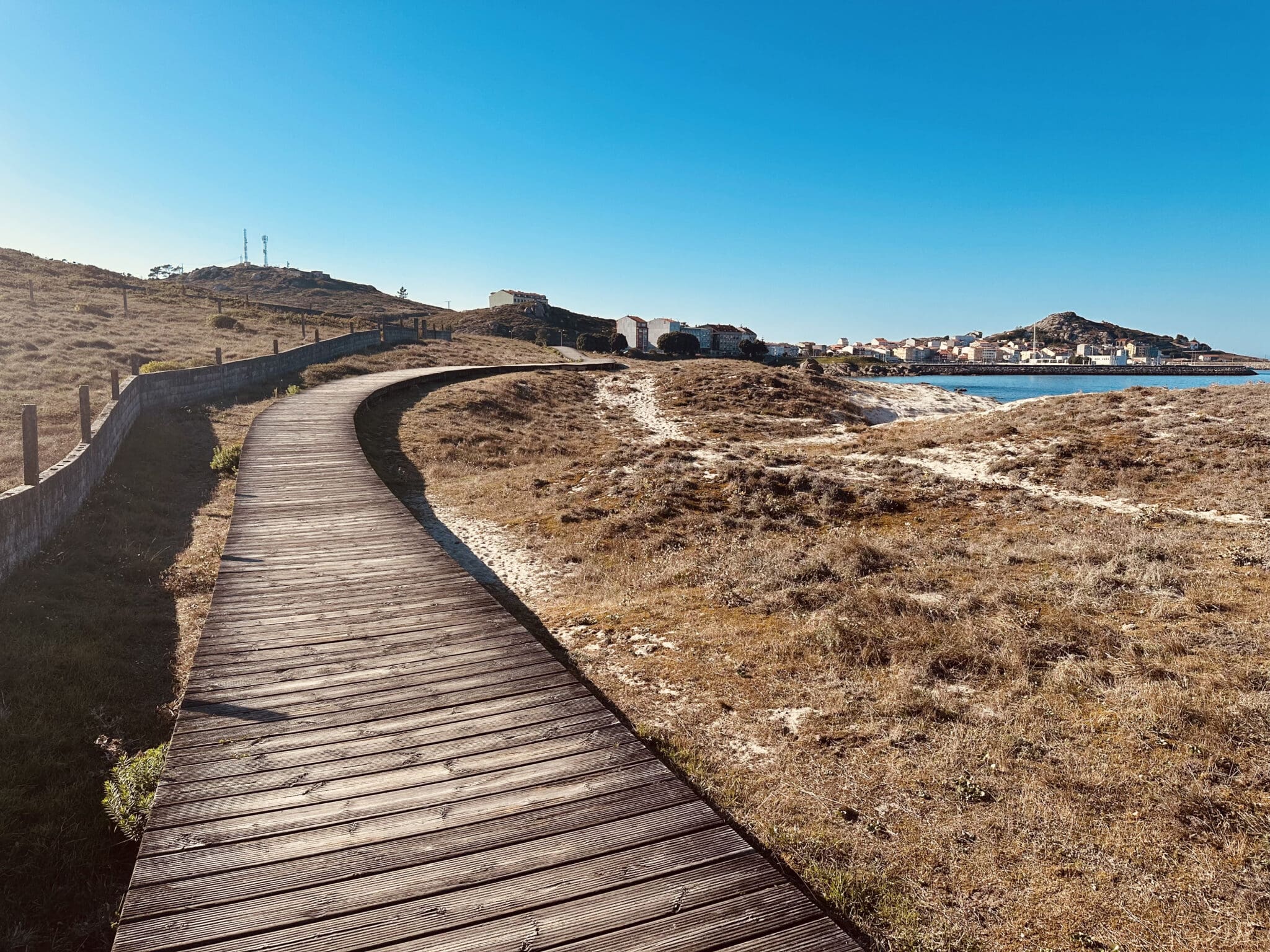
I absolutely love Muxía. It’s a little smaller and more relaxed than Finisterre, with a really calm, peaceful vibe.
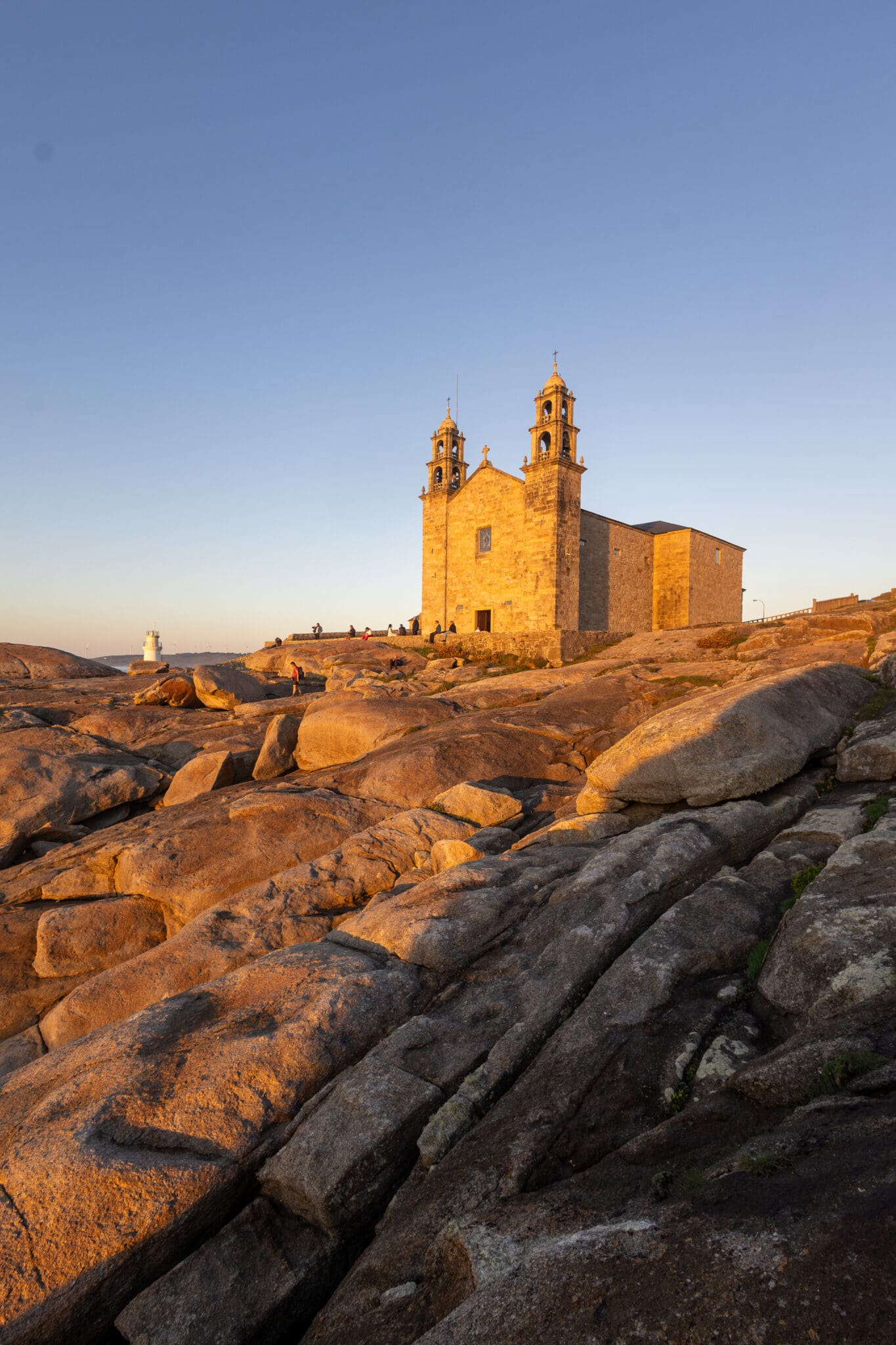
You have to visit the Church of Our Lady of the Boat, it’s the perfect place to end your Camino. The church is simply stunning, built right onto the rocks and looking straight out to sea. If you’ve seen the film The Way, this is where Tom scatters his son’s ashes. It used to only open for Mass, but when I visited in 2025, a wonderful new touch had been added: gentle choir music plays as you approach, making the place feel even more magical. The church stands on ancient holy ground, long before it became Christian, and it’s such a moving, reflective spot, gazing out over the wild Atlantic on the Costa da Morte, with nothing between you and Boston but open ocean.

There are plenty of places to stay in Muxía, including the municipal albergue, Albergue Arribada, and Albergue Bela, all clean and comfortable, if a bit on the functional side. There are also plenty of good places to eat. Down by the pier and in the little streets behind it, you’ll find cafés and restaurants serving some of the freshest seafood you’ll have on the Camino, grilled sardines, pulpo, scallops, and whatever came in from the boats that morning.
Finisterre Option – Cee
15 KM to Finisterre
So let’s backtrack to the roundabout at the Great Divide. This time, we’ll veer left and head toward Cee. The Camino follows the main road for about 300 meters before turning off onto a trail on the right. From here, you’re in for a lovely stretch of peaceful walking. For the next 12 kilometers or so, the path stays well away from traffic, winding through open countryside and quiet forest tracks. The only buildings you’ll pass are a couple of small chapels until you finally reach the outskirts of Cee.
From there, the trail begins a steep descent down from the plateau, with the Atlantic coming into view below, a stunning moment after so many inland days. Cee itself is a fine little seaside town, with plenty of cafés, shops, and a good handful of albergues to choose from. Many pilgrims stop here to grab a swim in the bay, or enjoy a plate of fresh seafood before continuing on toward Finisterre.
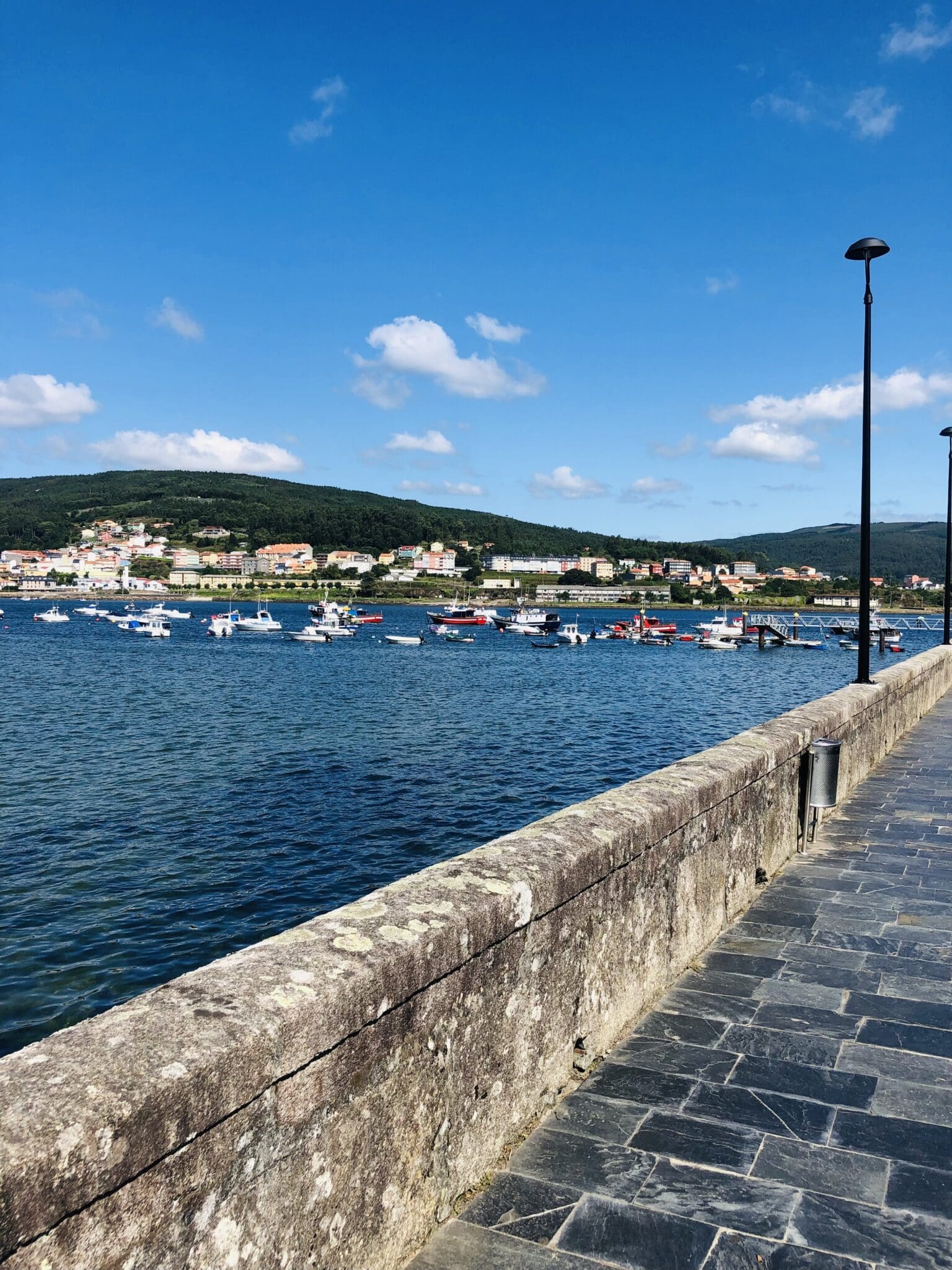
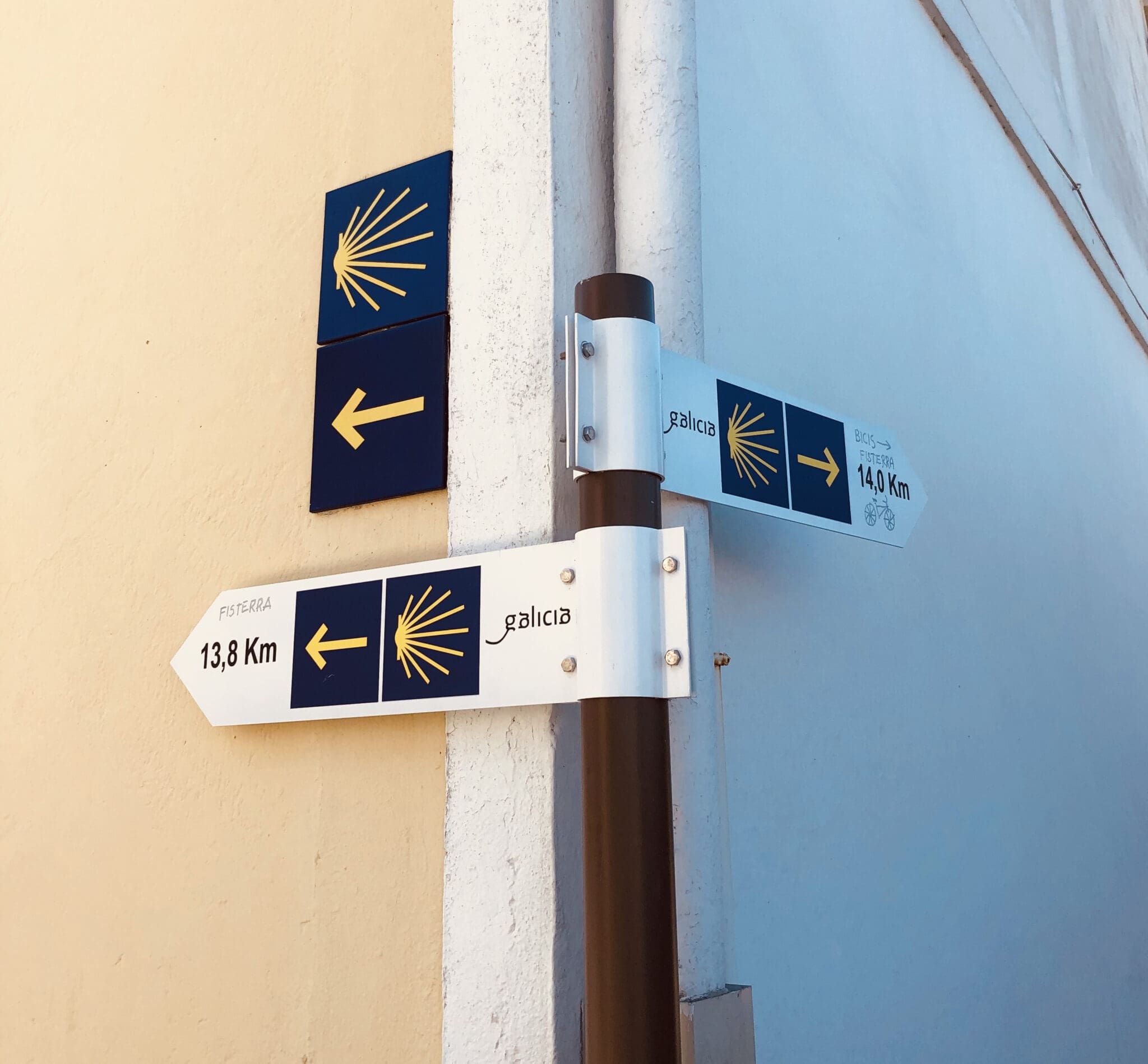
Leaving Cee, the Camino follows the curve of the coast toward Corcubión, a flat, easy walk along the waterfront with the sea right beside you. Corcubión is a lovely old fishing town with cobbled streets, stone houses, a small church, and a few good cafés for a quick stop.
After Corcubión, the trail climbs steadily through pine forest and quiet hillside paths. The views back over the bay are fantastic. You’ll pass a couple of tiny hamlets on the way and a very special donativo albergue in San Roque, simple, peaceful, and full of heart.
From there, the path begins a gentle descent back toward the coast. When you reach Sardiñeiro, the sea is once again right beside you. From here it’s an easy, beautiful walk along sandy tracks and small lanes all the way to Finisterre, with sea views almost the whole way.
Finisterre
0 KM to Finisterre
After another five kilometers or so, you’ll arrive in the small fishing town of Finisterre, or Fisterra in Galician. The name comes from the Latin Finis Terrae, meaning “end of the earth.” Long before Christianity, people came here to watch the sun sink into the ocean, believing it was the edge of the known world.
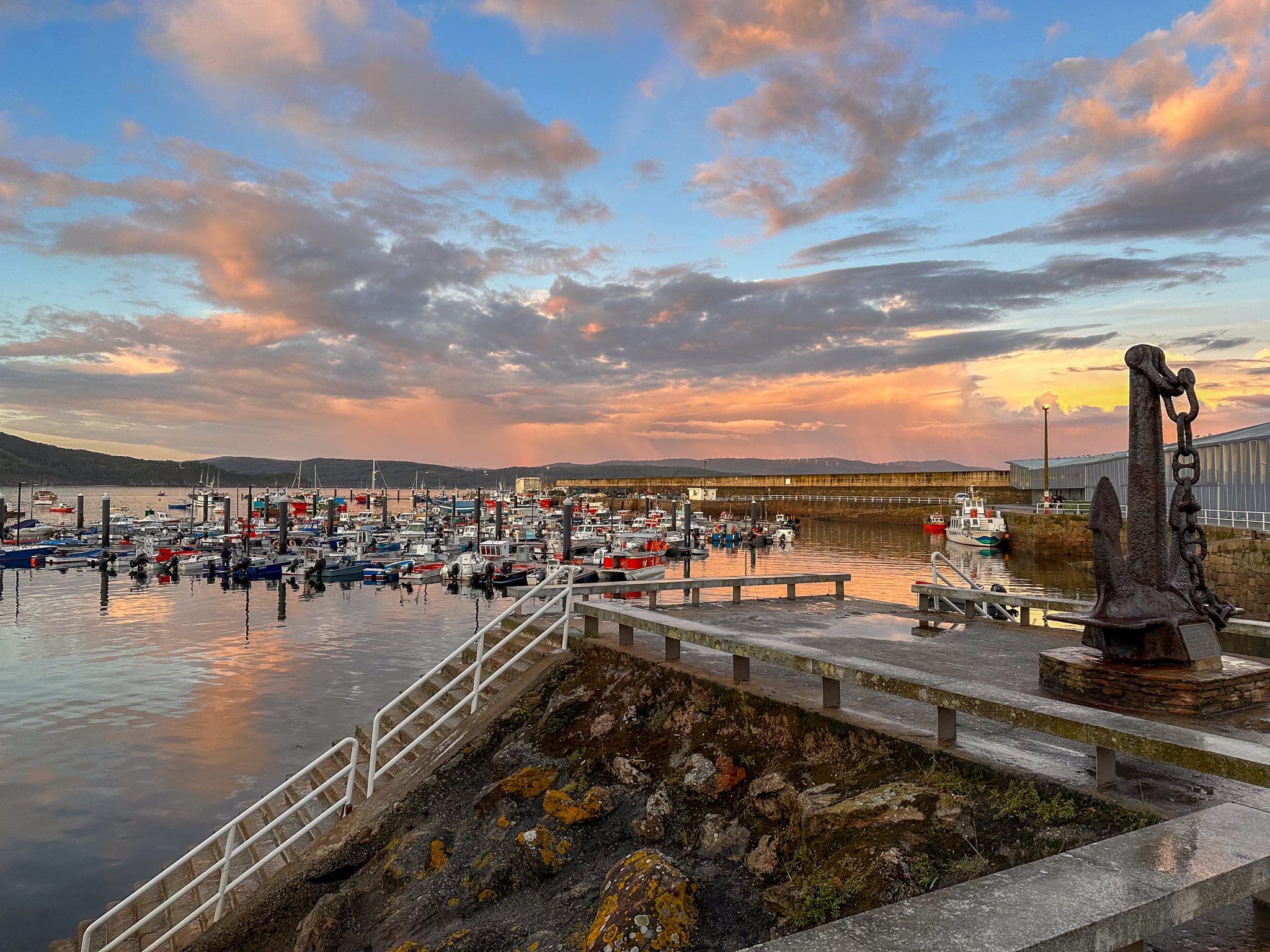

Like Muxía, Finisterre has plenty of places to stay. I really liked Albergue de Sonia, but there are loads of other good options around town, from simple pilgrim hostels to small hotels and guesthouses. From the center of Finisterre, it’s still about three kilometers to the 0 km marker at the lighthouse. It’s all uphill, but it’s worth every step; the views are incredible, especially if you catch the sunset. And if you have the budget, there’s a small hotel right at the lighthouse that would make a spectacular place to spend your final night on the Camino. (It’s expensive but not crazy expensive)


Whether you take the route to Muxía or Finisterre, I really recommend continuing on to walk the other; it’s about 30km between the two on the Camino path, and I really believe that it is the perfect way to complete your Camino. You can find a quick guide to that route here.
When your journey finally comes to an end and it’s time to say goodbye, you can catch a bus back to Santiago from either town with Monbus. They run a couple of times a day. Check the website for current schedules, and a little tip: book your ticket in advance, especially in high season, as these buses do sometimes sell out.
Finally, people often ask me about shorter Caminos, something they can do in about a week to get a taste of the experience. Most think of the Sarria to Santiago route, but I’d really recommend this one too, as the Camino Finisterre stands perfectly on its own as well. Some people make it a seven-day walk, taking three days to reach Finisterre, one day from Finisterre to Muxía, and then three more days to walk back to Santiago.


Thanks! I love those places. The walk between Muxia and Finisterre is also amazing! There is also now a Camino de Faros that goes from lighthouse to lighthouse along the coast!!! So many choices!
Thank you so much. I so want to do it, but not sure my knees will cooperate. I could take it super slow, have no time constraints to speak of.
This is awesome! I’m even more motivated and excited now!!!
I added Santiago to Finisterre and it was one part of the best experience for sure.