Section 6
Carrión de los Condes to León

From Carrión de los Condes to León, it is about 95 kilometres of classic Meseta walking, wide-open farmland, straight gravel tracks, and enormous skies that seem to go on forever. This stretch is definitely the flat part of the flat part of the Camino, but the vast sense of space gives you plenty of room to lose yourself in your thoughts. You will tackle the infamous 17 km stretch with no services, pass the halfway point of the Camino Francés just before the historic town of Sahagún, and tackle a brilliant day’s hike along an ancient, isolated Roman road if you’re up for the challenge. And at the end of it all, the magnificent royal city of León awaits, home to another breathtaking Gothic cathedral.

Carrión de los Condes
405 km (252 miles) to Santiago
Leave Carrión, cross the river, pass the Monasterio de San Zoilo and continue west. From here, it’s about 17 km to Calzadilla de la Cueza, the longest stretch of the Camino without passing through a village. The route is flat and straight, following a gravel track across open farmland, but honestly, it’s not nearly as bad as its reputation suggests. There’s very little shade, but just start early to avoid the worst of the heat. There are also usually a few food trucks along the way, but still carry plenty of water just in case.
Walking this stretch gives you plenty of time to think, and one thing I noticed along the way was how every Camino sign here carries the name of the region: Castilla y León. But for the first half of the walk, someone had scratched out “León.” Then, like there’s an invisible line drawn across the land, it flips and “Castilla” is the one crossed out instead. An unhappy marriage, each side wishing it weren’t joined to the other.
It got me thinking about how Spain isn’t really one country at all. It’s more a patchwork of old Iberian kingdoms stitched together under one state, and each region still holds onto its own history and identity. If that fascinates you too, pick up Giles Tremlett’s España: A Brief History of Spain. The book opens with him watching the World Cup, noticing that Spain’s national anthem has no lyrics, just music. It’s one of the only anthems in the world without words, because the country’s never been able to agree on any. Those crossed-out signs say it all.
Calzadilla de la Cueza
387 km (240 miles) to Santiago
After the long, empty stretch, Calzadilla de la Cueza materialises out of the heat haze like a mirage, a sun-baked little village so quiet you half-expect a tumbleweed to come rolling down the main street. There’s something almost cinematic about it, like something straight out of a Sergio Leone western. There’s a melancholy to these little villages and their splendid isolation that I have a real grá for.


You’ll almost certainly stop here for a Coke or a cold beer, and if you’re not pushing on, there are a handful of good albergues. My pick is Camino Real, the first one you reach as you enter the village on the left; they even have a little pool waiting out back.
Ledigos
382 km (237 miles) to Santiago
The next stretch to Ledigos is about 6 km. Just outside Calzadilla de la Cueza, a large stone marker lays out a few different route options. The alternative paths are quieter and more remote, climbing into the hills and away from the road before rejoining near Ledigos. The leftmost option skips both Ledigos and Terradillos de los Templarios altogether, continuing straight to Moratinos, and for once, the alternative route is actually the faster option.
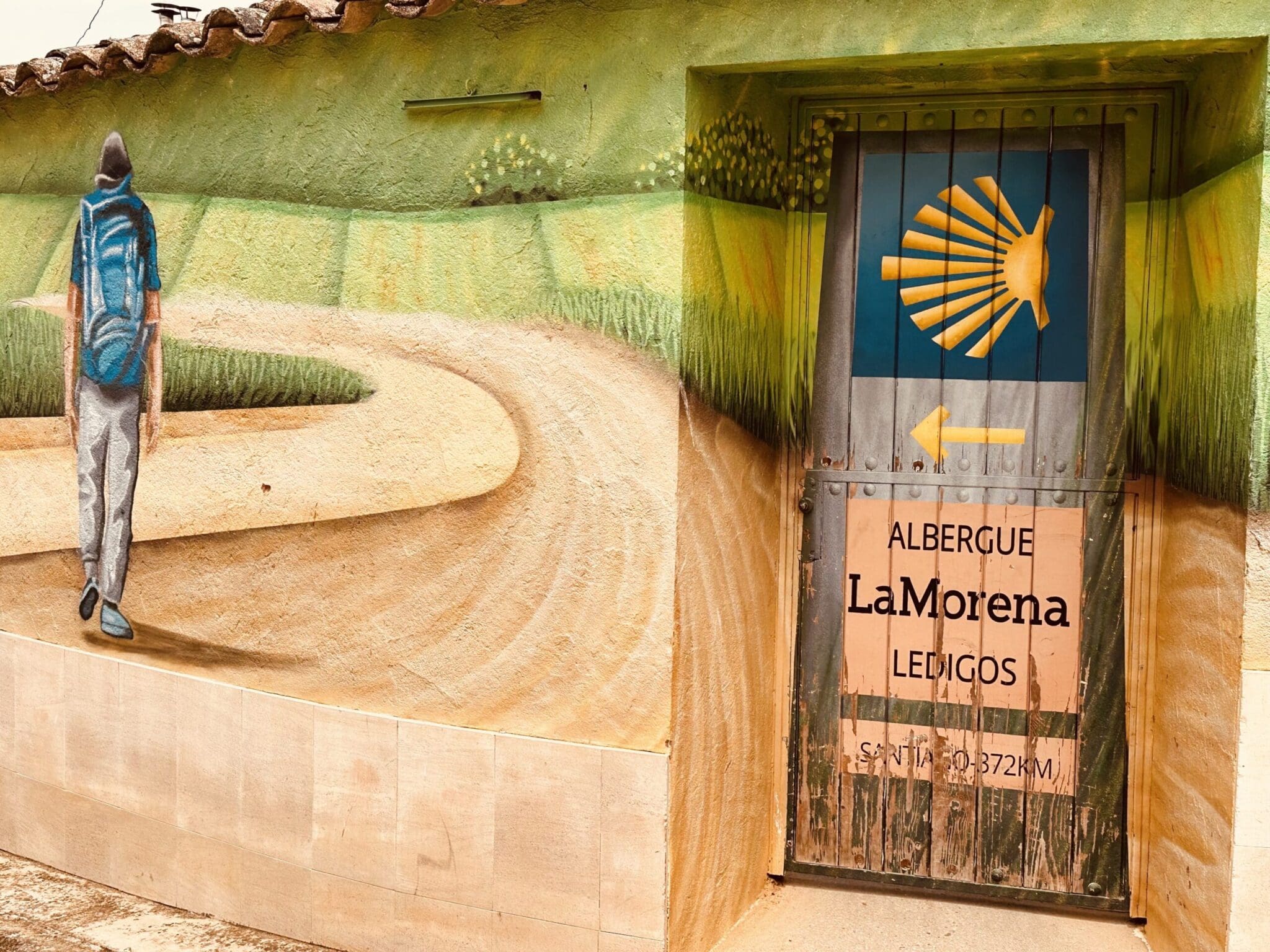
The village also has a great albergue, La Morena, a real little oasis. It is in a lovingly restored 300-year-old building that feels surprisingly modern and comfortable inside, providing a little more luxury than your average pilgrim stop.

Ledigos is a tiny village surrounded by wheat fields, but it’s worth pausing to see the 17th-century Iglesia de Santiago, a brick church perched on a hill overlooking the countryside. What makes it interesting are the statues that depict Saint James in all three of his traditional forms: the pilgrim, the apostle, and the Moor-slayer.
Terradillos de los Templarios
378 km (235 miles) to Santiago
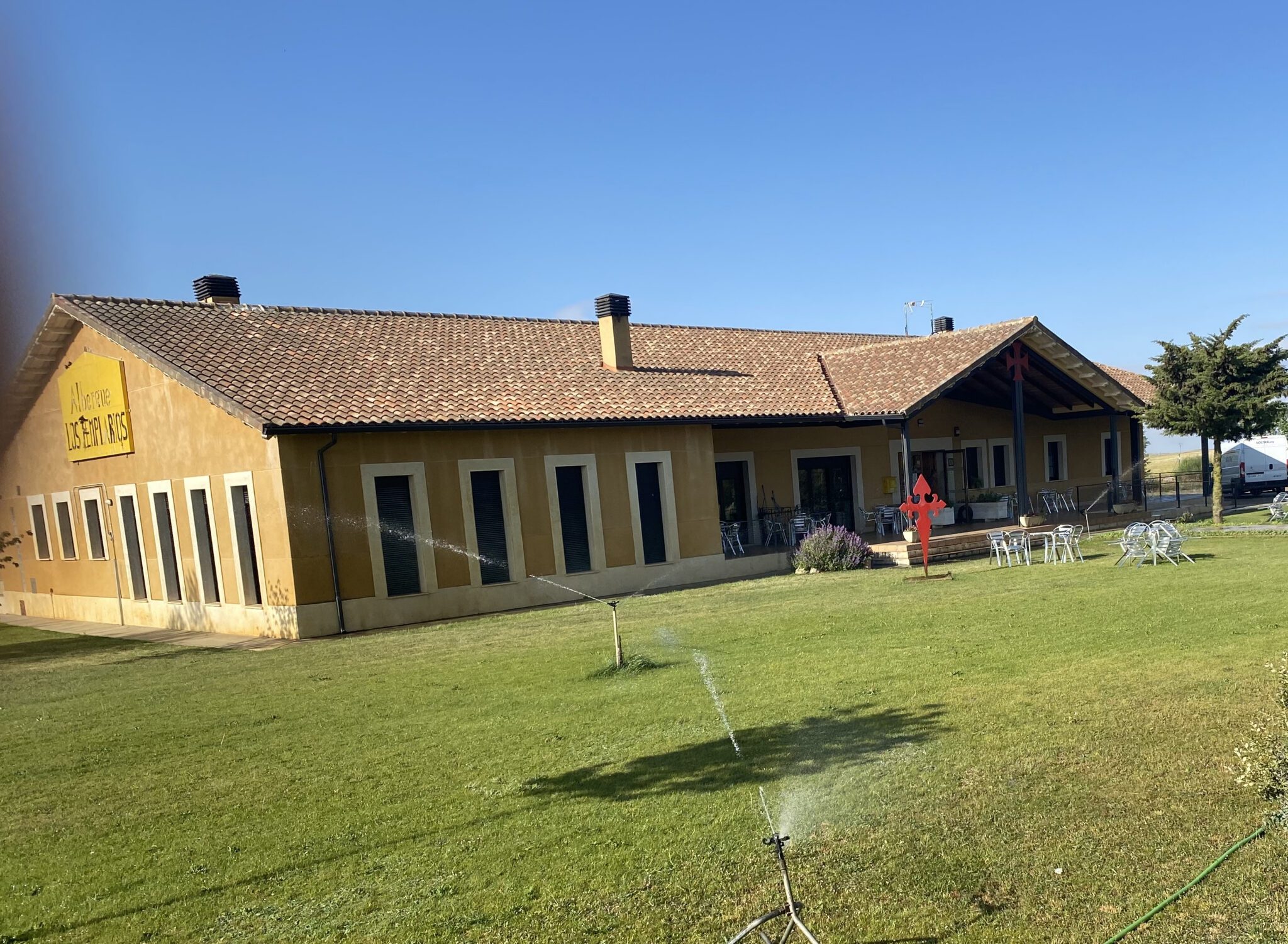
Just 2 km beyond Ledigos lies Terradillos de los Templarios, a small village with an intriguing past. The Knights Templar established themselves here in the 12th century to protect pilgrims on the road, and the name, meaning ‘small lands of the Templars’, is a reminder of the days when they decided who passed and who didn’t.
There are a couple of albergues in the village. On my last visit, I stayed at Albergue Jacques de Molay, named after the last Grand Master of the Templars.
The Knights Templar, you know, the famous Crusader knights in white cloaks with a bold red cross stitched across the chest, were officially known as the Poor Fellow-Soldiers of Christ and of the Temple of Solomon. They were founded in 1119 with a simple mission: to protect pilgrims travelling to Jerusalem in the wake of the First Crusade.
In reality, they became the medieval world’s most feared warrior monks. Part monastery, part army, part early multinational corporation with swords. They were brilliant organisers. Pilgrims could deposit money at one Templar house, receive a note, and withdraw it at another, meaning they didn’t have to carry cash on the road. Essentially, the world’s first traveller’s cheque, making the Templars unlikely pioneers of international banking. Not bad for men who had taken vows of poverty.
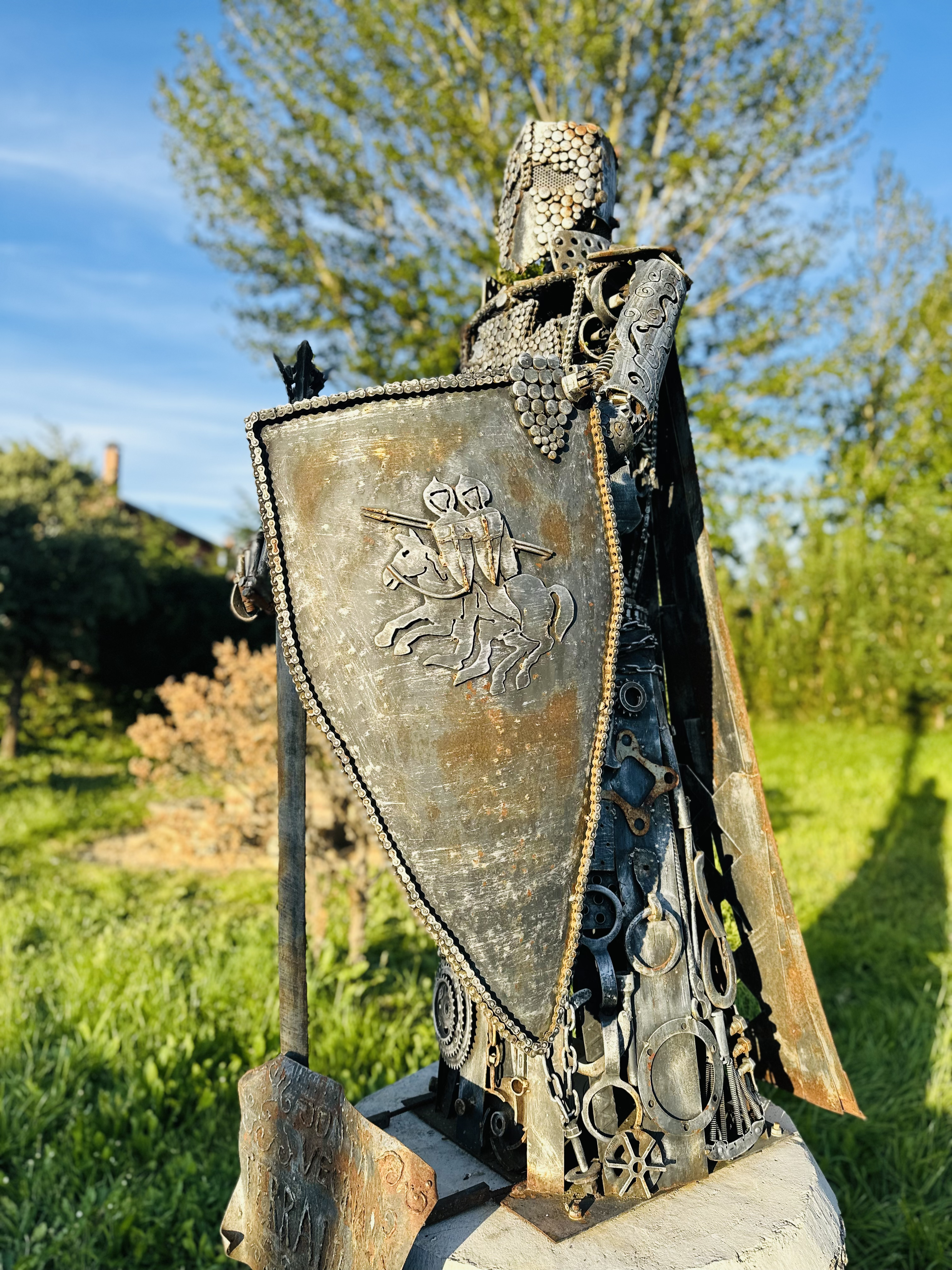
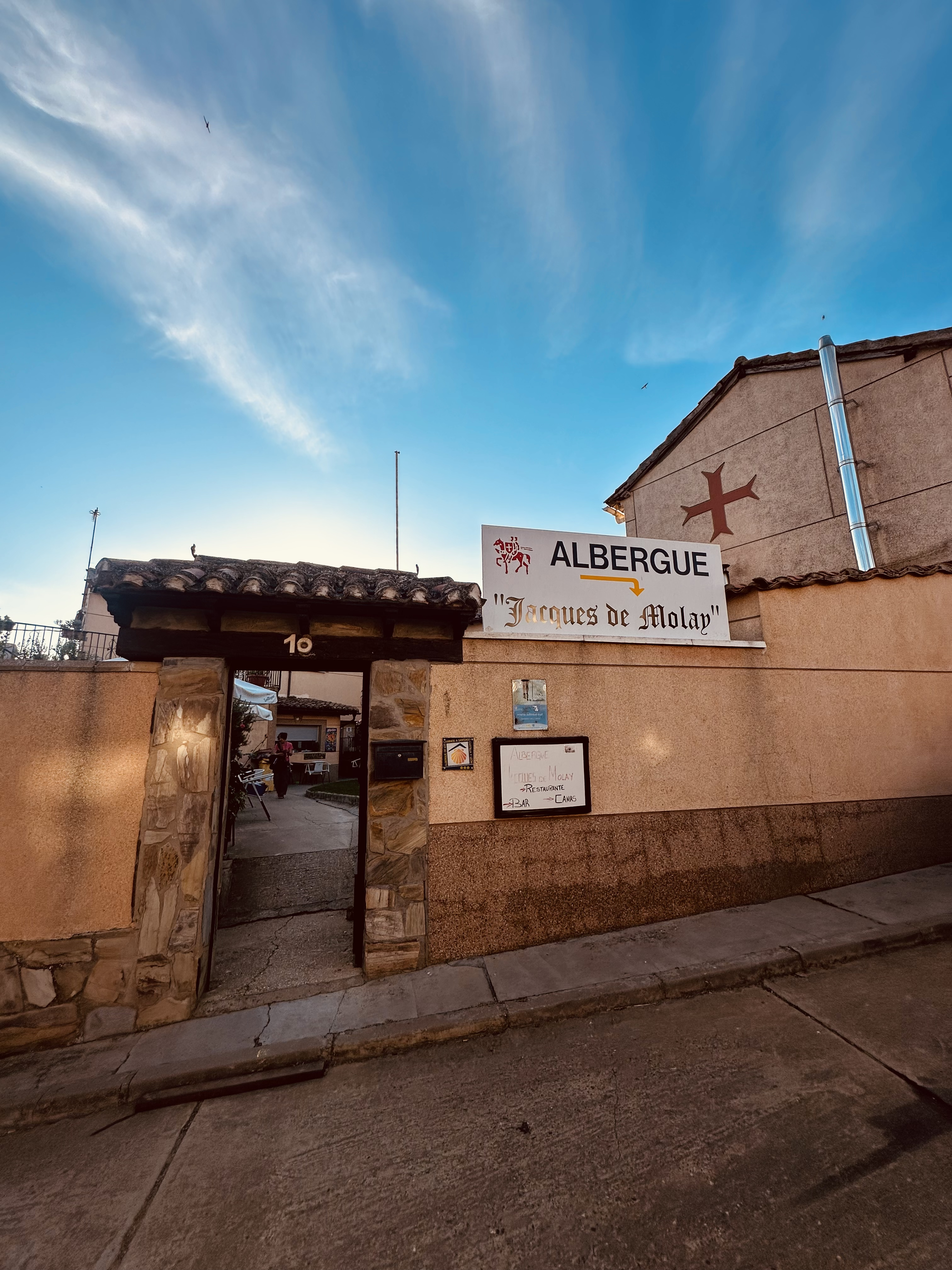
They built fortresses, fought in major Crusader battles, and accumulated vast wealth and land across Europe. And it wasn’t just pilgrims heading to Jerusalem that they protected. Those walking the Camino to Santiago were under their watch, too.
But success made the Templars powerful, and powerful men attract enemies. In 1307, the King of France decided he wanted their wealth, and on Friday the 13th of that year, he had many of them rounded up and arrested, helping to give the date its unlucky reputation that still lingers today. Accused of heresy, interrogators tortured many into wild confessions. The order dissolved within a few years, and they burned their Grand Master at the stake.

Moratinos
368 km (229 miles) to Santiago
After a few more kilometres, you’ll arrive in Moratinos. In the middle of the village stands a curious sight: a cluster of small grassy hills with round doorways set into the earth. They are old wine cellars, but they look, for all the world, like something out of a Hobbit movie or, for any British readers with kids or grandkids, the set of the Teletubbies.


There is also a fabulous restaurant, Bodega Restaurante El Castillo de Moratinos, built into the hillside, serving proper, authentic local food in one of the underground cellars. It is often missed by pilgrims, but you know it is good when it is packed with locals. Definitely worth a stop.
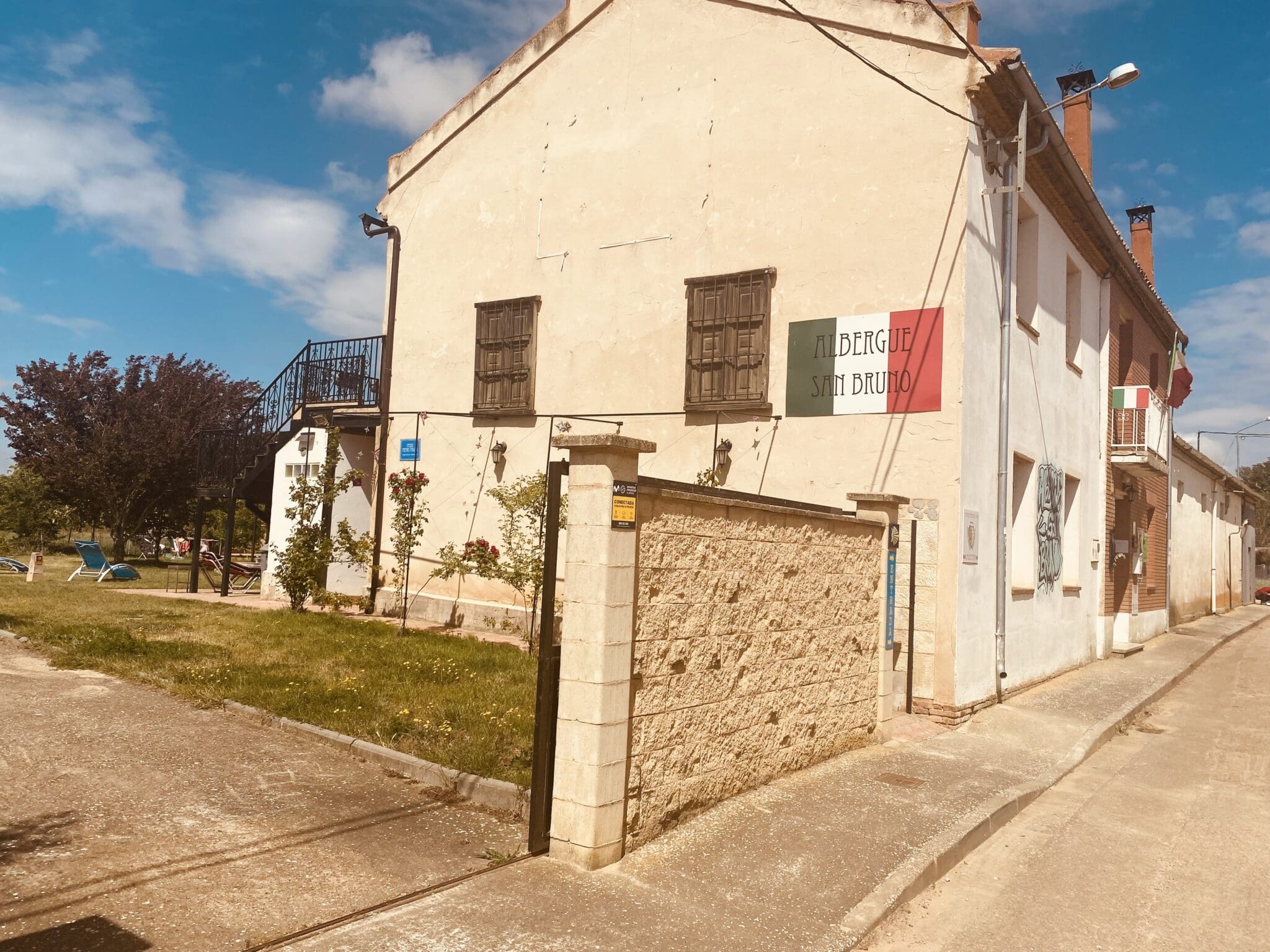
Moratinos has two albergues. The first, Hostal Moratinos, is just on your left as you enter the village, a fun spot with a good menu. The second, Hospital San Bruno, sits at the far end of town, about 100 metres off the Camino as you’re leaving, marked by a large Italian flag painted on the wall. There’s a lovely garden with sun loungers and a foot-soaking spot, and the hospitalero Pietro serves outstanding Italian food.

San Nicolás del Real Camino
368 km (229 miles) to Santiago
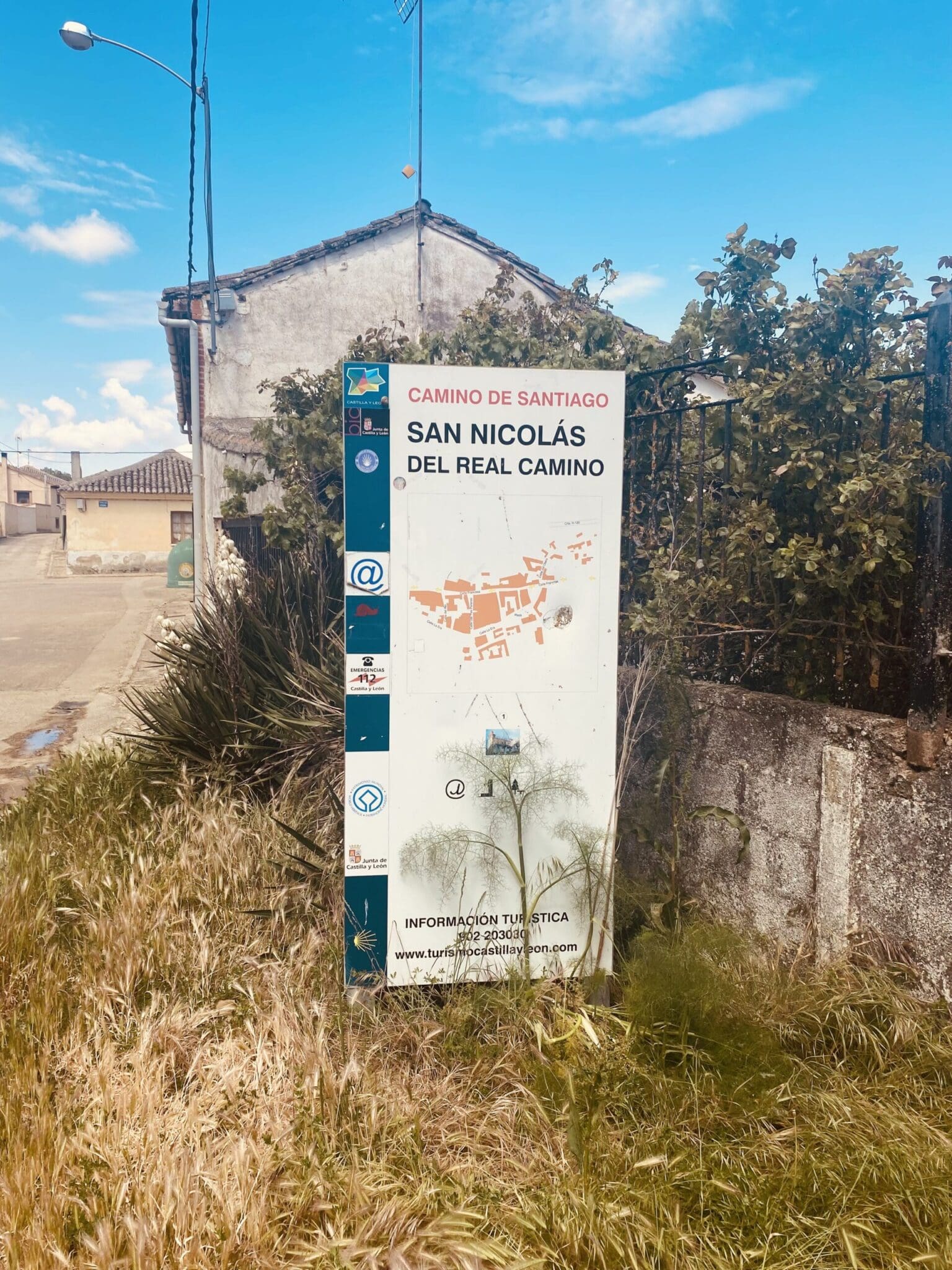
From Moratinos to San Nicolás del Camino is about 4 km on a flat dirt path beside the road, an easy, gentle stroll. San Nicolás itself is tiny, basically a handful of houses.
But don’t pass through without visiting Albergue Laganares, run by Pasquale and Daniela, a super-friendly Italian couple who make you feel as if you have just walked into their home. The food is amazing, more proper Italian cooking with loads of healthy options, and the albergue is modern and bright with a lovely little garden out the back.
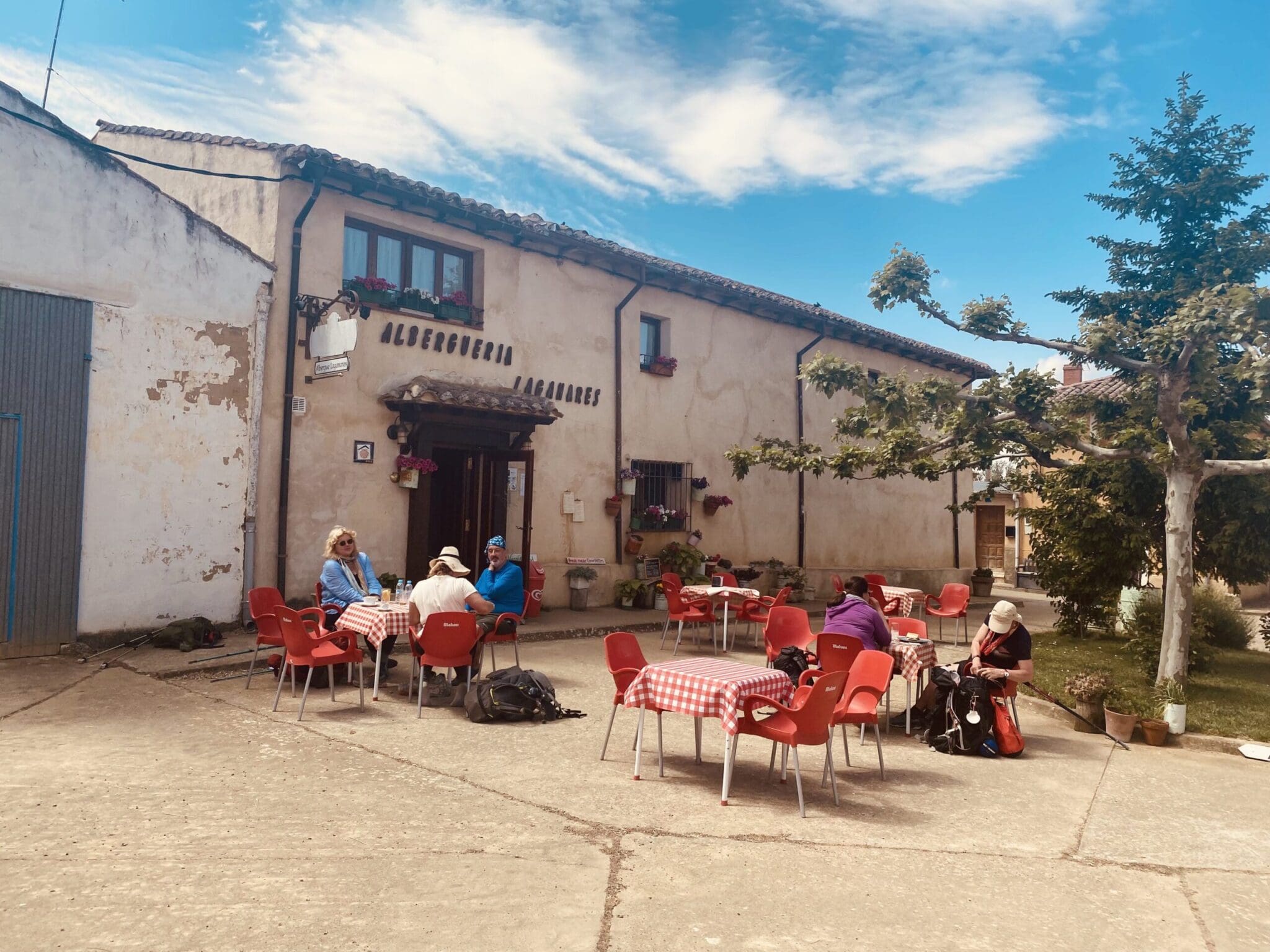
It is one of the nicest and most relaxed stops on the whole Camino. Even if you are not staying the night, it is well worth bookmarking for breakfast or lunch.
Sahagún
365 km (223 miles) to Santiago
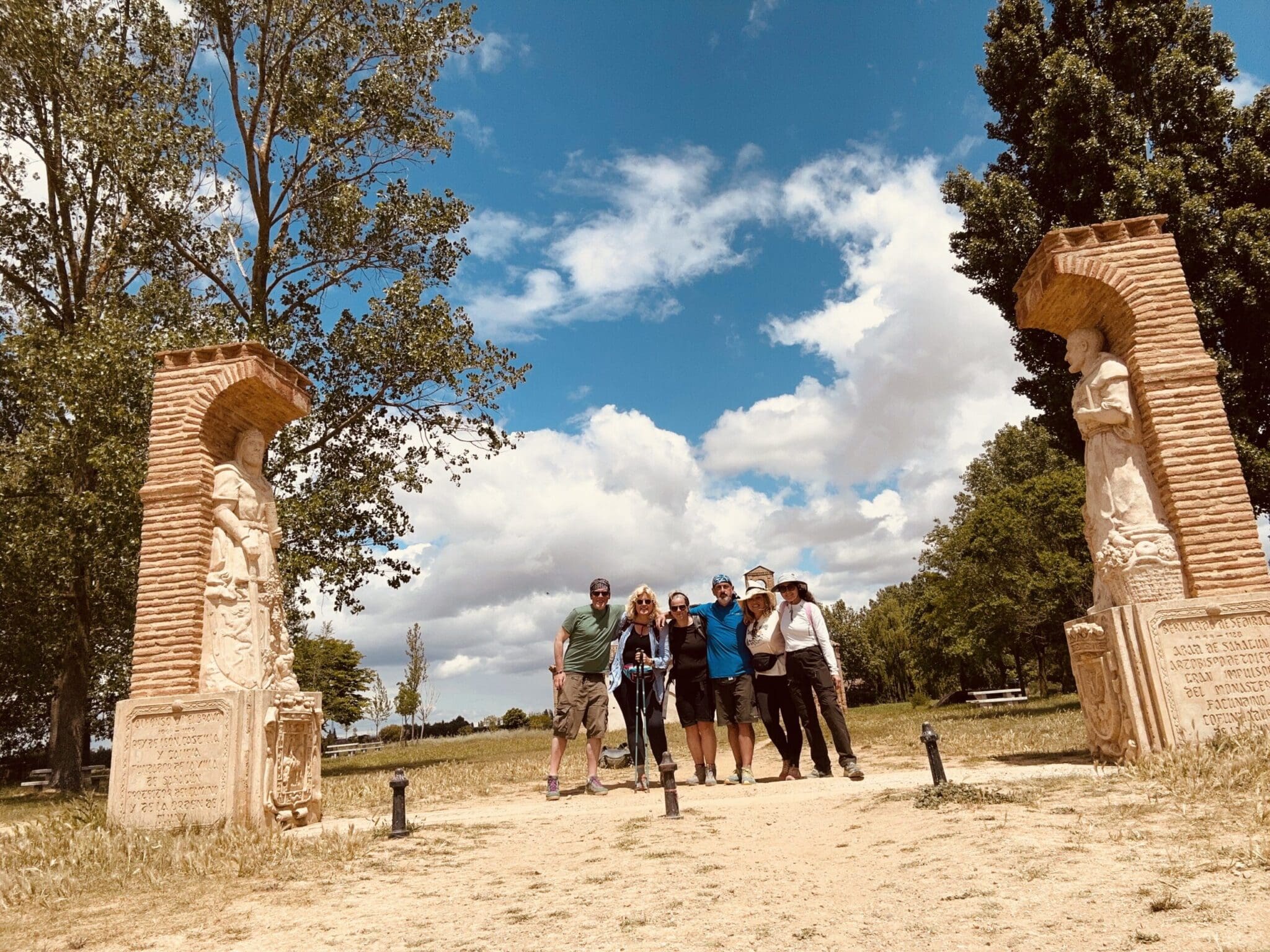
The walk from San Nicolás del Camino to Sahagún is about 8 km, flat and easy, mostly through open farmland. Just over halfway, you’ll come to The Halfway Arch, a monument marking the geographical halfway point of the Camino Francés. A nice little milestone, so give yourself a quick pat on the back. One small note: it is not strictly the true halfway mark if you started in Saint-Jean. The distance is measured from Roncesvalles, not Saint-Jean. Roncesvalles is about 24 km into the walk, so if you started in Saint-Jean, you will have passed the real halfway point roughly 12 km before the stone suggests.
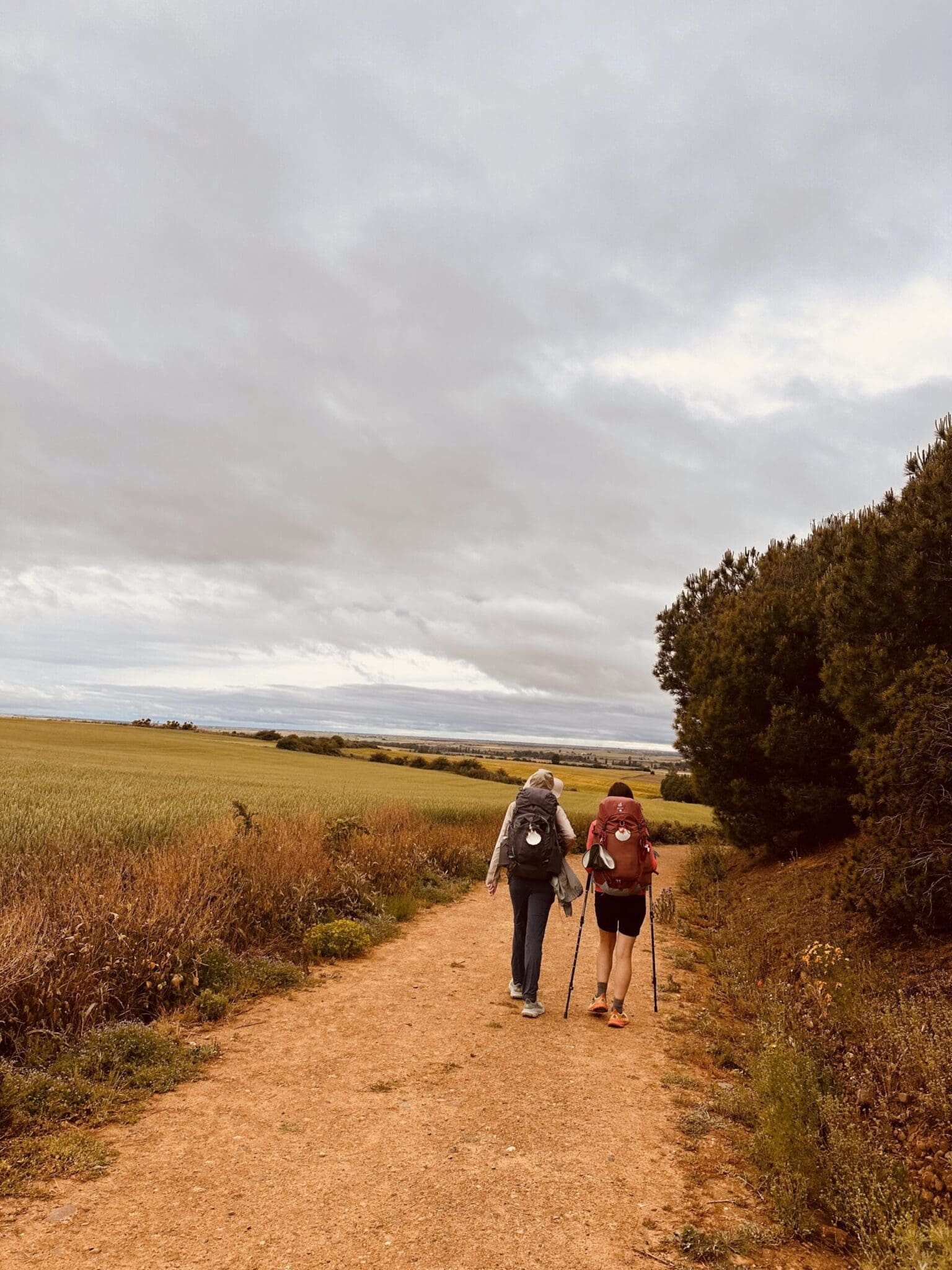

Sahagún is a proper town, the biggest you’ll pass on the Meseta. There are plenty of shops, bars, cafés, and places to restock.
As you enter Sahagún, you’ll pass the town’s historic bullring, the Plaza de Toros. During the Fiestas de San Juan de Sahagún (12–17 June), the town hosts one of the biggest traditional bullfighting festivals in this part of Spain after Pamplona. Expect daily bull runs through the streets at around 9 am, followed by evening bullfights in the Plaza de Toros. If you’re planning your Camino for June, it’s well worth timing your visit to catch the festival.


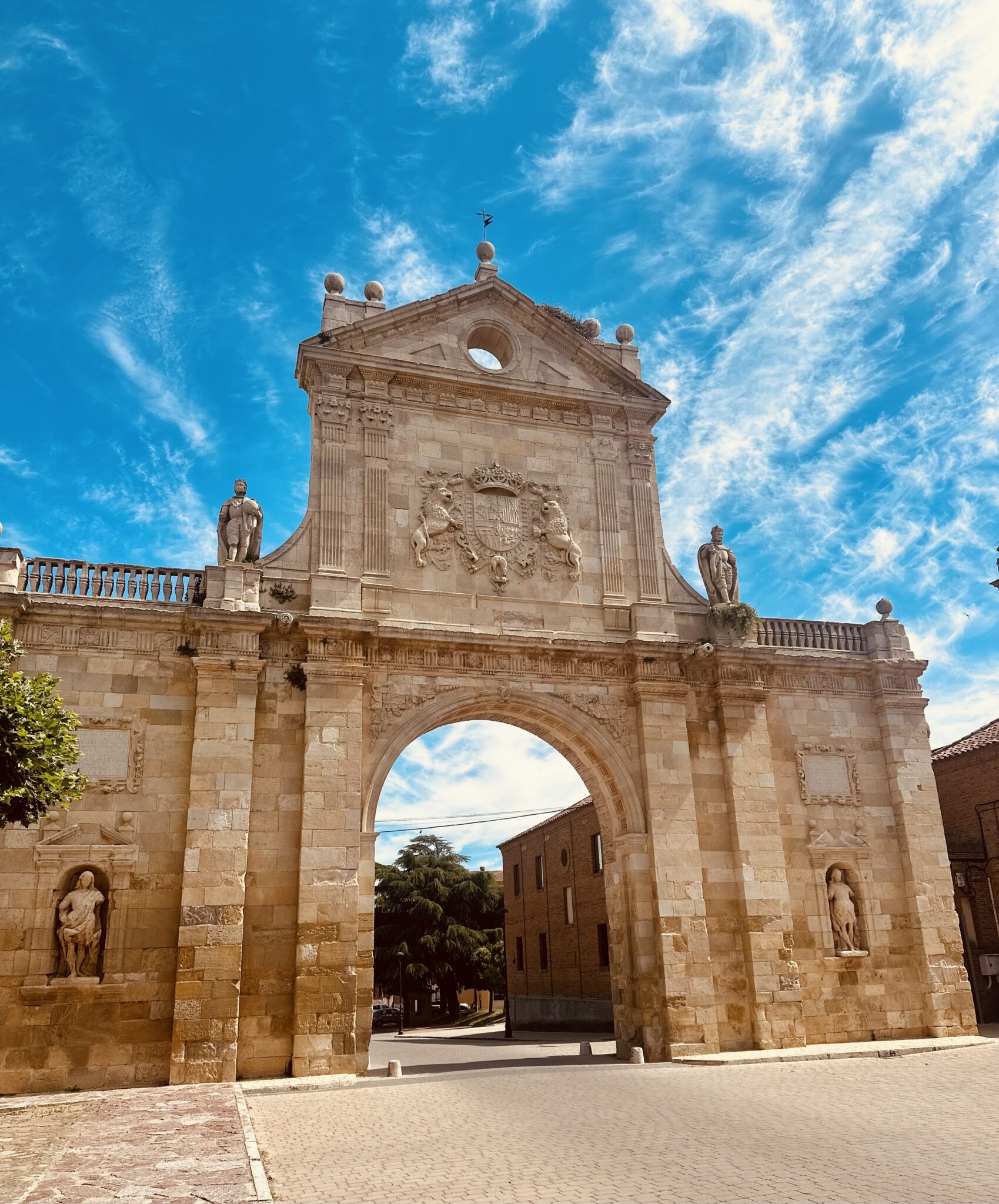
What makes Sahagún stand out is its Mudéjar architecture, a blend of Christian and Moorish building styles that gives the town a look unlike anywhere else on the Camino. A quiet reminder that this road has always passed through a Spain shaped by more than one culture. Instead of grey stone, the churches here use warm reddish brick, creating a striking effect. Seek the churches of San Tirso and San Lorenzo.
You can also pick up a Halfway Certificate here in Sahagún. It’s a nice little souvenir. Just visit the Santuario de la Peregrina, a former Franciscan monastery about a 10-minute walk from the town centre. Pay the modest €3 entry fee, and you’ll receive your Halfway Certificate as part of your visit.
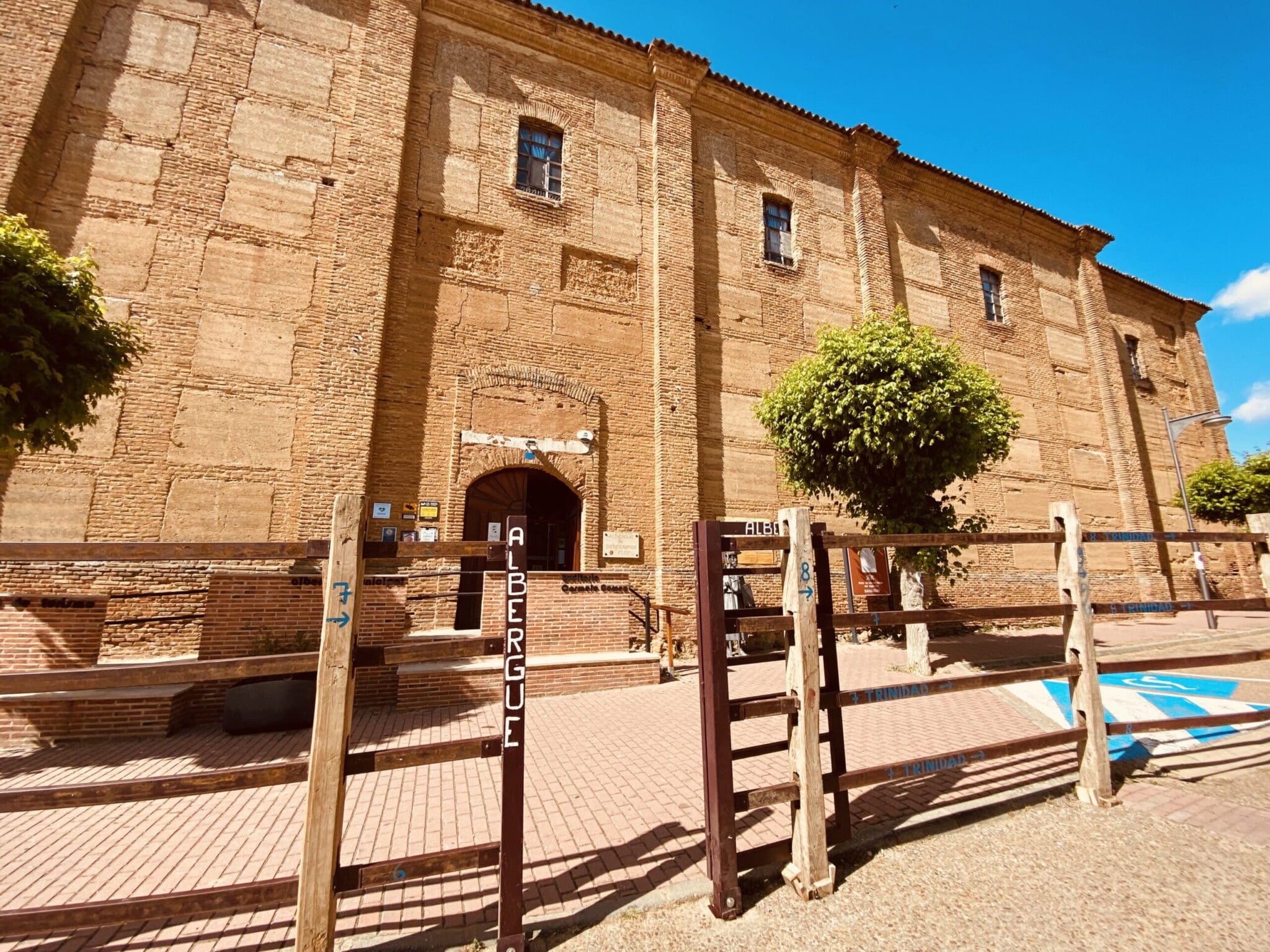
There are loads of albergues to choose from in Sahagún. I really like the parochial Albergue de la Santa Cruz. Originally part of the Benedictine nuns’ monastery, now run by the Marist Fathers. You feel the warmth of Christian hospitality in every small gesture here. They offer a pilgrim Mass and blessing and a community dinner. Priest Matteo and the team who look after the albergue are incredibly welcoming.
There is also a large municipal Albergue de Peregrinos de Cluny, located inside a converted church. On the ground floor, there is a community hall, and when we stayed, a local school was rehearsing a musical. We grabbed a spot at the back and lost ourselves in the music for an afternoon.
Bercianos del Real Camino
351 km (218 miles) to Santiago
After Sahagún, you face another choice. The Camino splits into two paths: the official path, or the Vía Trajana, named in honour of the Roman Emperor Trajan.
Let’s start with the official route, which stays close to the road and passes through some small villages. The path is mostly flat and easy, with food, water, and accommodation readily available along the way. A good choice if you want a simple, easy day of walking.
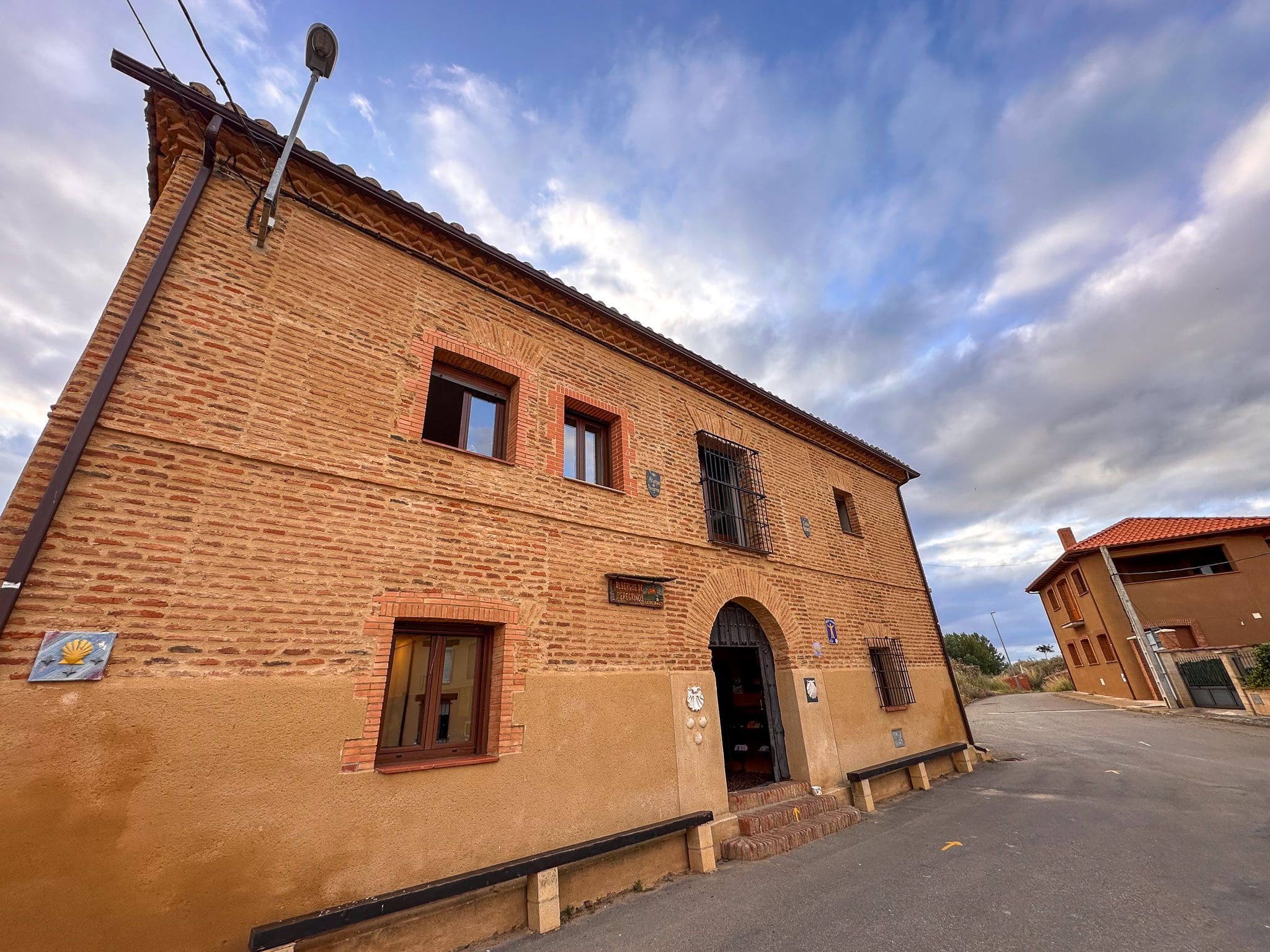

Just before Bercianos del Real Camino, there is a well-run, modern mega albergue, Albergue La Perala and in the village itself, there is a wonderful donativo albergue, Albergue Parroquial Casa Rectora. Volunteers operate the albergue, which occupies an old rectory within a peaceful garden. It is simple and quiet, with a genuinely warm and welcoming feel. Shared meals, pilgrim prayers, and a real sense of community.
El Burgo Ranero
346 km (215 miles) to Santiago
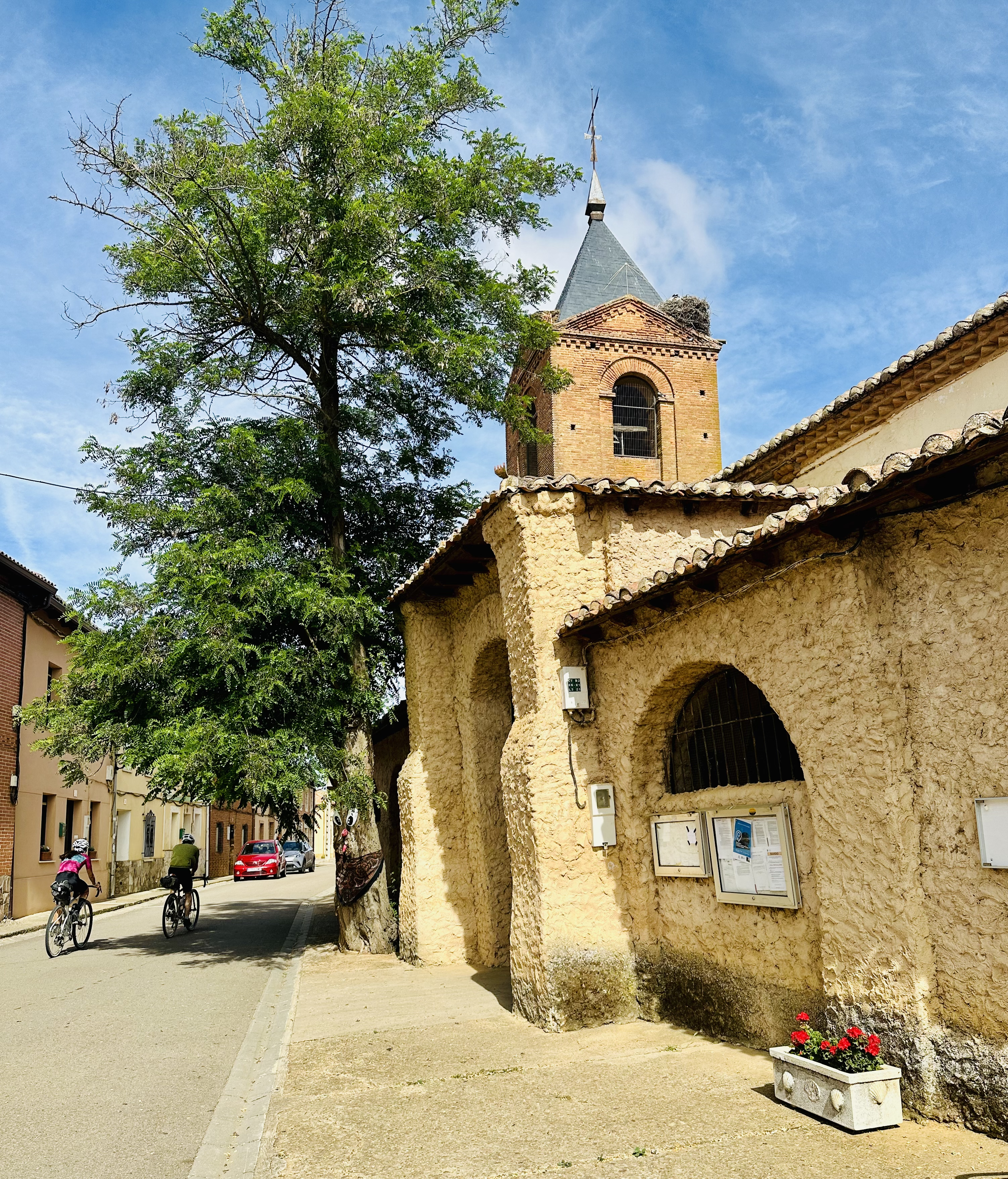
It’s another 7km to El Burgo, another small village. El Burgo has a few fine cafes, all advertising their smoothies for some reason. There are a few albergues in the village, including a fine donativo. Keep an eye out for the storks on the church tower. If you’re walking in late May, you might spot the chicks chirping for food.
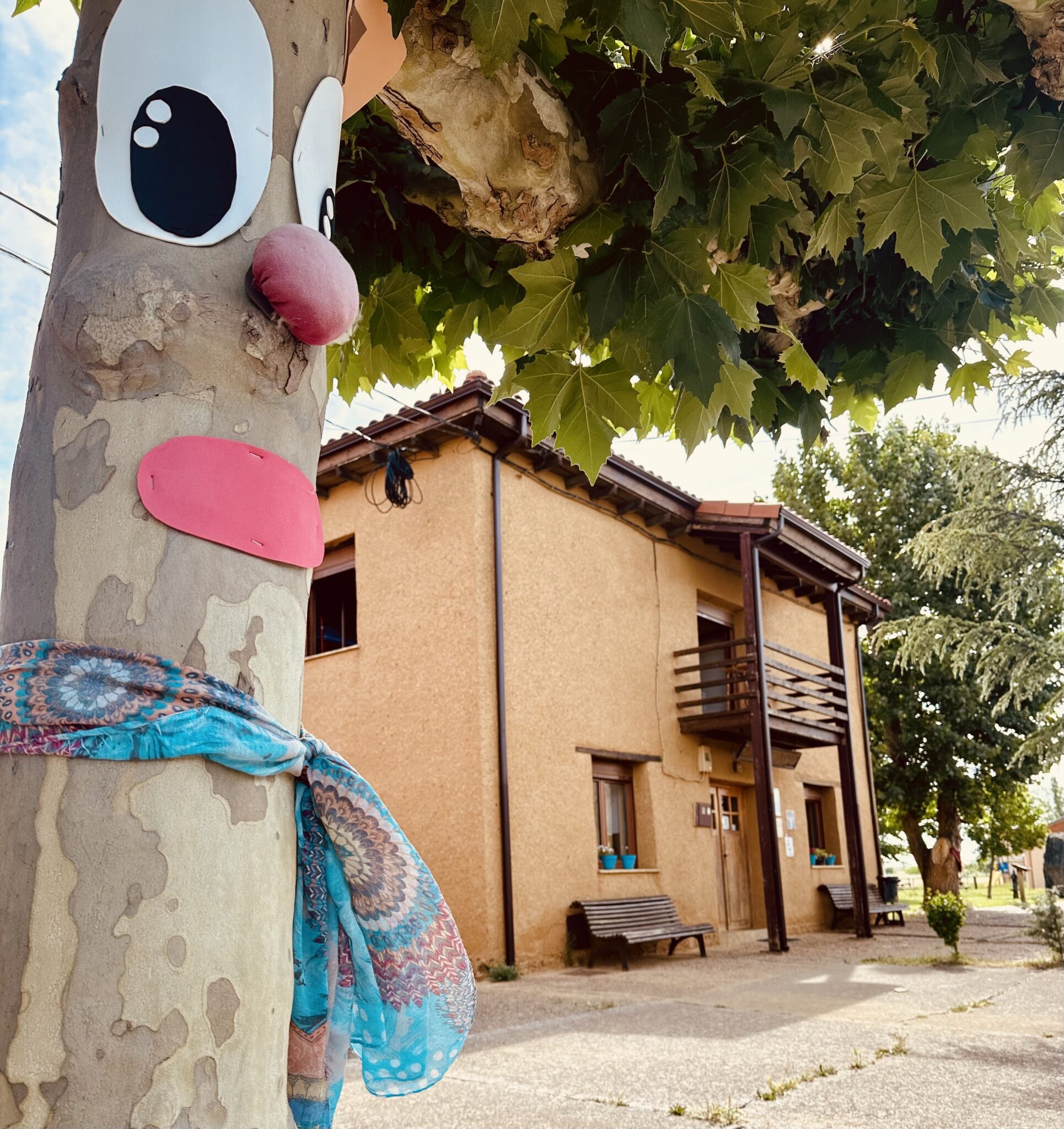
From El Burgo Ranero, it’s about 13 km farther to Reliegos along a straight, flat dirt track that runs alongside the road. Trees have been planted along the entire path, providing some welcome shade, but it’s still a bit of a slog, one of those stretches that explains why some people aren’t big fans of the Meseta.
Calzada de Coto
360 km (224 miles) to Santiago
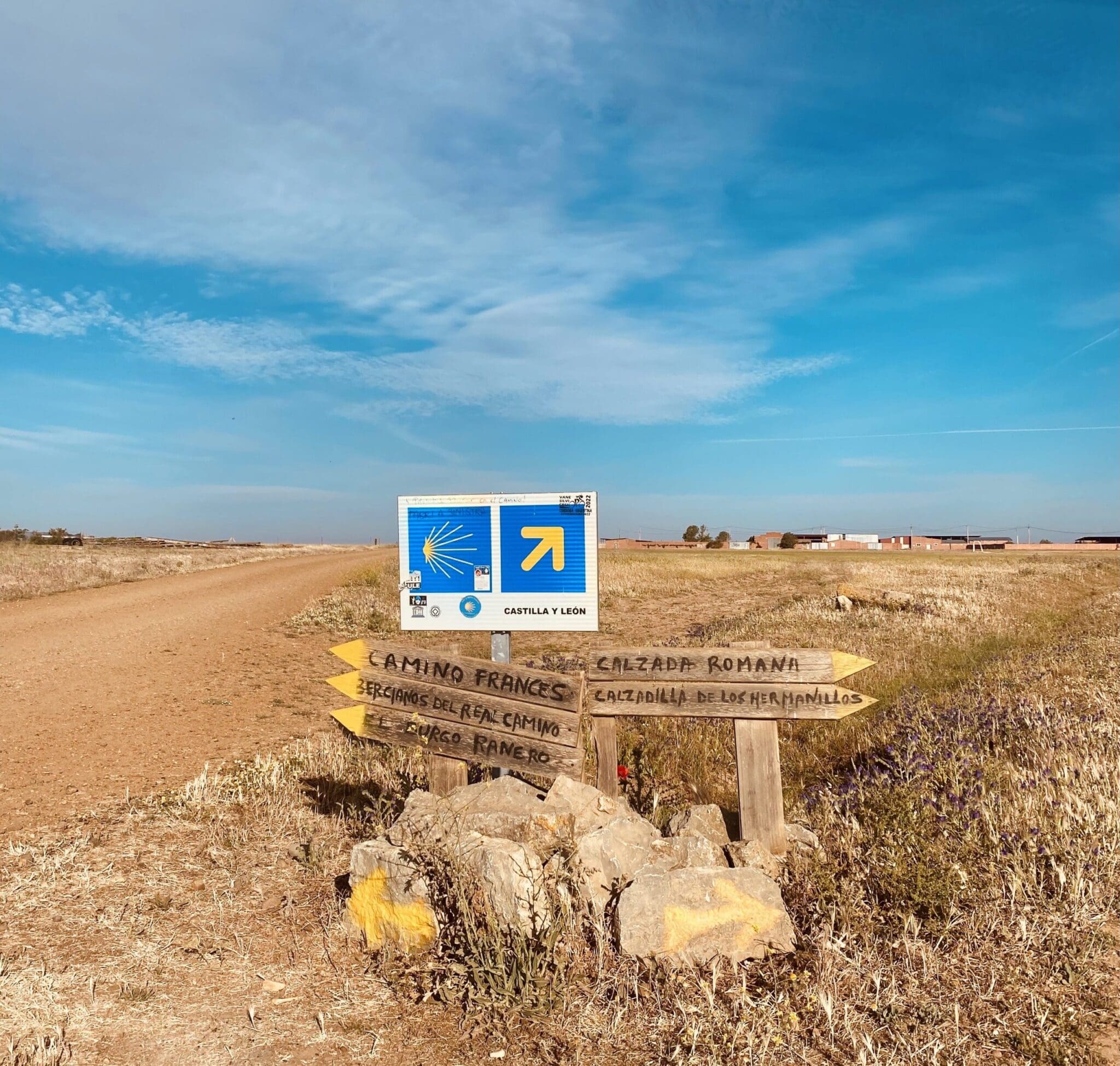
To walk the alternative route, turn off just before Calzadilla de los Hermanillos and branch right toward Calzada del Coto. It is much quieter and more remote. The track can be hard going in places, and services are very limited, but the sense of quiet and remoteness is its own reward.

Calzadilla de los Hermanillos
352km (219 miles) to Santiago
Calzadilla de los Hermanillos, which I think means the road of little brothers, is the only place to stop: there’s a small café that serves decent breakfasts and a couple of albergues. It feels very remote. After that, you’re onto the old Roman road all the way to Reliegos. On a hot day, it can be unforgiving. You’re trading a quiet road with the odd car for a track with absolutely no traffic, unless you count imaginary Roman chariots if you’ve been walking too long in the sun. It’s about 18 km of straight, open walking with no shade and no services. Tough going, but if you’re after solitude, this is the one.

Reliegos
334 km (208 miles) to Santiago
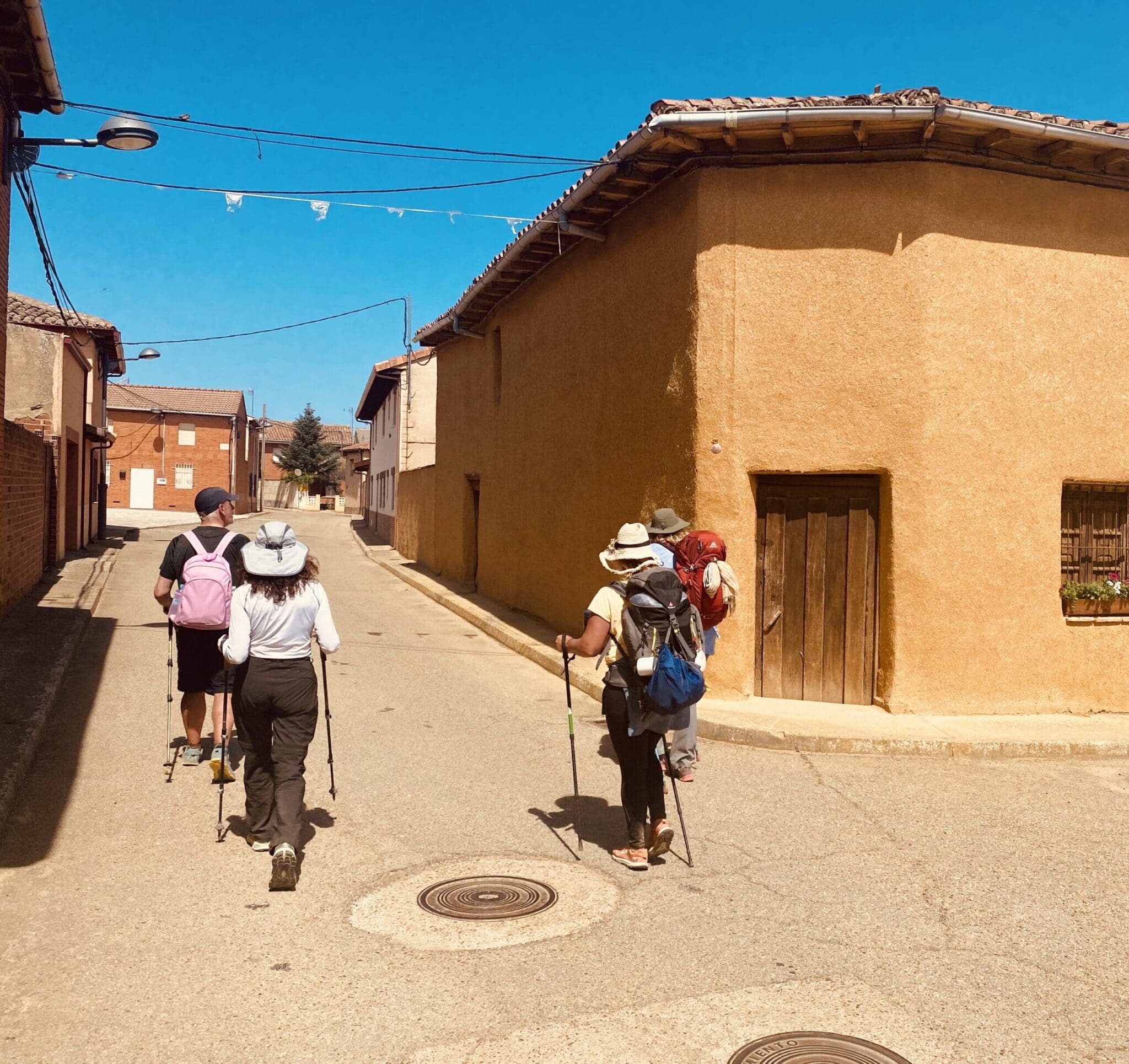
Both routes meet in Reliegos, a small, dusty village and a very welcome sight, especially if you have arrived on the Vía Trajana.
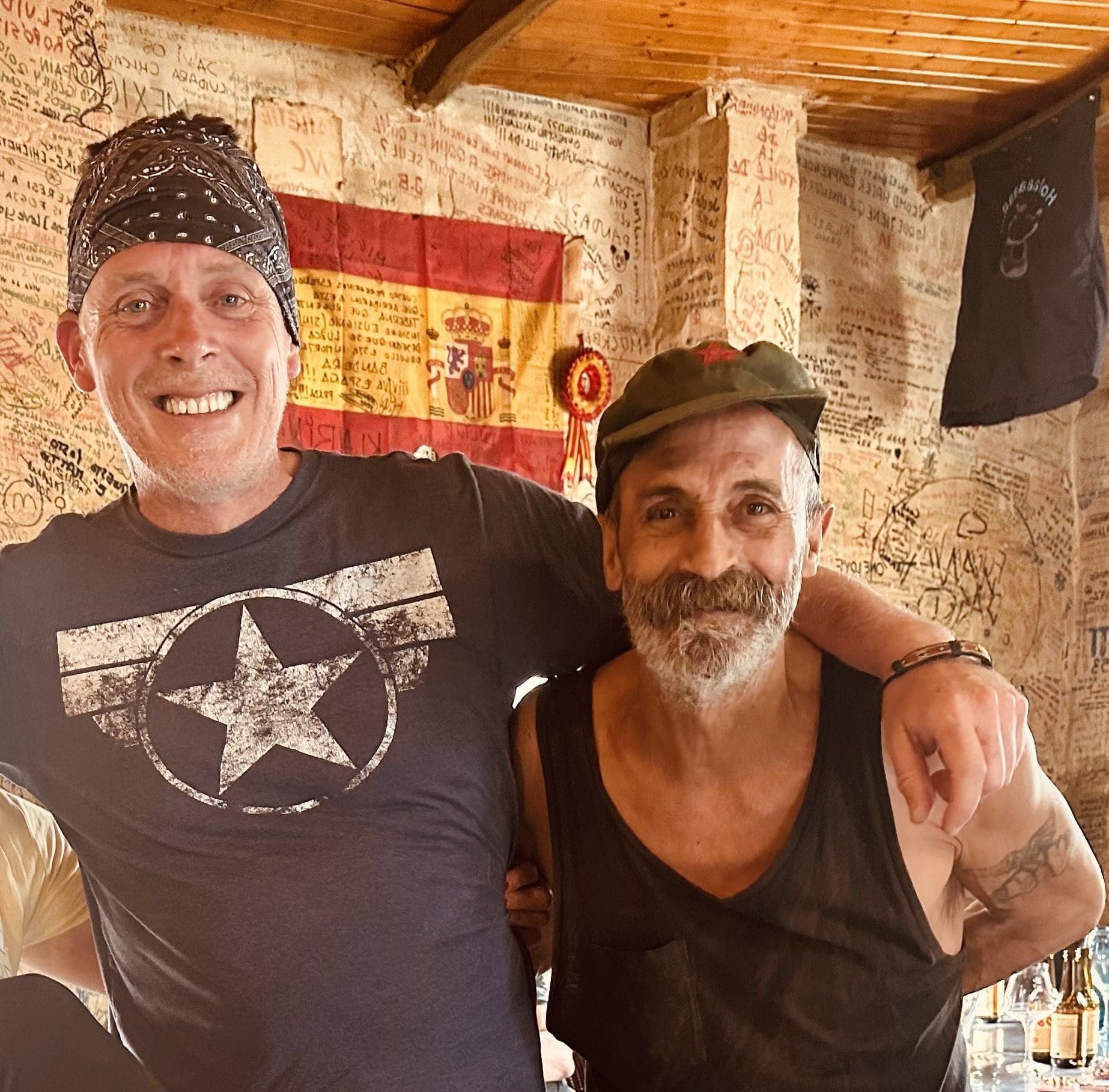
The village is best known for Bar Elvis, probably the most famous bar on the Camino, a proper institution. Graffiti, pilgrim messages, and random Elvis paraphernalia plaster the walls. It’s weird, wonderful, kitsch and unapologetically a dive bar. The owner, Sinín Prieto, is a one-of-a-kind character with infectious energy. It’s not for everyone, and the opening hours are entirely at his discretion, but if you are lucky enough to find it open, pop in for a cold one. The village is otherwise small and quiet with a few albergues, including the lovely vegan Albergue Las Hadas “The Fairies Albergue”

Mansilla de las Mulas
328 km (204 miles) to Santiago
The walk from Reliegos to Mansilla de las Mulas is an easy 6 km, flat and fast, mostly along a gravel track beside the main road. Not the most scenic stretch, but it goes by quickly.
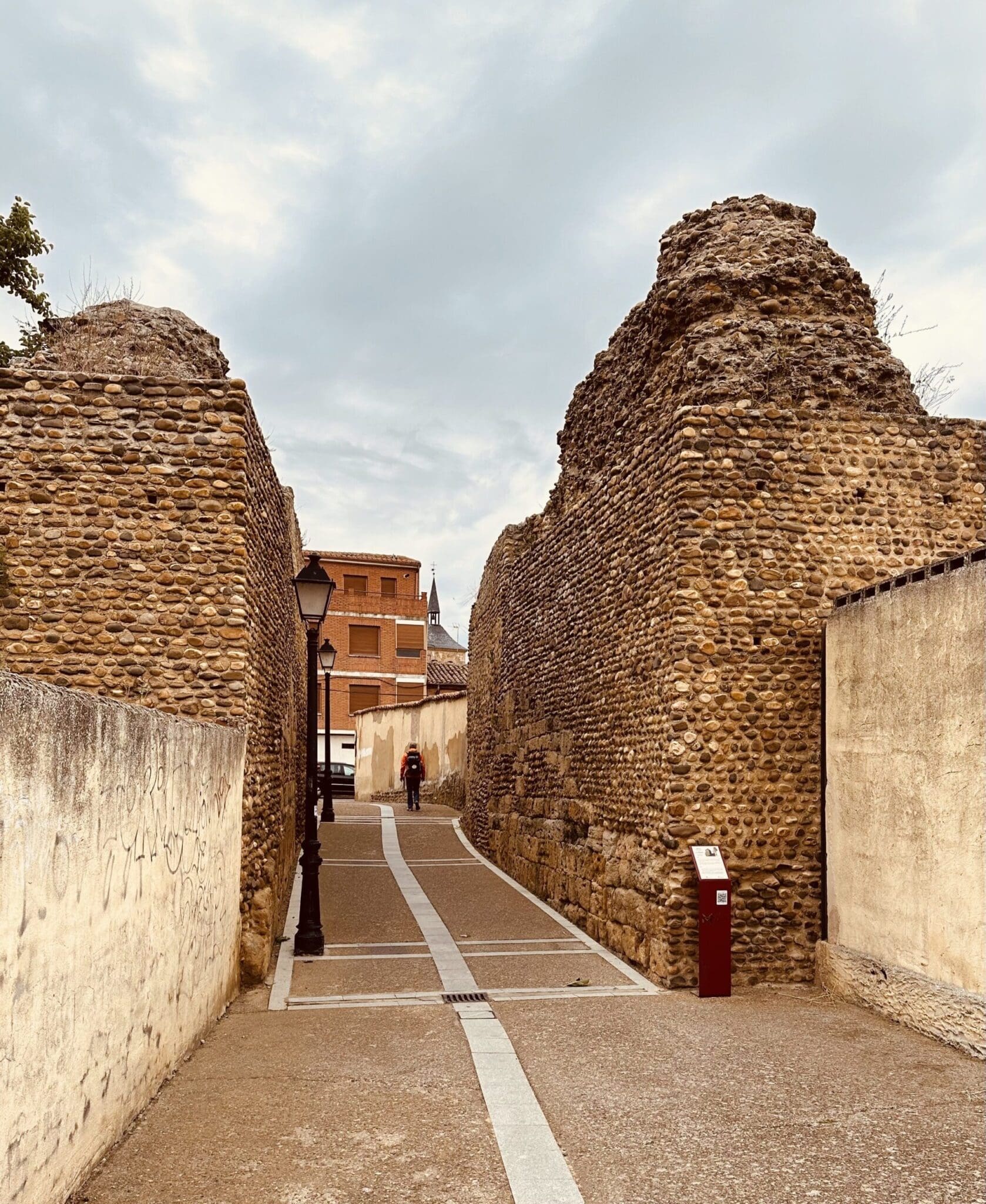
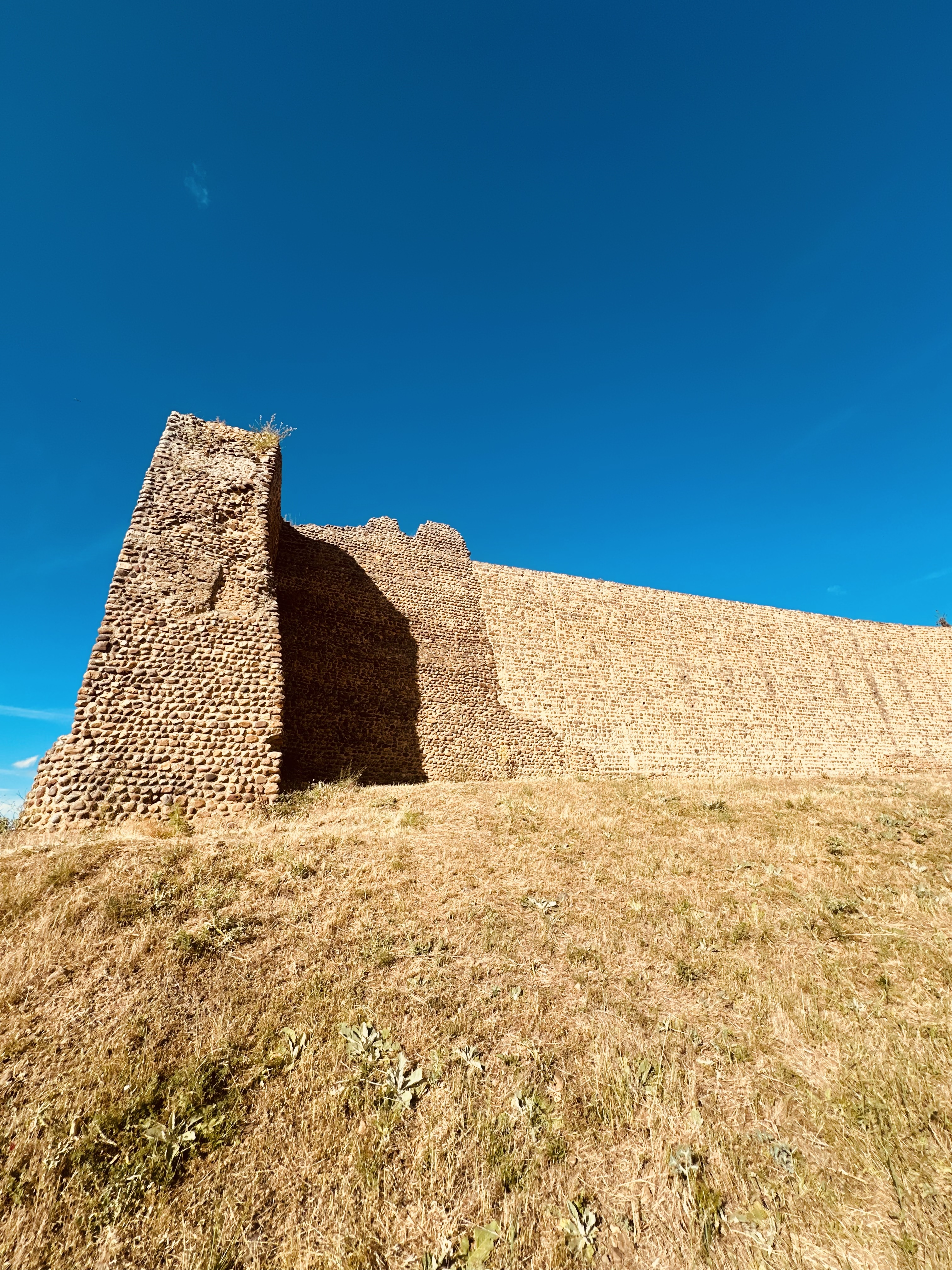
If you’re just passing through, Mansilla de las Mulas may not seem like much, just a busy little commuter town outside León. But if you stay the evening here, you’ll get a chance to see the medieval walls it’s celebrated for, and they’re pretty impressive; they almost completely encircle the town.
A good way to see them is to walk through town to the far end, and just before the bridge where you’d exit town, take a left and walk down a path. From there, you get a full view of the walls, and you can walk all the way around the town. There are a number of turrets and towers along the wall, and at least one has steps up to the top that have been reinstalled in recent years, so you can climb up and view the entire town from there.
Every year, on the weekend closest to 25 July, Mansilla’s medieval walls provide the perfect backdrop for the Jornadas Medievales festival, with knights’ jousting tournaments and a huge medieval market.
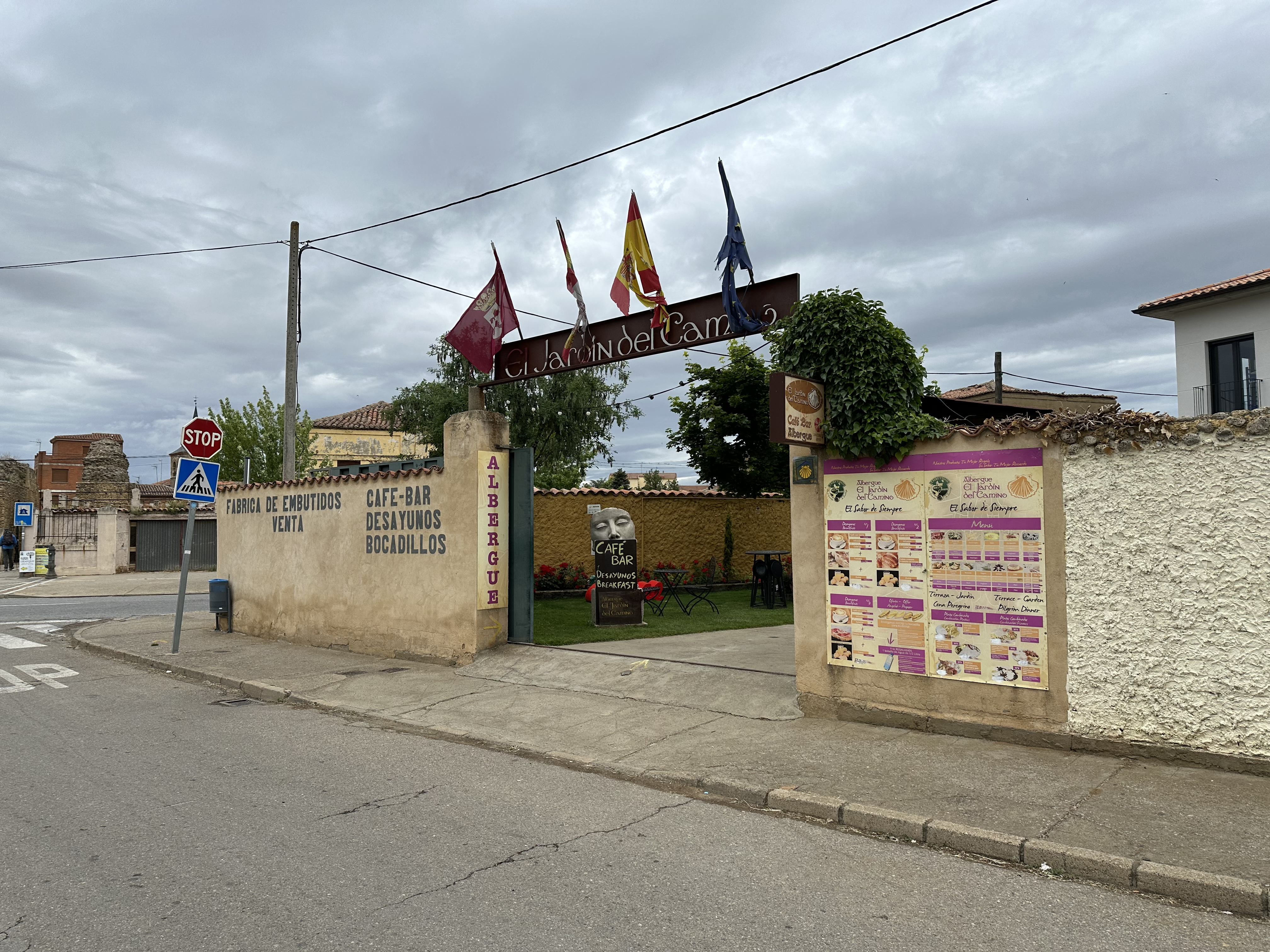
There are a few albergues in Mansilla de las Mulas, including Albergue Gaia, run by a former pilgrim and the modern Albergue El Jardin. Mansilla is only 18 km from León, so it’s a great place to overnight if you want a shorter day’s walk, so you can arrive early.
León
309 km (192 miles) to Santiago
The walk from Mansilla de las Mulas to León is a bit of a drag. A lot of it runs near the road, through suburbs and industrial areas, not the most inspiring stretch. The best thing to do is just put your head down and keep going, and if you’re going to skip a stage and take a bus anywhere on the Camino, this is probably the one. Buses leave from the bridge on the edge of town, take around 30 minutes to reach León, and cost just a few euros.
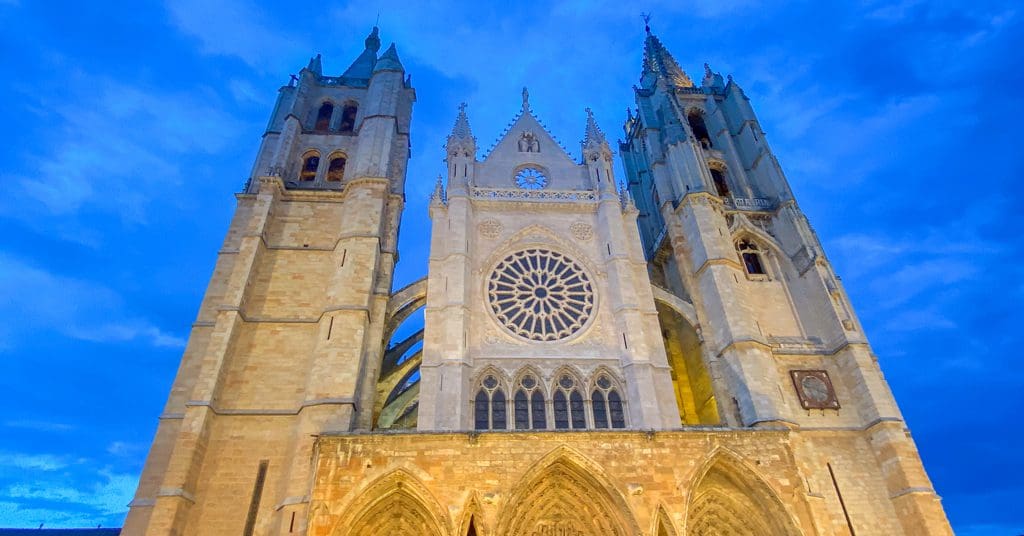
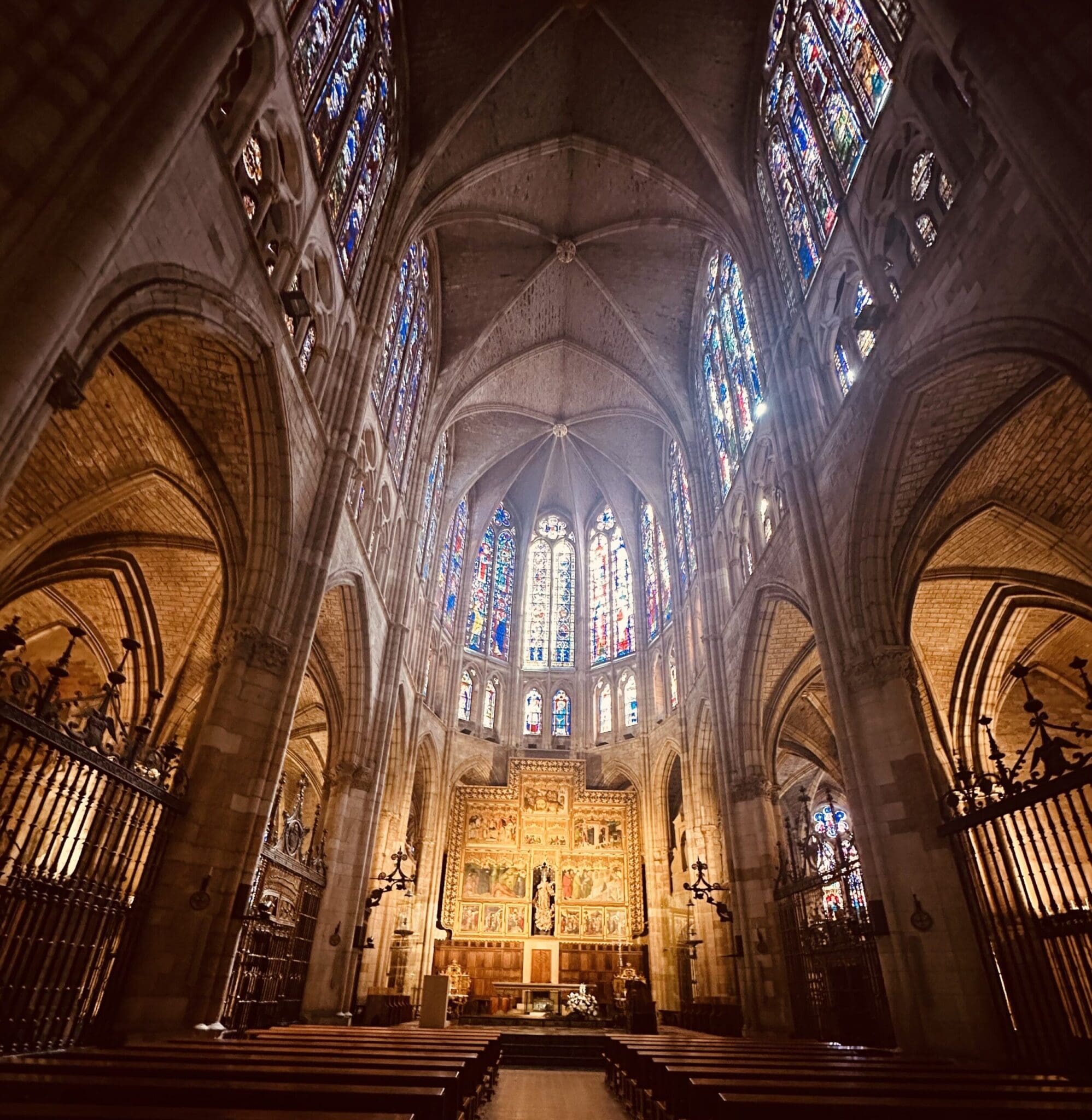
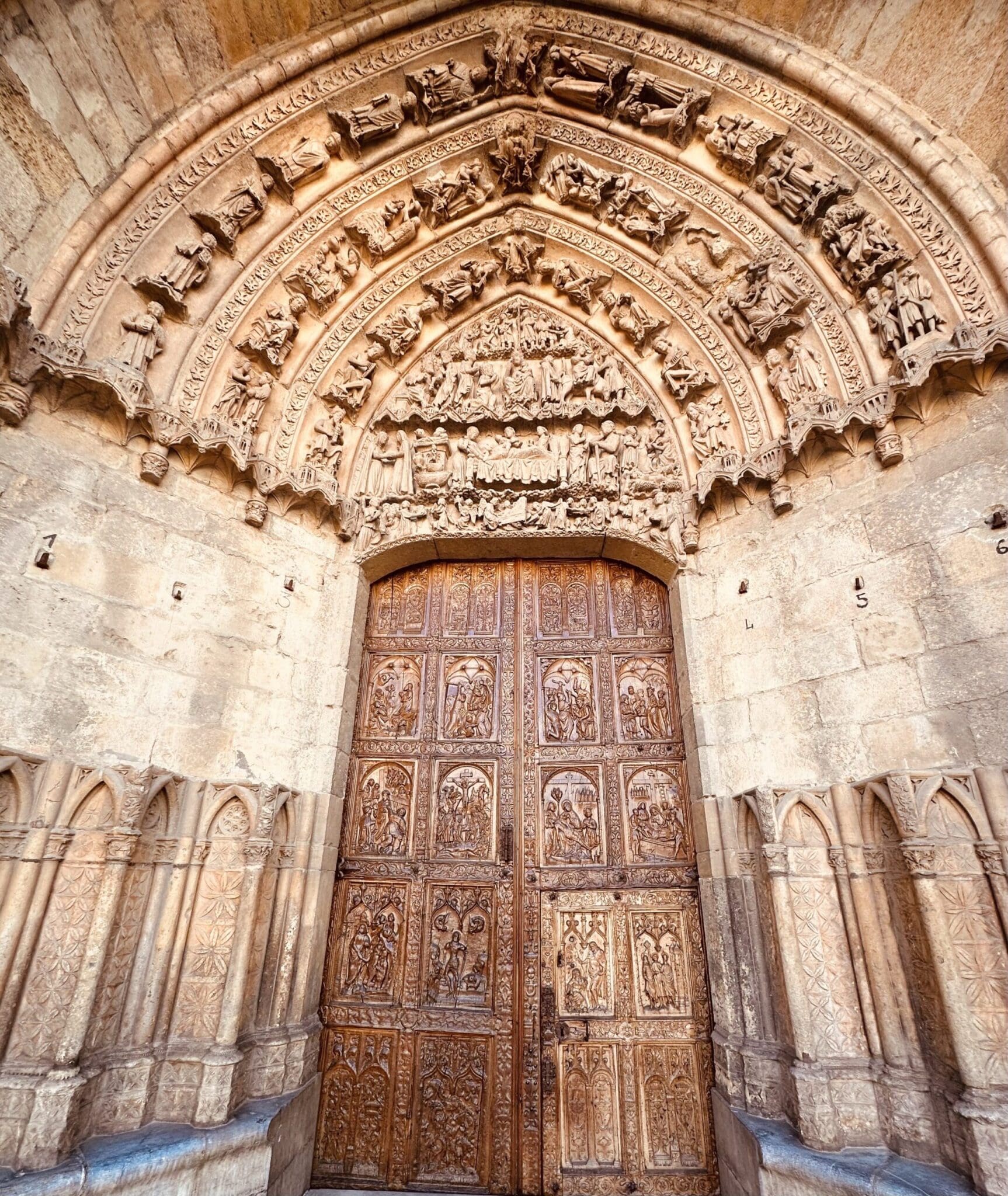
On arriving in León, head first to the cathedral. It makes the boring walk so worthwhile. It’s one of the most stunning along the entire Camino, famous for its huge stained-glass windows. Step inside and you’ll instantly see why: sunlight pours in, filling the whole place with colour. It’s like walking into a jewel box.
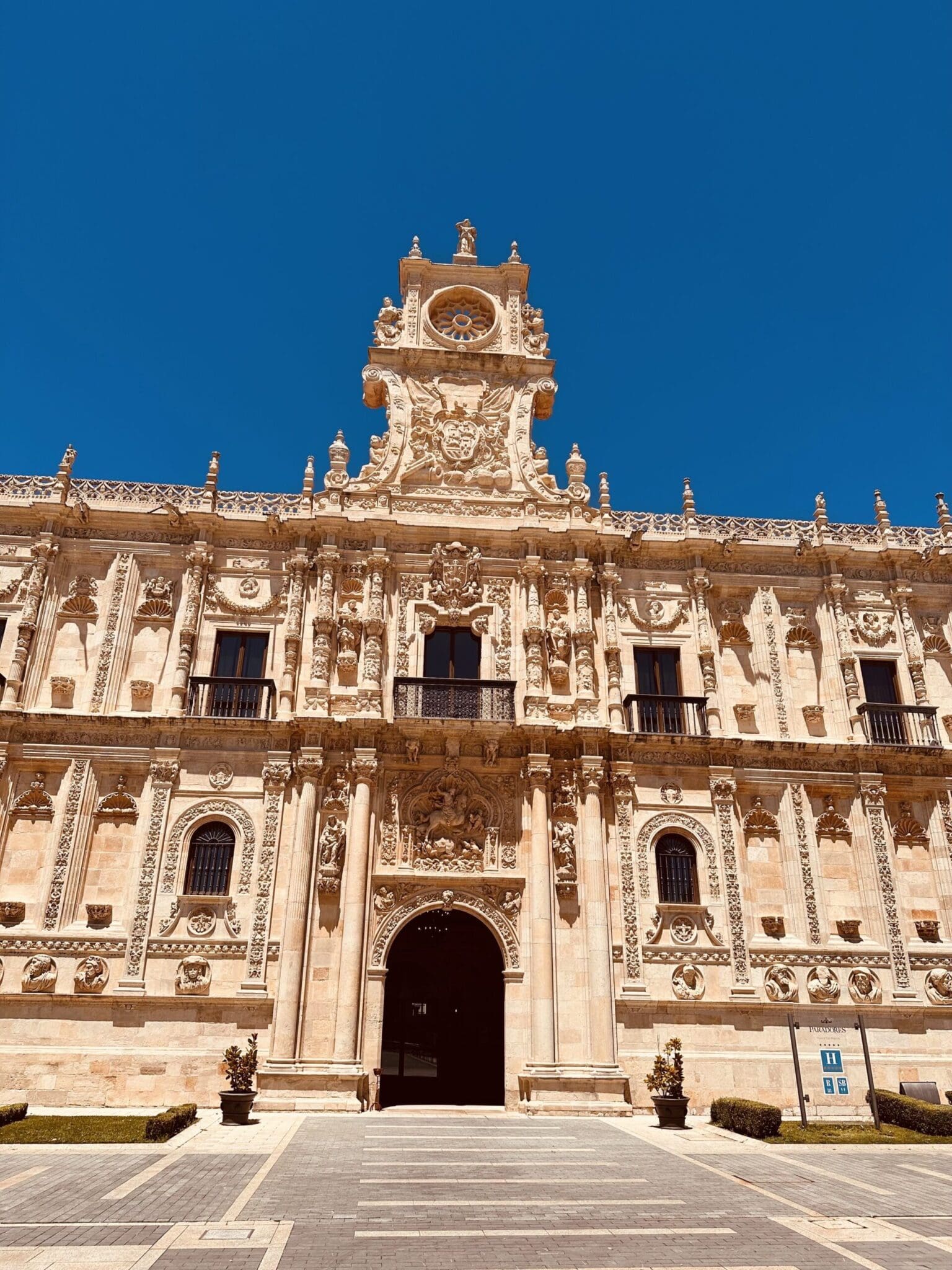
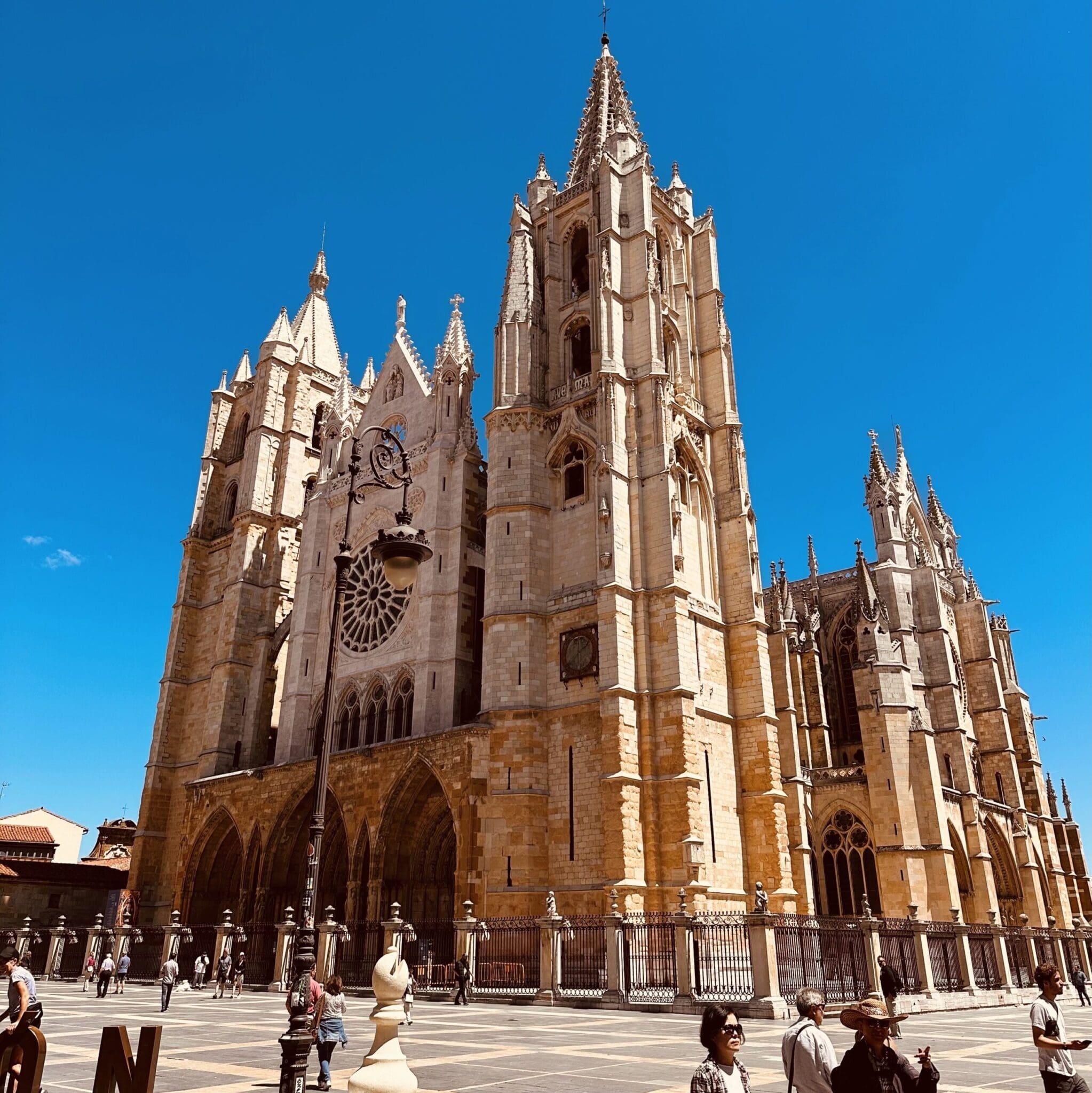
Then wander through León’s old town, with its narrow cobbled streets and sunny little squares packed with cafés and tapas bars. And if you fancy something slightly different, you can always go in search of the Holy Grail.
Inside the Basilica of San Isidoro, just a 5-minute walk from the cathedral, resides an ornate chalice known as the Chalice of Doña Urraca, which contains a Roman cup dating back to the first century. In 2014, two Spanish historians proposed in their book The Kings of the Grail that this cup might be the real Holy Grail. According to their theory, the cup travelled from Jerusalem to Egypt and eventually made its way to León in the 11th century. After the book’s publication, visitors suddenly flooded the little-known church. Is it the Holy Grail? Not sure. But worth the visit..
If you’re spending the evening in León, head straight to the Barrio Húmedo, literally the “wet neighbourhood”, a labyrinth of lively bars where a free tapa usually appears with every drink. When I’m in León, I always end up surrendering to the nightlife, so staying somewhere with no curfew is a must. This is not the night to be tucked up in your sleeping bag by ten. There are loads of good accommodation options around the city centre, from the magnificent Parador to smaller, more affordable hotels and a handful of private albergues.
The Globe Trotter is a great shout, a trendy, lively hostel right across from the cathedral, buzzing with young travellers, not just pilgrims.
If you’re on a tighter budget, there are two large traditional albergues: the Albergue de las Carbajalas and the Albergue San Francisco de Asís. Both are simple and fairly basic, nothing particularly special, but perfectly fine if all you need is a bed for the night.
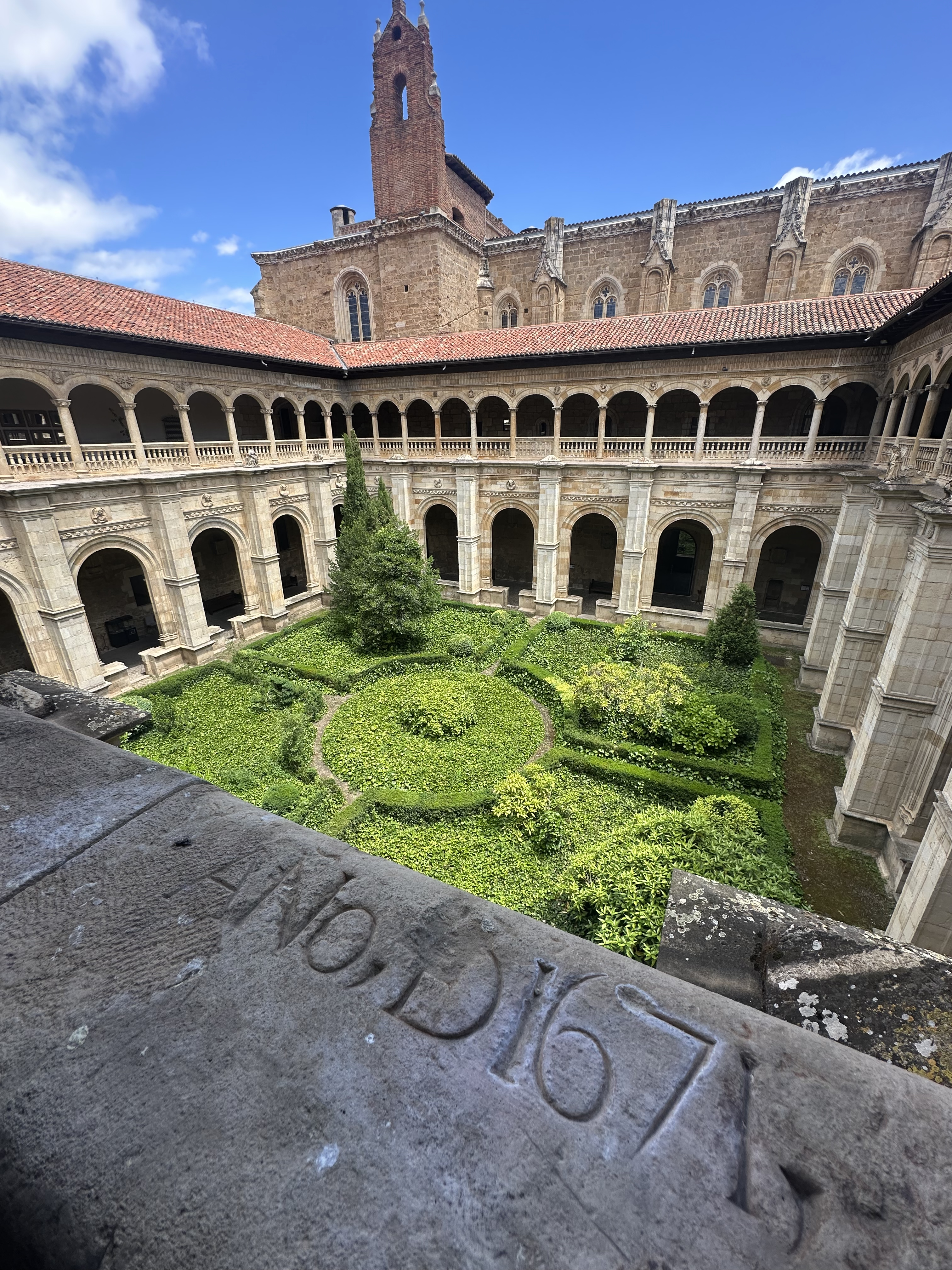
And finally, if you want to splurge, stay at the 12th-century Hostal San Marcos, now a luxury parador hotel, the one featured in The Way. It’s expensive by Spanish standards, but honestly great value compared to what you’d pay in the US or UK for something similar. I stayed here once, and yeah, it’s pretty special. There’s something about walking into a five-star hotel like a vagabond, dusty from the road, and pulling out your Amex that makes you feel kind of enigmatic and somehow important. The indifferent receptionist barely looks up anymore, just another fool in the middle of a midlife crisis trying to relive a movie.