Section 6
Carrión de los Condes to León

From Carrión de los Condes to León, it’s about 95 kilometres of more Meseta walking. You’ll pass the halfway point of the Camino Francés just before the historic town of Sahagún. There’s also a brilliant day’s walk along an old, isolated Roman road if you’re up for the challenge.

Carrión de los Condes
400. KM to Santiago
The walk from Carrión de los Condes to Calzadilla de la Cueza is approximately 17 km and features the dreaded longest stretch of the Camino, where you pass through no villages. It’s very flat and straight, mainly following a gravel track through old farmland. There is no shade, so bring water and snacks. It’s a good idea to start early, especially in summer when the heat can be tough. In busier times of the year, some local entrepreneurs set up a way station, a food truck-style stop halfway along, where everyone inevitably gathers for a much-needed break.
Calzadilla de la Cueza
381 KM to Santiago
After the long empty stretch, Calzadilla de la Cueza appears, a dusty little town where a tumbleweed rolling down the main street wouldn’t look out of place, like something out of West Texas.


You’ll almost certainly stop here for a cold beer or a Coke. If you’re not pushing on, there are a few good albergues. I liked Camino Real, the first one you see as you enter town. There’s something about these little villages and their splendid isolation that I have a real grá for.
Ledigos
377 KM to Santiago
The next stretch to Ledigos is about 6 km. There are a few detours if you have the energy. A large stone outside Calzadilla shows the options. The alternative routes are more remote, heading into the hills and away from the road, before rejoining near Ledigos. The path that keeps farthest to the left bypasses both Ledigos and Terradillos and runs straight to Moratinos. For once, the alternative is the faster way.

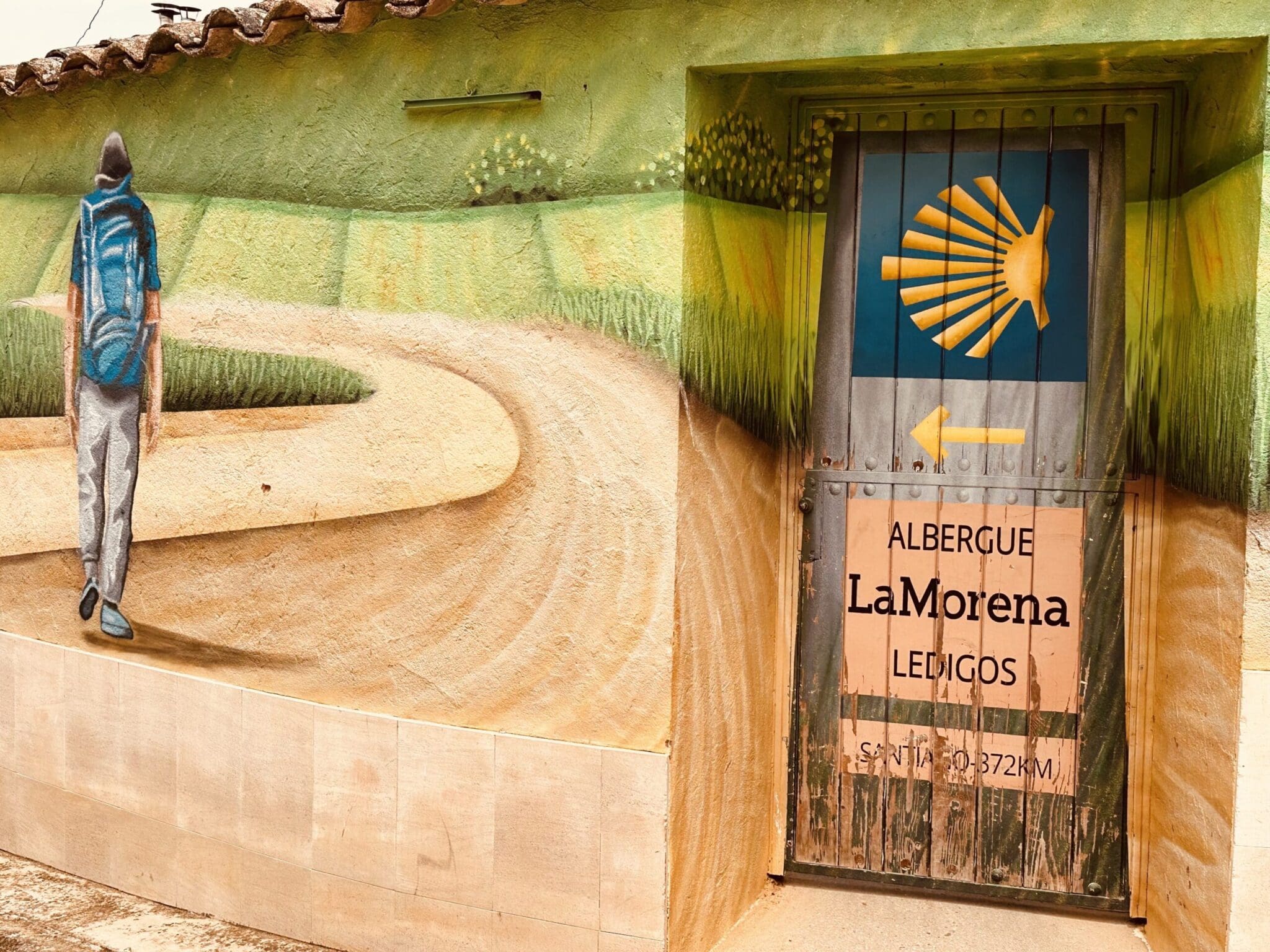
Ledigos is a small village with only about 60 inhabitants. It’s worth stopping to see the 17th-century Iglesia de Santiago, a brick church that sits on a hill overlooking the countryside. The church is interesting because it shows Saint James in his three traditional forms: the pilgrim, the apostle, and the Moor-slayer.
There’s also a good place in town, Albergue La Morena. It mixes a hotel and an albergue and is set in a restored 300-year-old building. Inside, it’s modern and feels a bit more luxurious than most pilgrim stops.
Terradillos de los Templarios
374.1 KM to Santiago
Terradillos de los Templarios is just 2 km beyond Ledigos. It’s a small village with a bit of history, the Knights Templar set up here in the 12th century to help protect pilgrims. The name means “small lands of the Templars,” a nod to the days when they ran things around here.
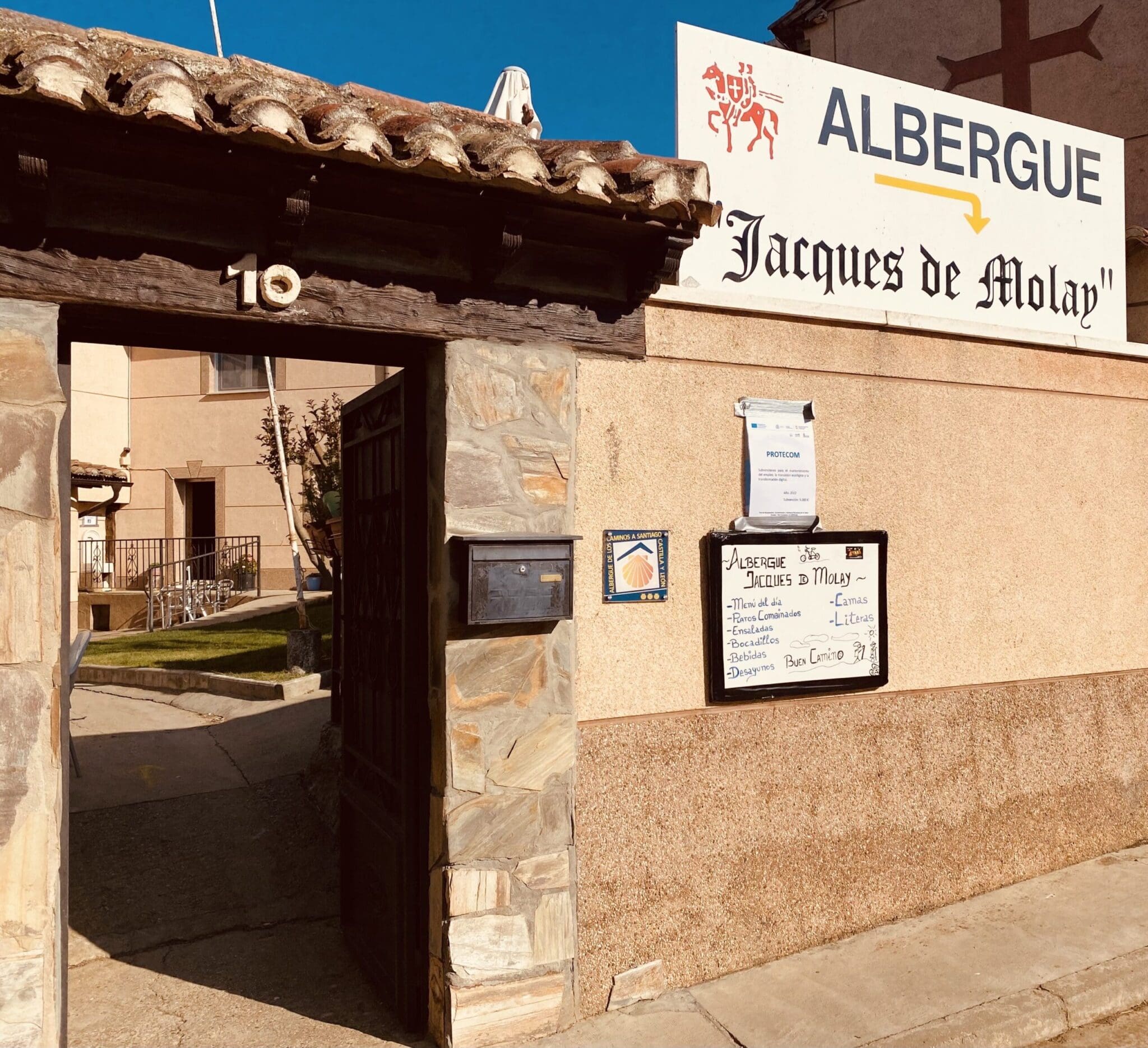
There are a couple of albergues in the village. I stayed at Albergue Jacques de Molay, named after the last Grand Master of the Templars. It’s a good spot.

Moratinos
371 KM to Santiago
After a few more kilometres, you’ll arrive in Moratinos. Just outside the village, you’ll see a group of small grassy hills with doors built into them. They’re old wine cellars, but they look like something out of a hobbit movie, or for any British readers the set of the Teletubbies.


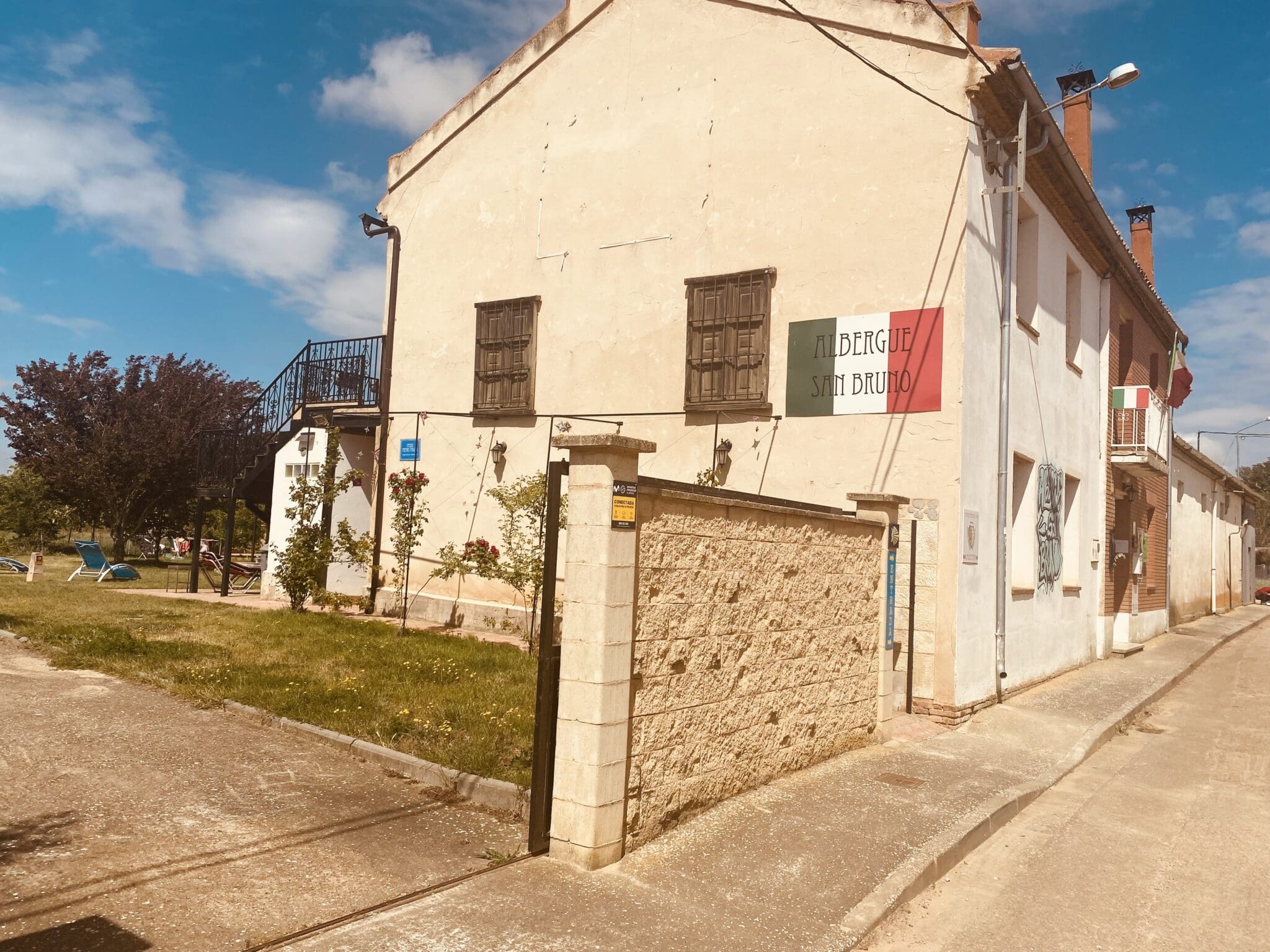
There are two albergues in Moratinos. The first is Hostal Moratinos, just on your left as you come into the village. It’s a fun spot with a good menu. The second is Hospital San Bruno, at the far end of town. Keep an eye out, it’s about 100 yards off the Camino as you’re leaving and has a big Italian flag painted on the wall. They’ve got a lovely garden with sun loungers and a place to soak your feet. Pietro was running it when I stayed, and the food was brilliant. After days of paella and the usual pilgrim fare, sitting down to real Italian food was a treat.

San Nicolás del Real Camino
368.3 KM to Santiago
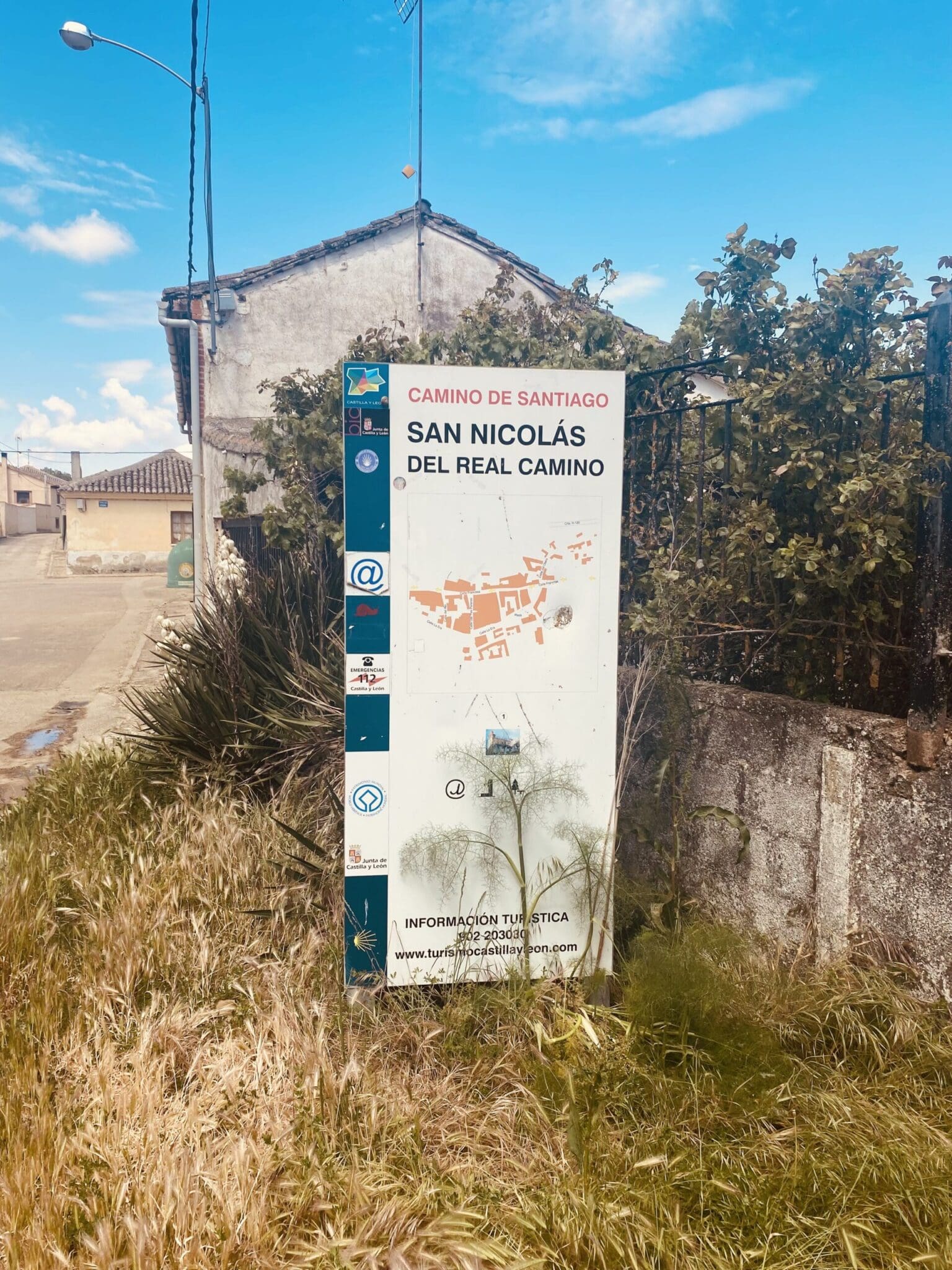
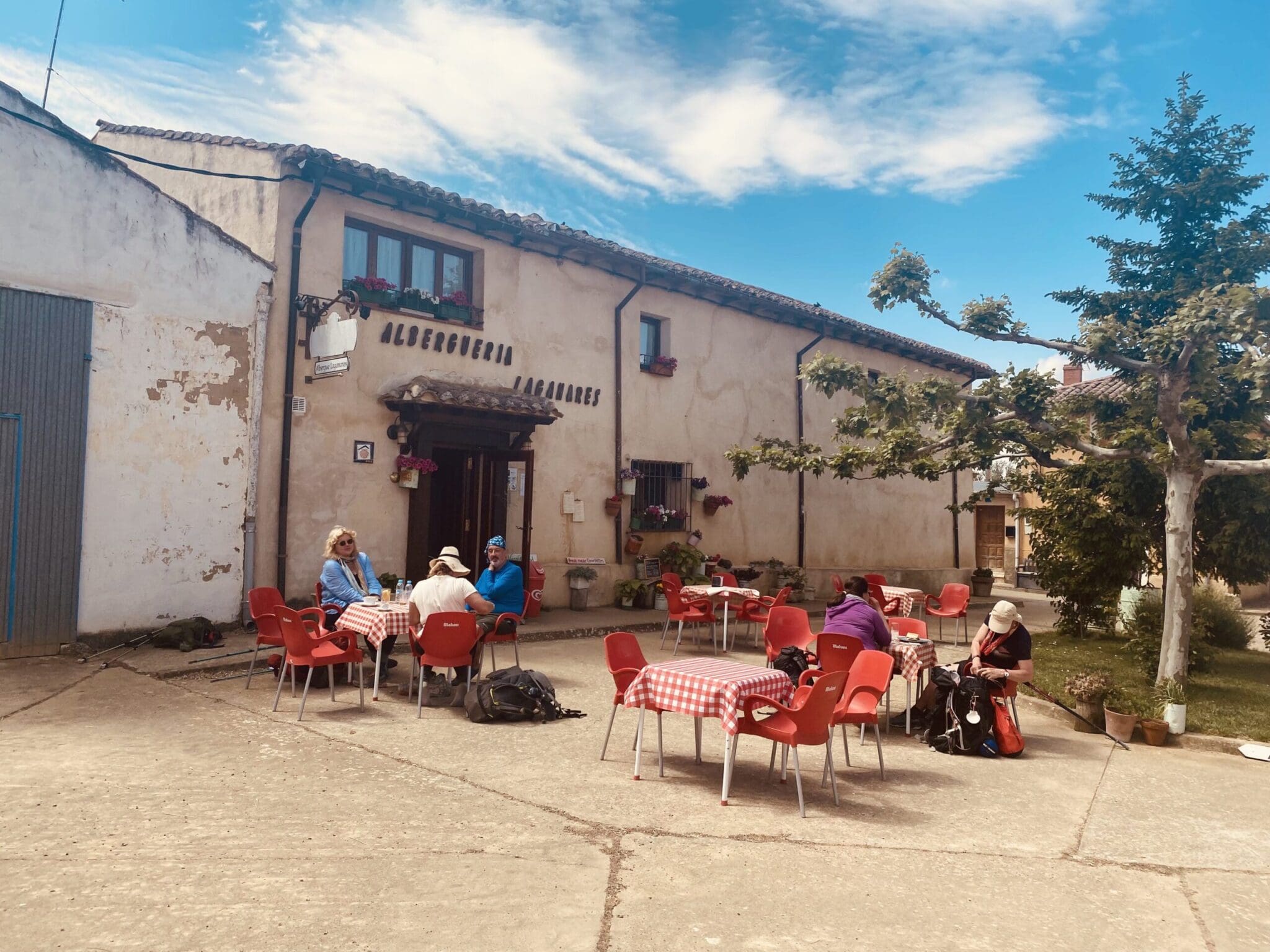
From Moratinos to San Nicolás del Camino it’s about 4km on a flat dirt path that runs beside the road. The village is tiny, just a few houses really and one main street. There’s an albergue with a garden, not much else going on.
Sahagún
361 KM to Santiago
The walk from San Nicolás del Camino to Sahagún is about 8 km, flat and easy, mostly through open farmland. Just over halfway, the Camino leaves the dirt track and crosses the highway. Not long after that, you’ll come to a monument marking the geographical halfway point if you started in Saint-Jean. Nice little milestone, give yourself a pat on the back.

Sahagún is a proper town, the biggest you’ll pass on the Meseta. There are plenty of shops, bars, cafés, and places to restock. It’s got a bit more life than the smaller villages, so it’s a good place to take a break or stay the night. There are loads of albergues to choose from, including a big municipal one and a few smaller private spots.
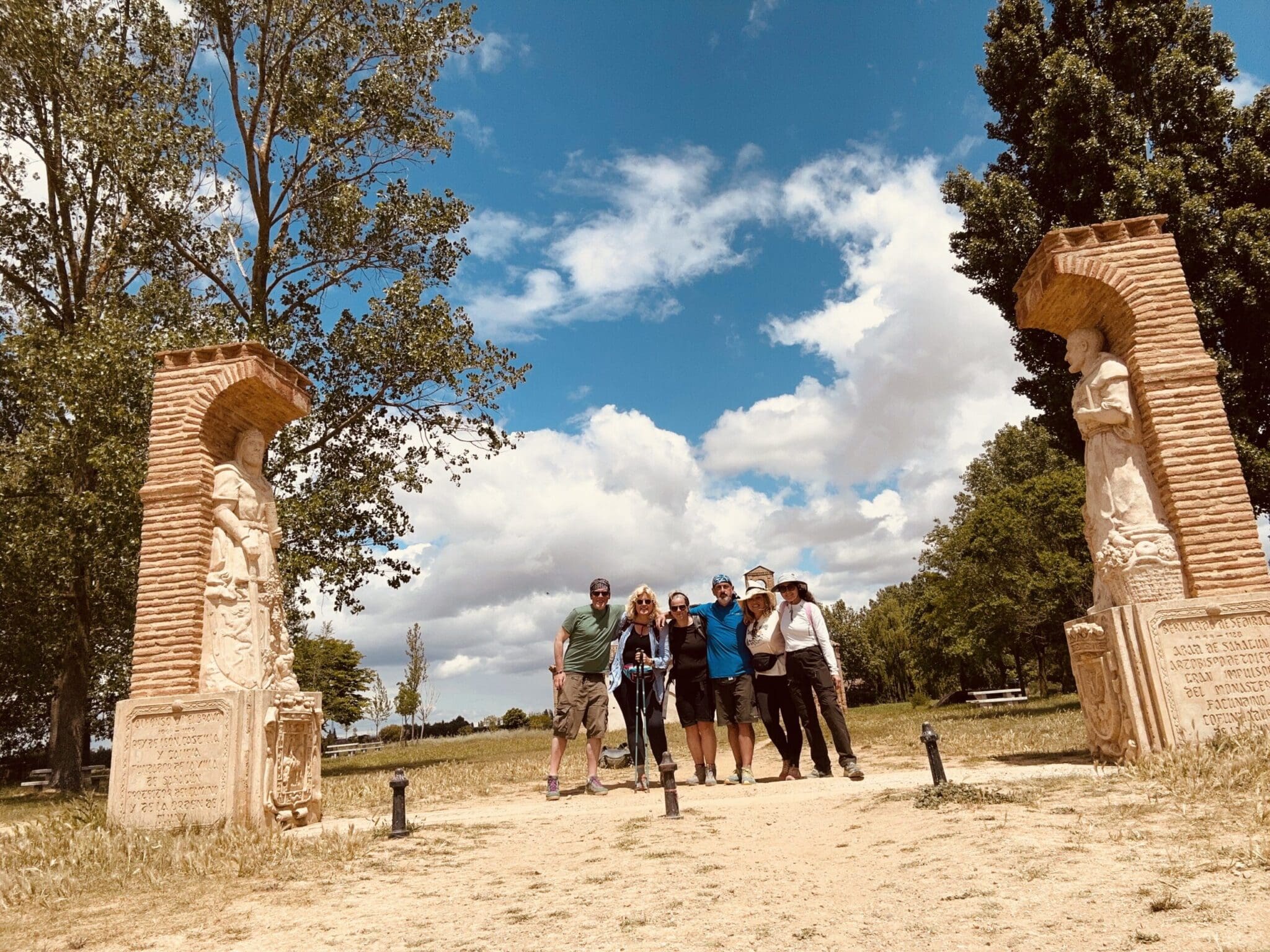
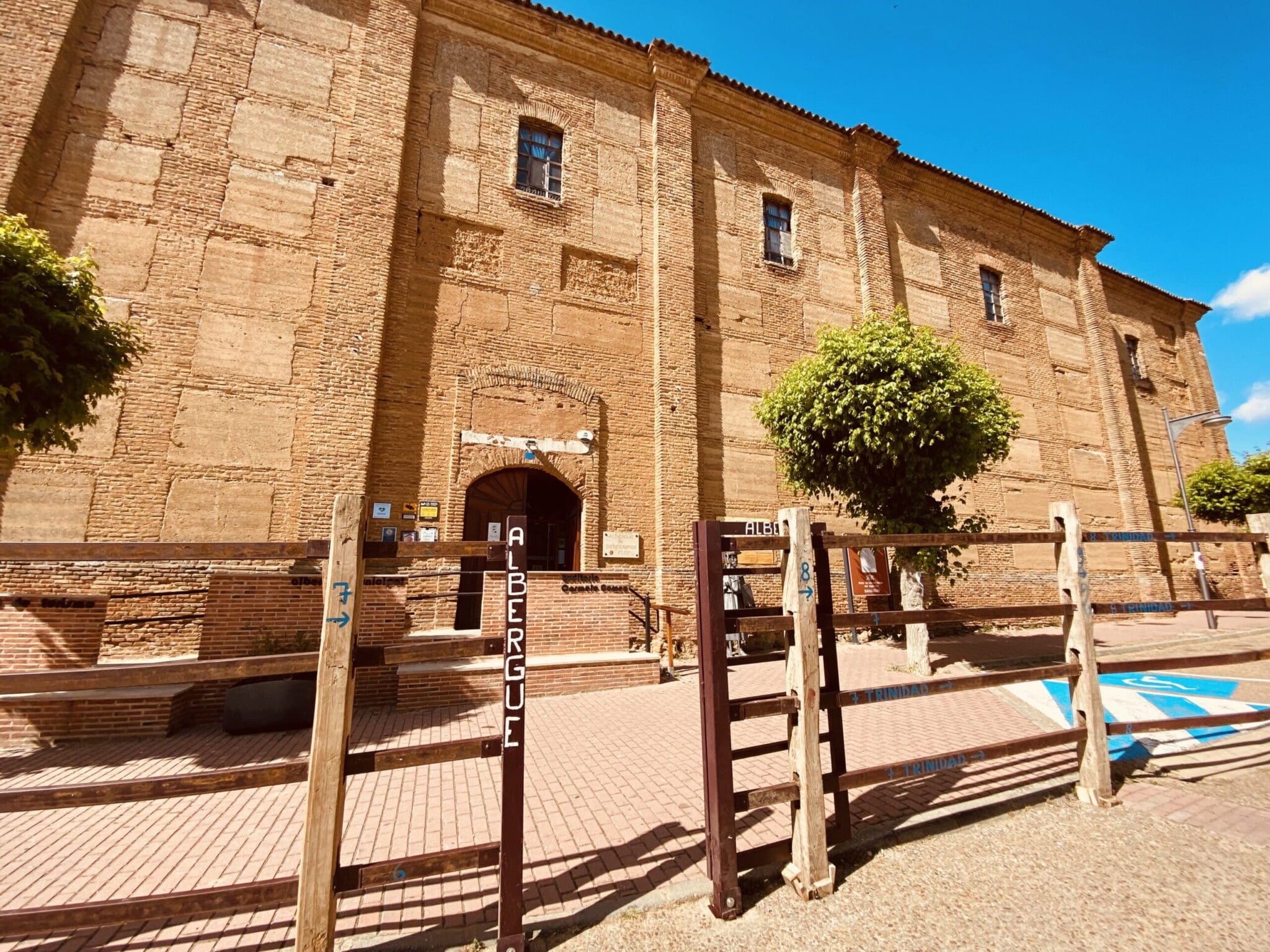
The town has a Moorish feel. Check out the Church of San Lorenzo with its brick tower and the old archway as you enter. It’s not the prettiest town on the Camino, but it’s got character and everything you might need.


Bercianos del Real Camino
350.6 KM to Santiago
After Sahagún, the Camino splits and you’ve got two route options: the official route and the Vía Trajana.
The official route sticks closer to the road and passes through small villages like Bercianos del Real Camino and El Burgo Ranero. It’s a bit more straightforward, with more services, and the path is mostly flat and easy. Good choice if you want a simple day and easy access to food, water, and places to stay.
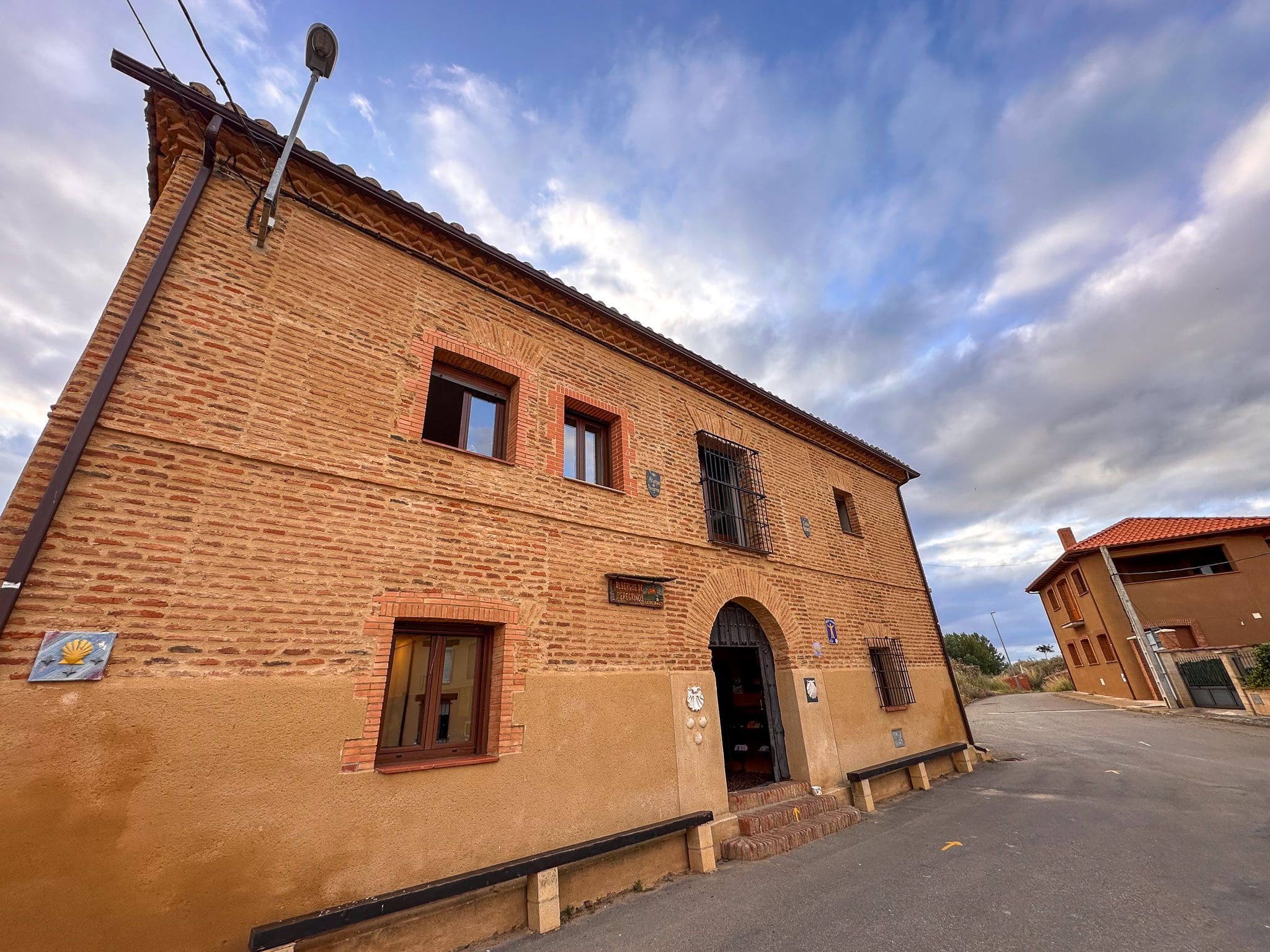

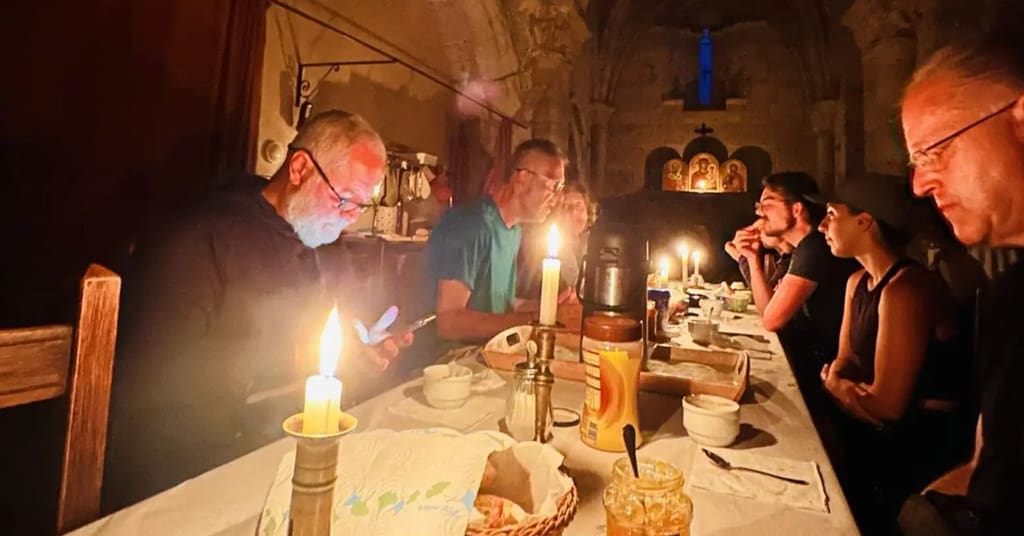
There is a wonderful donativo albergue in Bercianos del Real Camino, Albergue Parroquial Casa Rectora, run by volunteers and has a warm, welcoming vibe. It’s in an old rectory building with a peaceful garden. It’s simple, quiet, and has that classic Camino spirit, think shared meals, pilgrim prayers, and a sense of community.
El Burgo Ranero
343 KM to Santiago
It’s another 7km to El Burgo, another small village with a few albergues. Keep an eye out for the storks on the church tower, if you’re walking in late May, you might catch a glimpse of the babies chirping for food

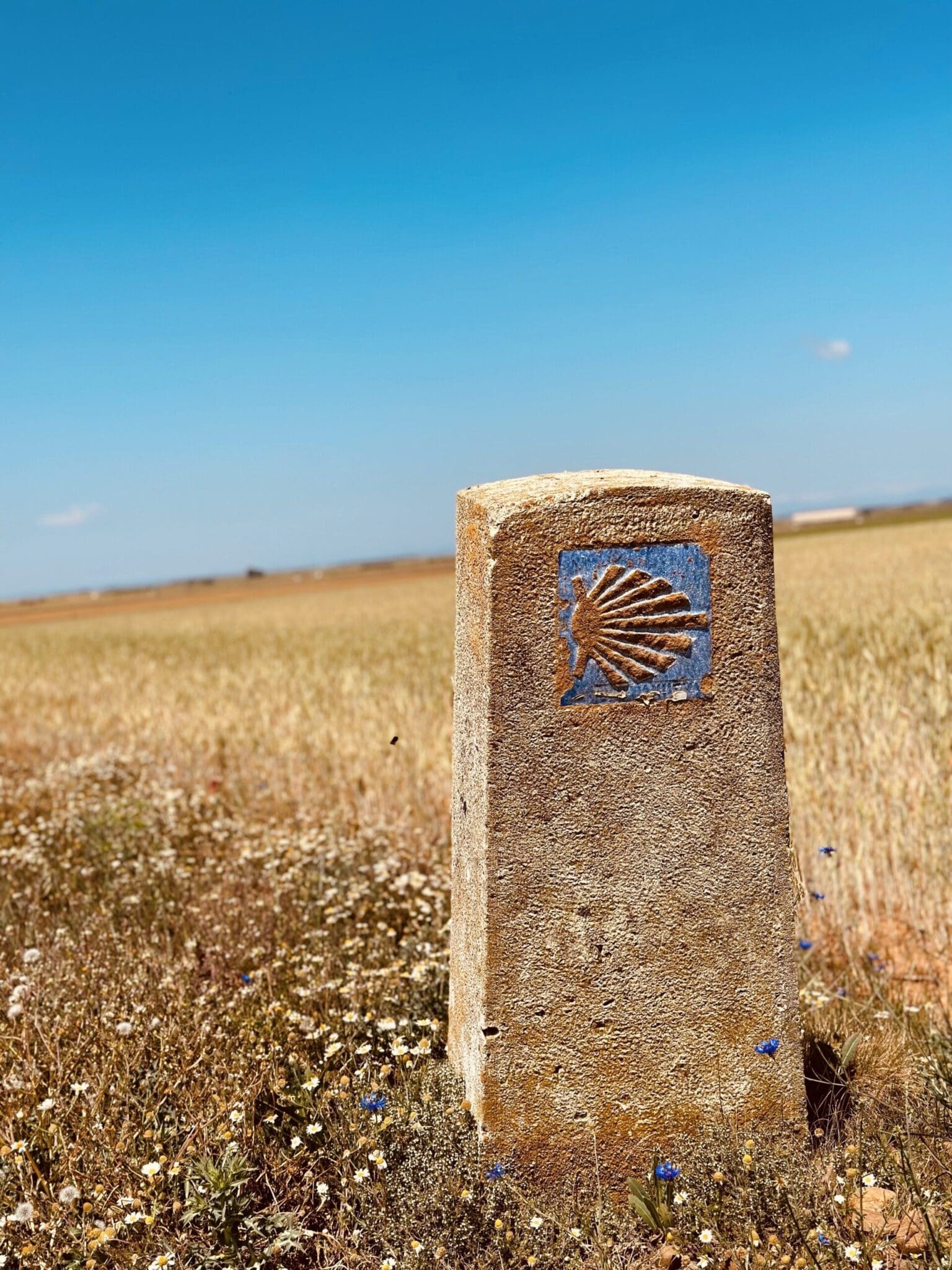
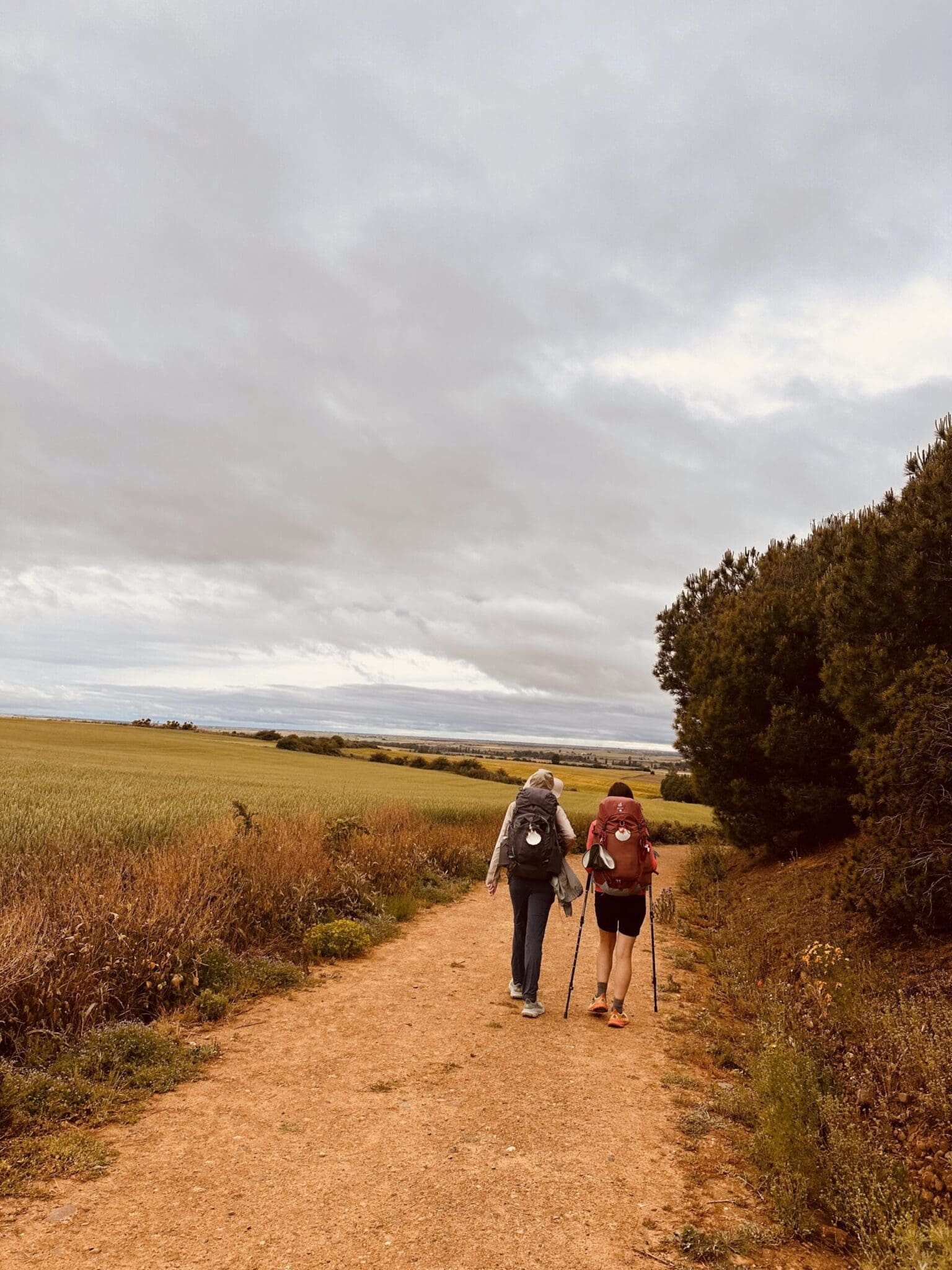
From El Burgo Ranero, it’s about 13 km to Reliegos along a straight, flat dirt track that runs next to the road. There are trees lining the way, but they don’t offer much shade. It’s a bit of a slog to be honest—one of those stretches that explains why some people aren’t big fans of the Meseta.
Calzada de Coto
356.5 KM to Santiago
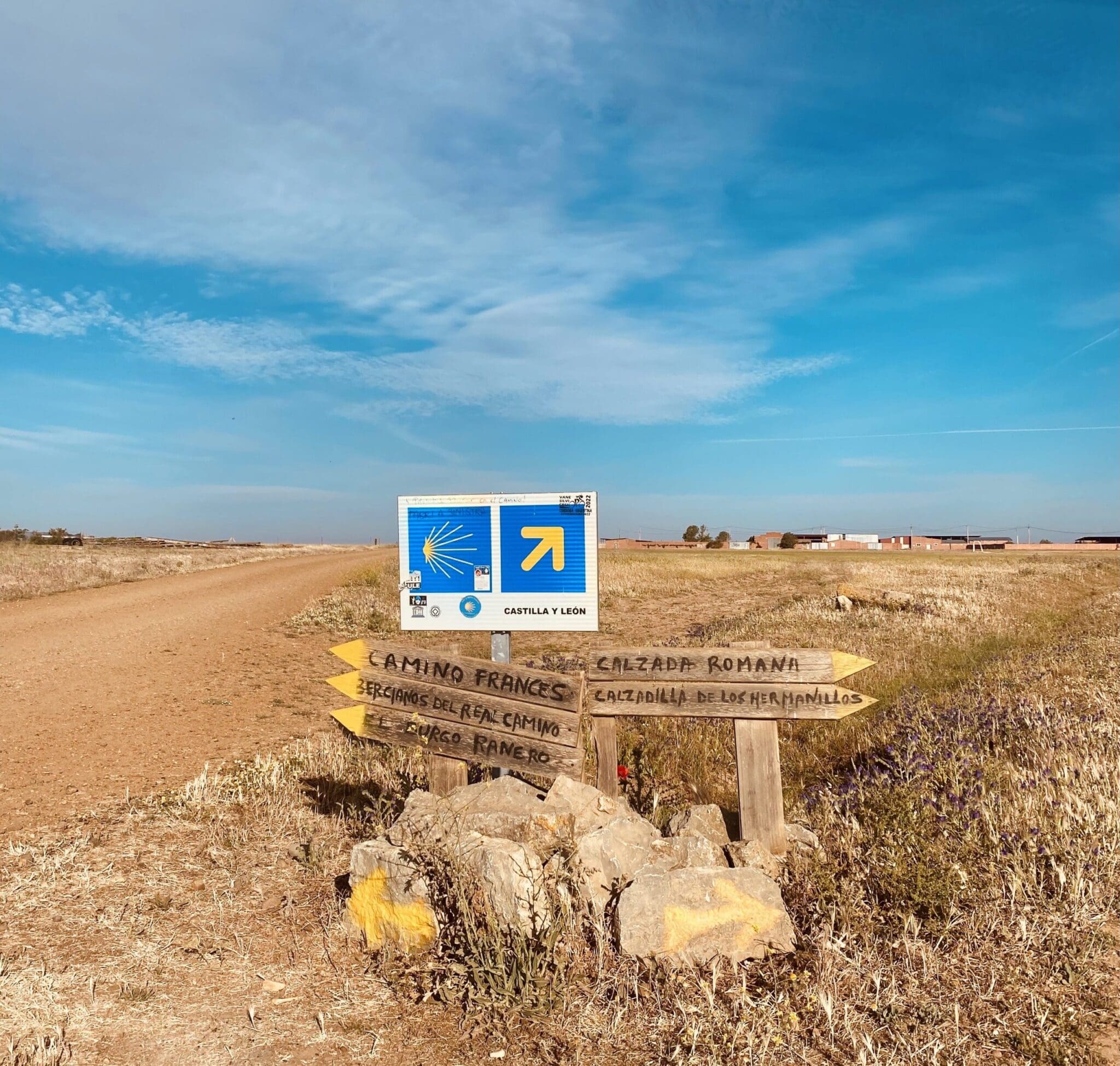
The alternative route is the Vía Trajana, the older Roman path. It branches off and heads into the village of Calzada del Coto, just turn right. It’s quieter, more remote, and has a more rustic feel. The track’s a bit rough in spots, and there aren’t many services, but it’s peaceful and definitely feels more off the beaten path.

Calzadilla de la los Hermanillos
348.2 KM to Santiago
Calzadilla de los Hermanillos is the only place to stop; there’s a small café that does a solid breakfast and a couple of albergues. It feels pretty remote. After that, you’re onto the old Roman road all the way to Reliegos. On a hot day, it can be rough. You’re trading a quiet road with the odd car for a track with absolutely no traffic, unless you count the imaginary chariots if the heat gets to you. It’s about 18 km of straight, open walking with no shade and no services. Tough going, but if you’re after real solitude, this is the one.

Reliegos
330.4 KM to Santiago
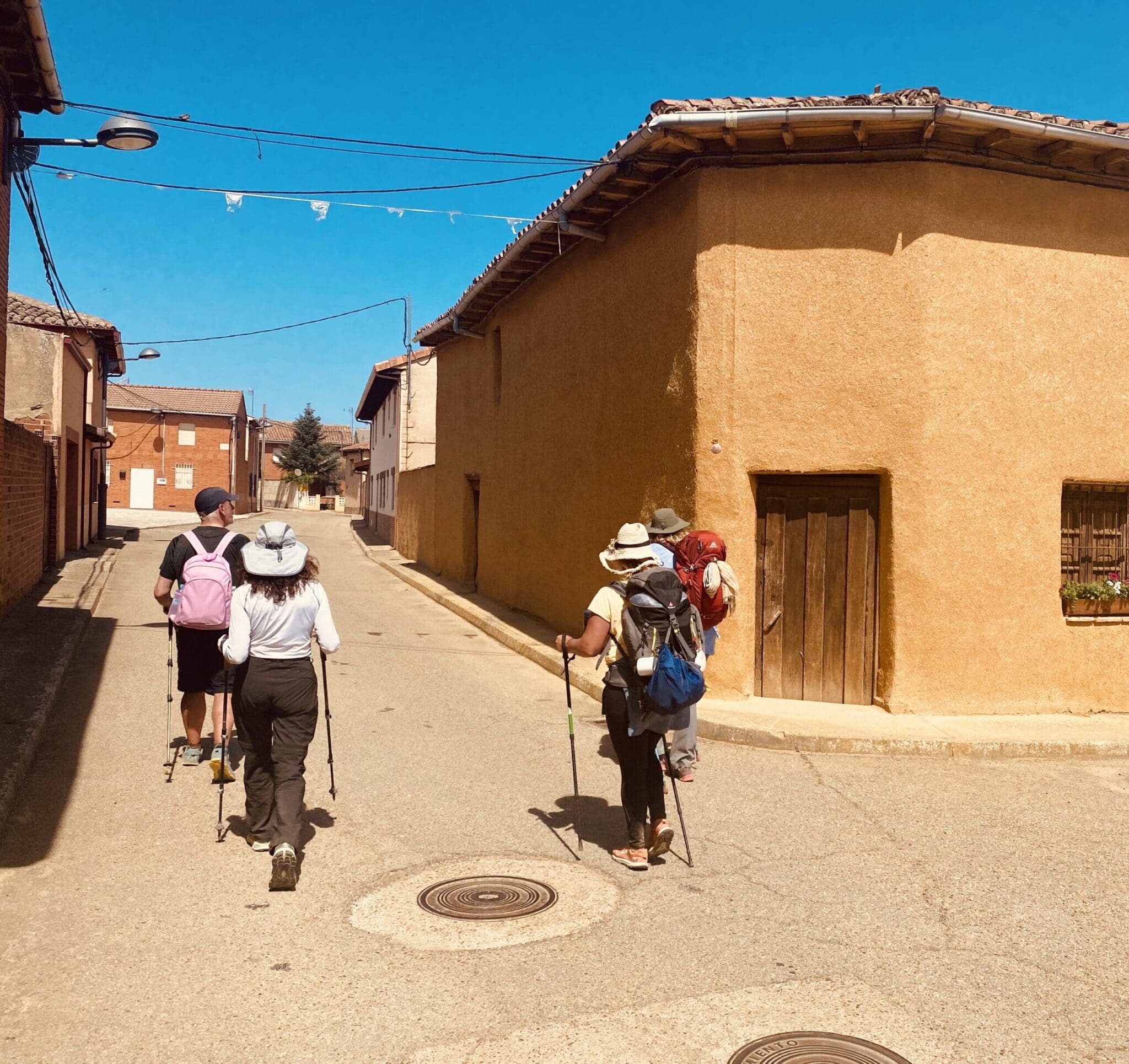
Reliegos is a small, dusty village that’s a real welcome sight after that long slog. The Camino track actually keeps going straight toward the next town, so you’ve got to turn off and walk back a few hundred metres to get into the village. It’s a bit of a detour, but well worth it.
The place is best known for Bar Elvis, a proper Camino institution. It’s covered in graffiti, messages from pilgrims, and random Elvis memorabilia. It’s weird, wonderful, and a great spot to grab a cold drink and rest your feet. The owner’s a character, too.

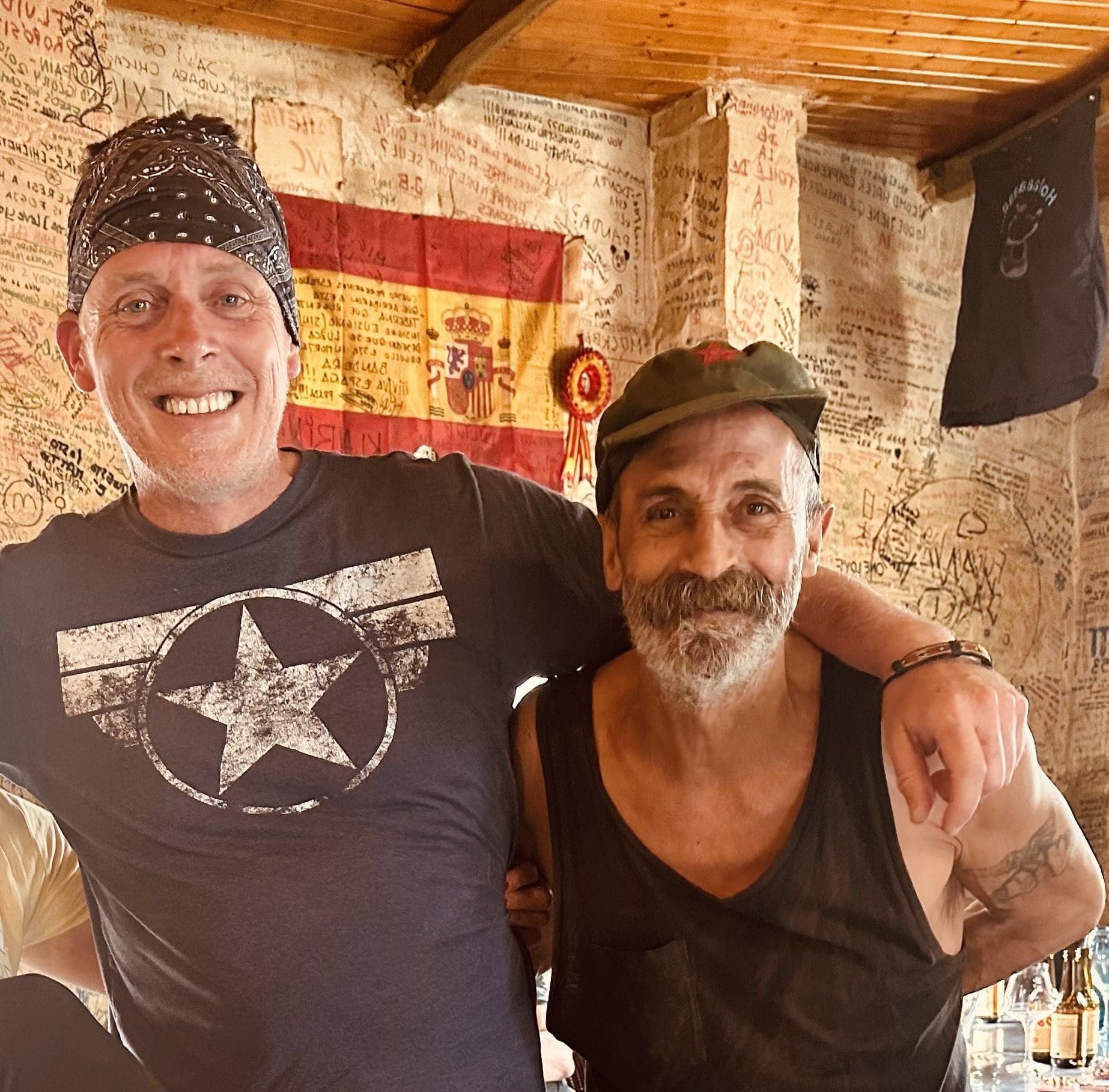
There are a few albergues here, including Albergue Las Hadas, a lovely little spot that does amazing vegan food.
Mansilla de las Mulas
324.5 KM to Santiago
The walk from Reliegos to Mansilla de las Mulas is an easy 6 km or so flat and fast, mainly along a gravel track that runs beside the main road. Not the most scenic stretch, but it goes by quickly.
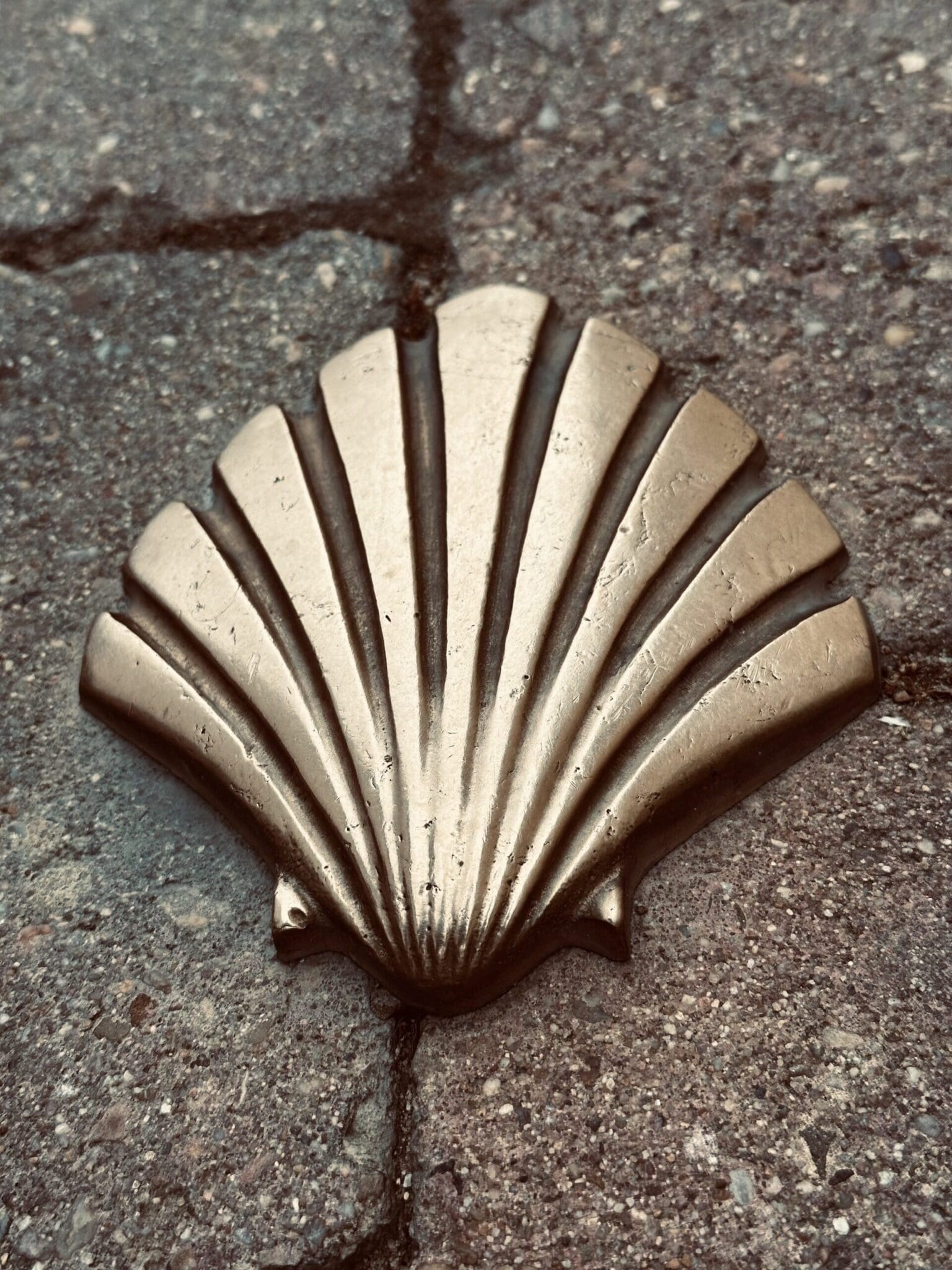
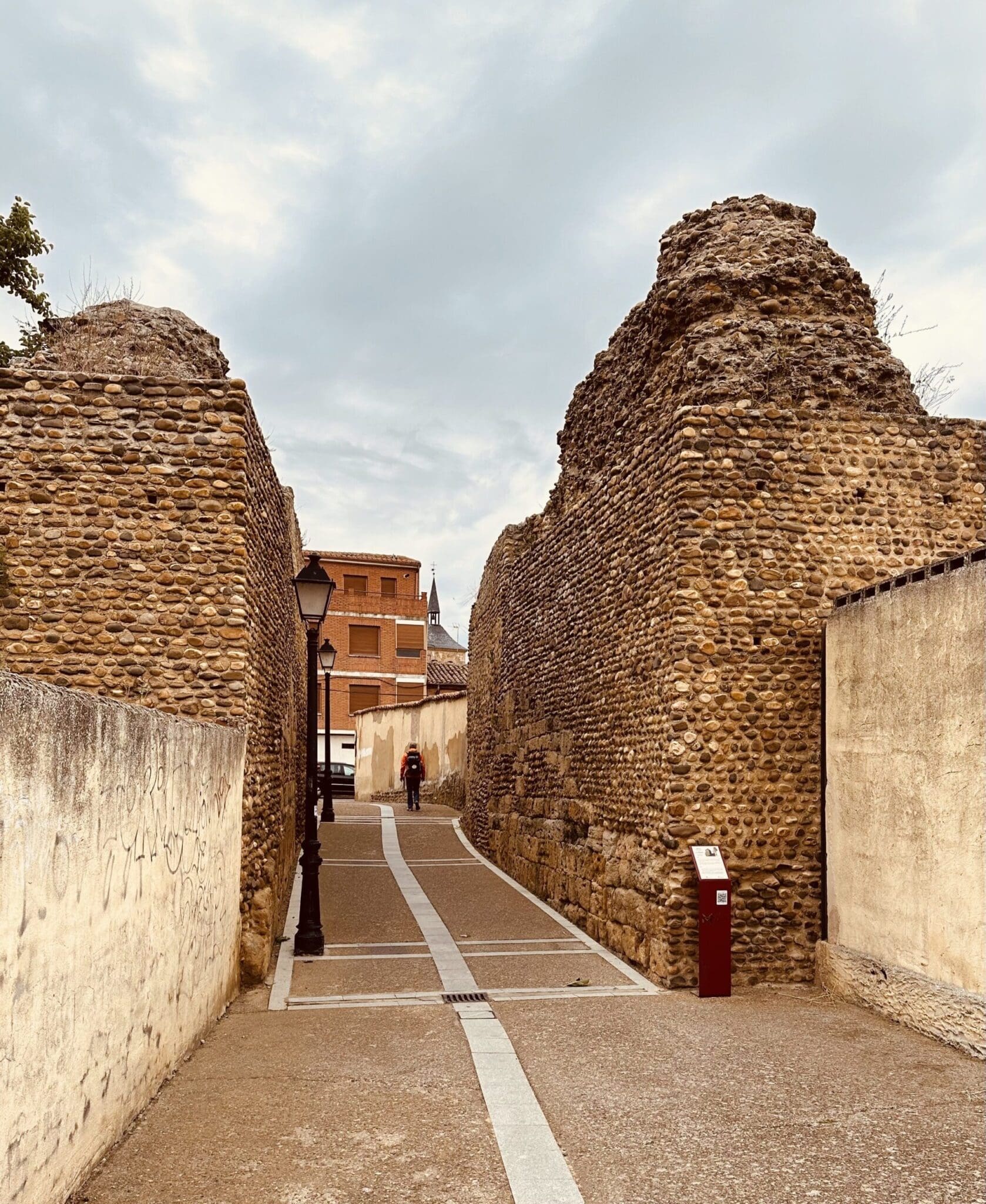
As you reach Mansilla, you’ll spot bits of the old medieval walls, which give the town a bit of character. It’s a decent-sized place with plenty of bars, shops, and everything you need. The name literally means “hands on the saddles”, a nod to its old role as a frontier town.
There are a few albergues here, including Albergue Gaia and Albergue El Jardin, both friendly and well-kept. It’s a great place to stop if you want a short day before heading into León the next morning, only about 18 km to go, so it sets you up nicely for an early arrival in the city.
León
305.5 KM to Santiago
The walk from Mansilla de las Mulas to León is around 18 km and, it’s a bit of a drag. A lot of it runs near the road, through suburbs and industrial areas, not the most inspiring stretch.
Best approach? Put your head down and just keep going. There are a few spots to grab a coffee or a snack along the way, but most people just push through and aim to get into León early.
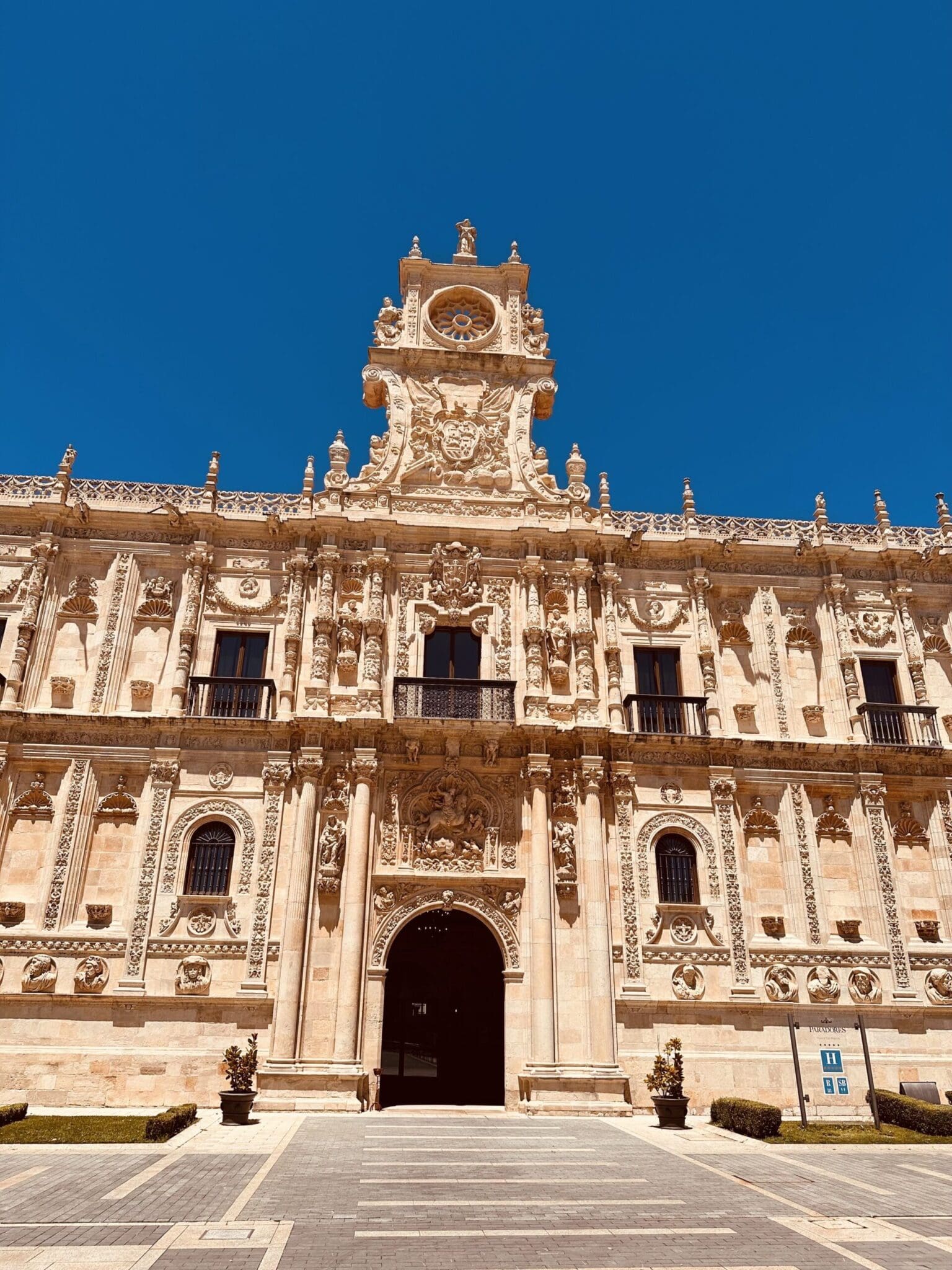
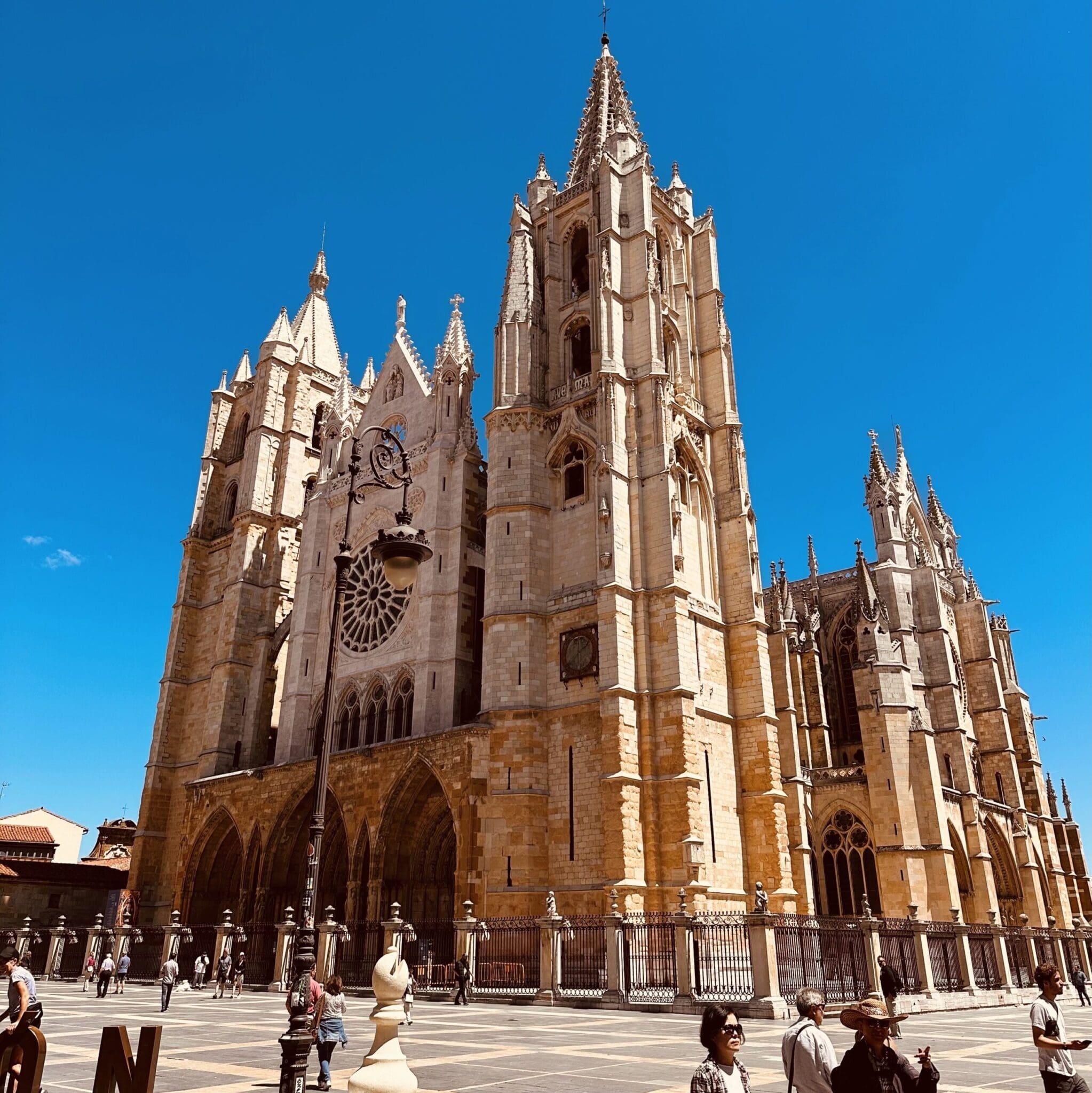
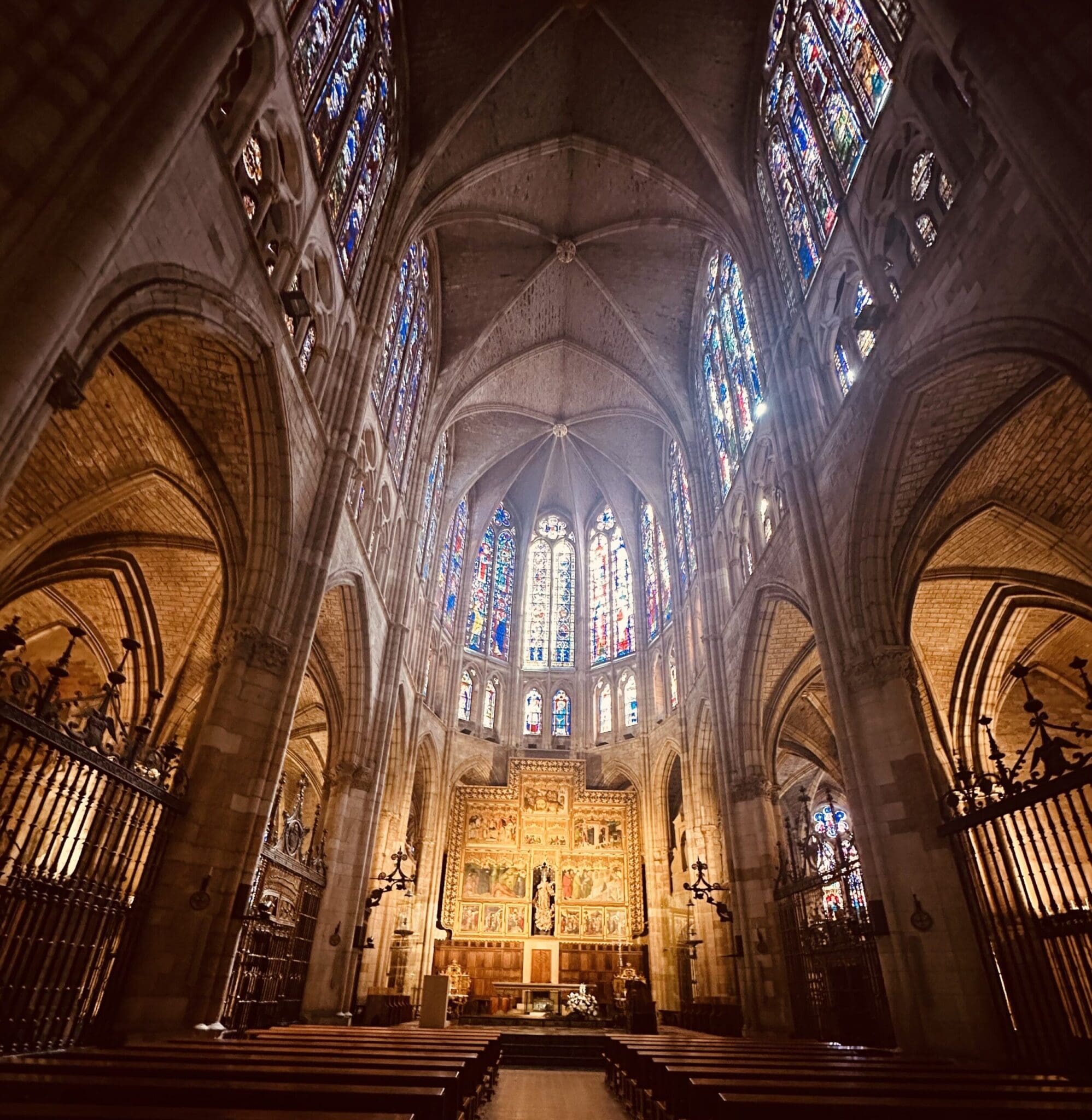
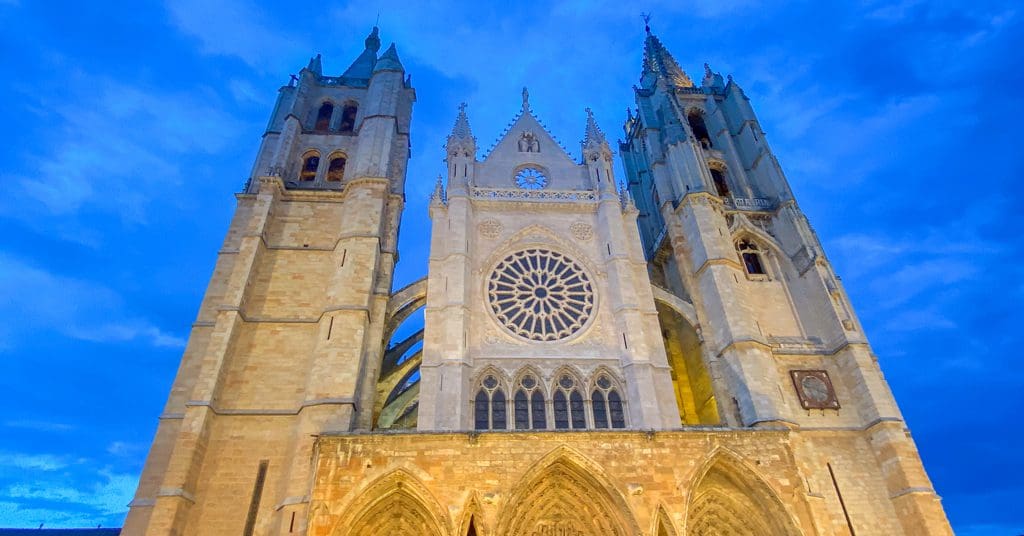
The cathedral is one of the most stunning on the whole Camino, famous for its massive stained glass windows. Step inside and you’ll see why, sunlight floods the place in colour. It’s like walking into a jewel box.
There are loads of places to stay. If you’re after the classic Camino feel, there’s the parochial Albergue de las Carbajalas or Albergue San Francisco de Asis, both simple, welcoming, and full of character. For something quieter or more private, there are loads of pensiones and small hotels scattered around the centre.
A few odd things about León: they have Semana Santa processions that include someone walking barefoot in chains (worth seeing if you’re around at Easter). Also, locals from León call themselves leoneses—not to be confused with actual lions, although the city crest has one.
At night, head to the Barrio Húmedo (literally “wet district”), it’s packed with bars where you’ll get free tapas with every drink