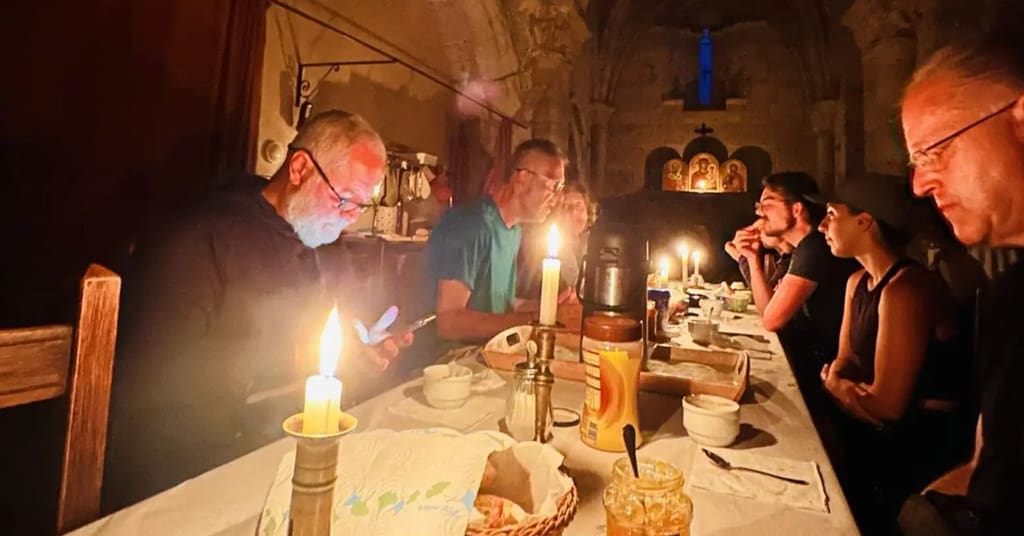

Camino Church Architecture Cheat Sheet

You will pass a lot of churches on the Camino, and you will hear fellow pilgrims confidently throwing around words like cloisters, flying buttresses, Gothic, and Romanesque. It can all sound a bit overwhelming at first.
This quick cheat sheet is here to help. A little background goes a long way, and knowing what you are looking at makes these churches far more interesting to visit. It also means that the next time someone says, “Ah, yes, classic Romanesque,” you can be the one saying it.
Most of the churches you will encounter were built between the 11th and 18th centuries and fall into three main architectural styles. Once you know what to look for, spotting them is easier than you might think.

Romanesque
1000 – 1200 AD
First up is Romanesque, the style that dominated from around 1000 to 1200 AD and the one you will encounter most on the Camino. The quickest way to identify a Romanesque church is to ask yourself if it looks like it could survive a siege. These churches were built to last, and they have.
What to look out for:
Thick stone walls, small windows, rounded arches, and square or round towers; and, if the church was attached to a monastery, look out for the cloister, a covered walkway surrounding a quiet, open courtyard.
Also, look closely at the columns and doorways, inside and out. Carved into the stone, you’ll find demons dragging sinners to hell, acrobats performing impossible contortions, monkeys playing instruments, and creatures that defy easy description. Medieval sculptors had a vivid imagination and a dark sense of humour, but all those monsters and warnings were also meant to remind pilgrims to stay on the righteous path. Consider yourself warned.
BEST EXAMPLE ON THE CAMINO
San Martín de Frómista, Frómista
Built in 1066, the same year as the Battle of Hastings, this is considered one of the purest Romanesque churches in Spain. Perfectly proportioned, unaltered, and covered in those strange carved creatures. If you want to understand Romanesque, stand in front of this one.


Gothic
1200 – 1500 AD
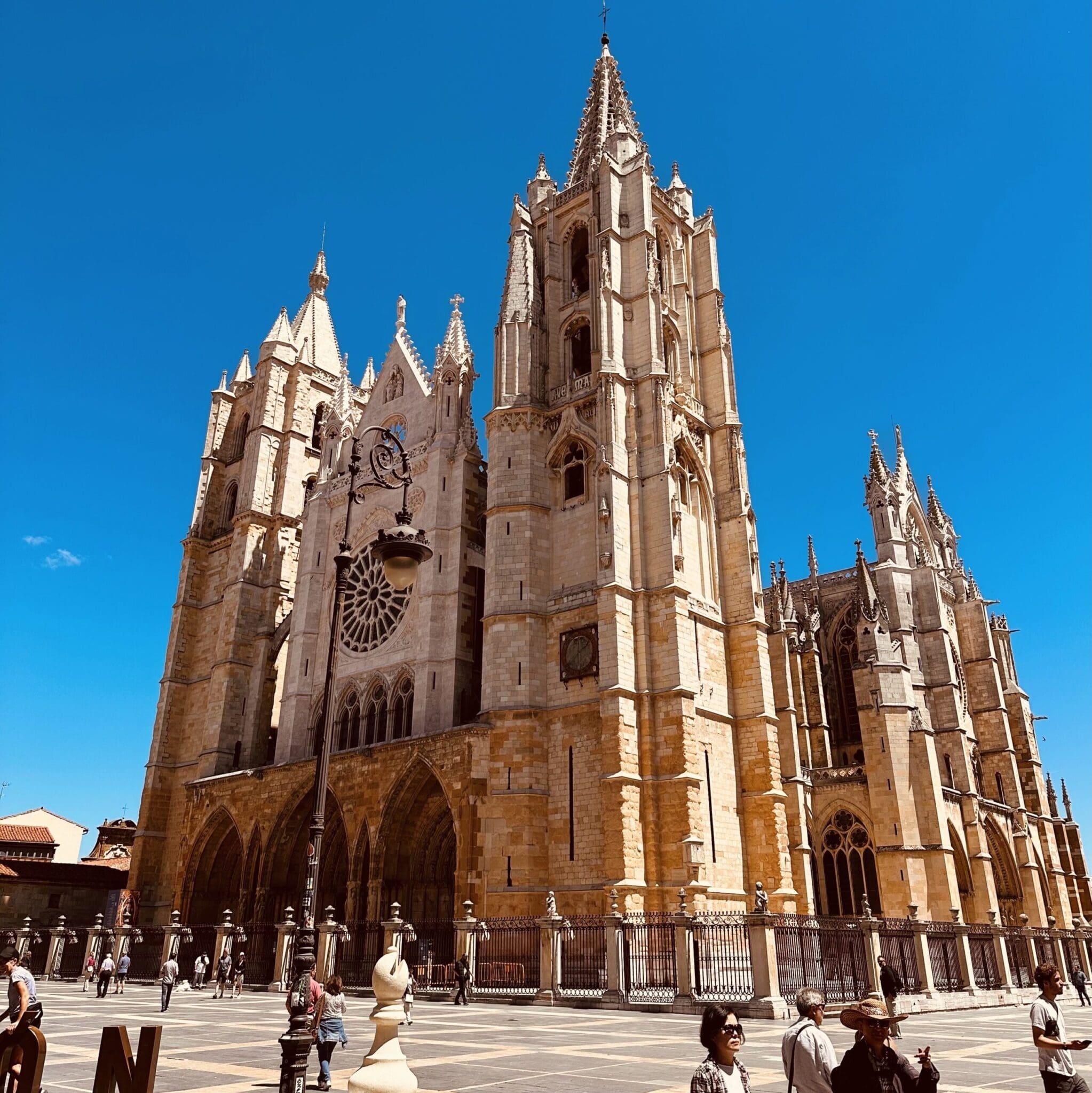
After Romanesque came Gothic architecture, and the difference is immediately obvious. Where Romanesque churches hunker down, Gothic ones shoot upward, as if the building itself is trying to reach heaven. Taller, brighter, and considerably more dramatic, they were made possible by a series of clever engineering breakthroughs. The builders themselves never called the style Gothic. The name came later, coined during the Renaissance by critics who preferred the classical architecture of ancient Rome and thought medieval cathedrals looked barbaric. They associated them with the Goths, the Germanic tribes blamed for the fall of the Roman Empire, and meant it as an insult. It didn’t quite land the way they intended. Gothic cathedrals are now considered some of the most beautiful buildings ever constructed.
What to look out for:
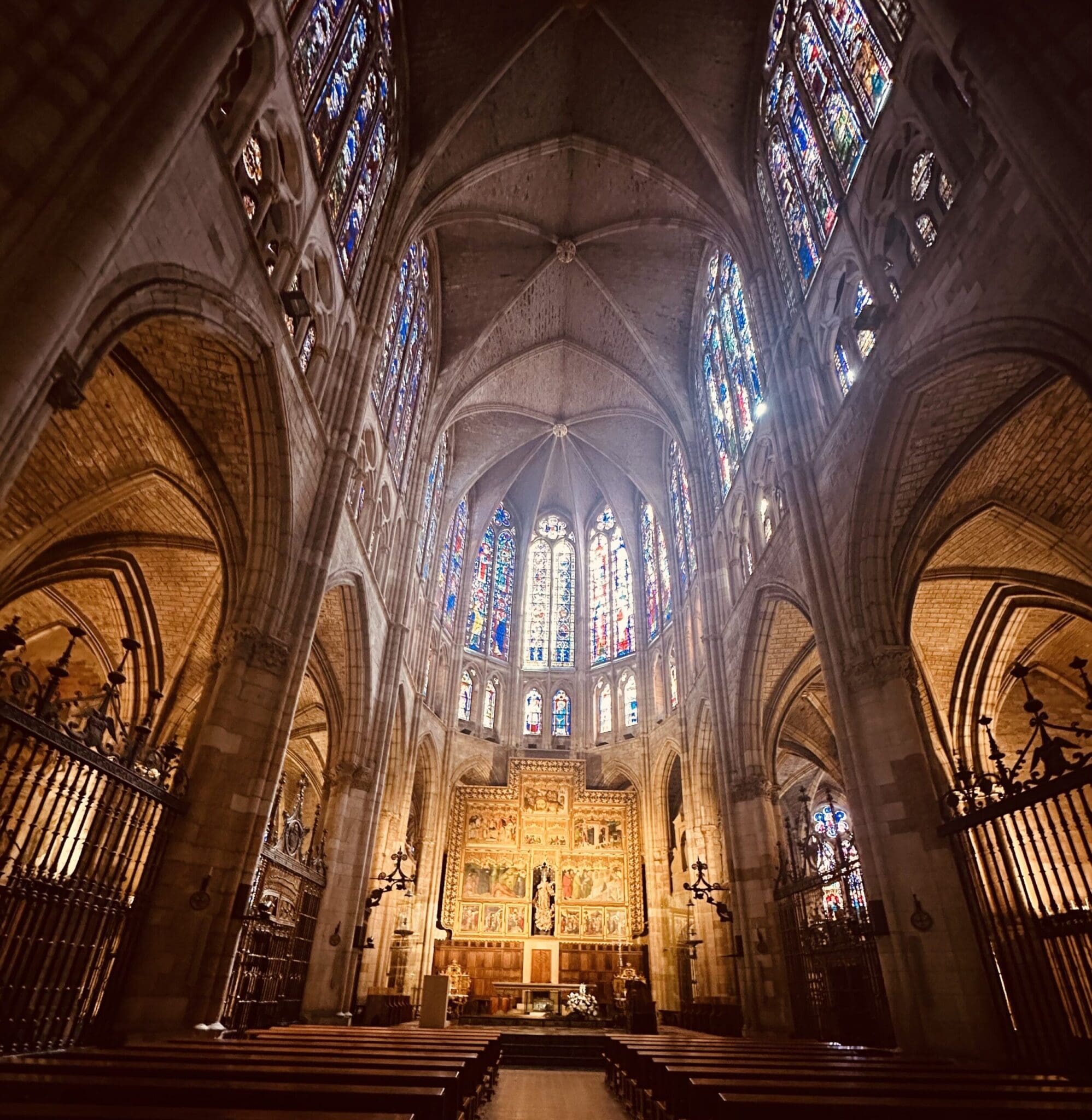
Pointed arches, ornate spires, ribbed vaults, stained-glass windows and flying buttresses. The flying buttresses were the innovation that made it all possible. These elegant stone arms arch out from the exterior walls, carrying the weight of the roof away from the walls and down to external supports. Because the walls no longer had to hold everything up, they could be made thinner and taller, and filled with enormous stained-glass windows, including the rose window, a large circular window typically set into the west-facing front façade. Churches that had once been dark and heavy suddenly became luminous spaces filled with coloured light. This was entirely intentional. Medieval theologians associated light with the presence of God, so Gothic cathedrals were essentially designed to feel like heaven on earth.
BEST EXAMPLE ON THE CAMINO
León Cathedral
For the full effect, step inside León Cathedral. The stained glass is so vast and so vivid that the whole building seems to glow from within. Burgos Cathedral and Astorga Cathedral are also incredible examples of Gothic Architecture.
Baroque
1600 – 1750 AD
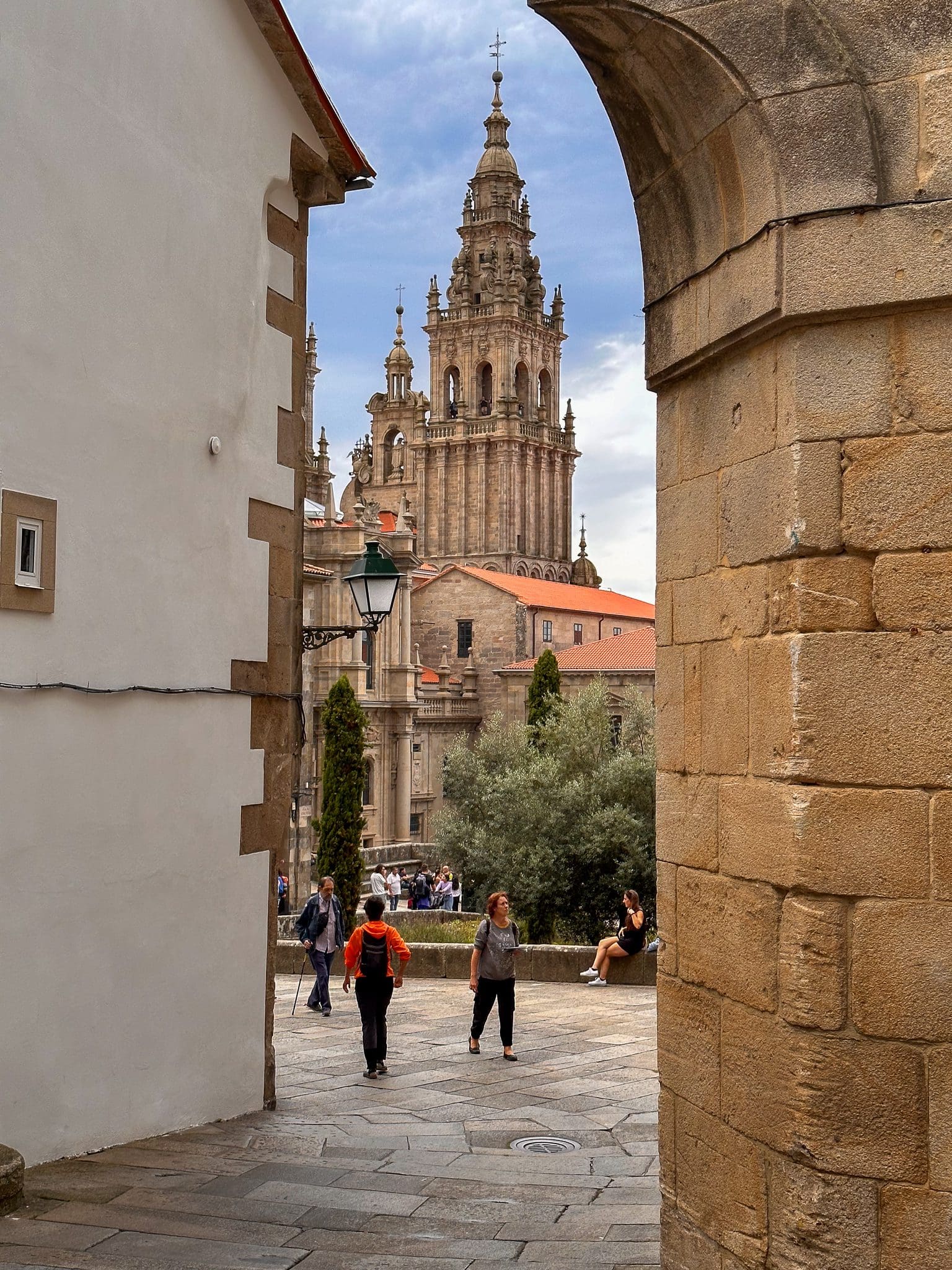
Finally, we arrive at Baroque, the most dramatic style you will encounter on the Camino. These churches were designed to impress, inspire, and overwhelm the senses, and they do exactly that. Baroque developed during the Catholic Counter-Reformation, a period when the Church was pushing back against the rise of Protestantism and wanted buildings that left no doubt about its power and glory. Churches became theatrical spaces filled with light, sculpture, and decoration turned up to maximum. The name Baroque likely comes from the Portuguese word barroco, meaning an irregular or imperfect pearl, originally used by critics who thought the style was excessive and over the top. Ironically, the name stuck.
What to look out for:
Very elaborate decoration, dome roofs, dramatic statues and sculptures, and altars dripping in gold. If you walk into a church and your first instinct is that someone may have gone slightly overboard, you are probably looking at Baroque.
BEST EXAMPLE ON THE CAMINO
Santiago Cathedral
The most famous Baroque building on the Camino is the Cathedral of Santiago de Compostela. The cathedral itself began as a Romanesque church in the 11th century, but the spectacular façade pilgrims see today on the Praza do Obradoiro was added in the 18th century and is one of the most iconic Baroque façades in Europe.

In summary, the Romanesque churches feel solid and fortress-like, the Gothic cathedrals soar toward heaven, and the Baroque churches seem to explode with decoration and drama.
So we’ve looked at the architecture — now let’s step inside.
Most churches are laid out in the shape of a cross. You enter through the front door, which traditionally faced west, and walk down the nave, the long central aisle that forms the main body of the church, where everyone sits.
At the far end is the altar, positioned to face east and the rising sun. For most of history, the priest stood at the altar facing east, with the congregation behind him, everyone praying in the same direction. Today, priests usually face the people, which is why many Camino churches have two altars. The original high altar is still at the back in its traditional position, while a newer altar sits further forward with the priest standing behind it, facing you.
The parts that stick out to the left and right are called the transept, and this is what gives the church its cross shape. Where the nave and transept meet is the crossing, often sitting directly beneath a dome or tower and forming the visual and spiritual heart of the building.
Behind or around the altar, you’ll find the choir, traditionally where the clergy sat. Despite the name, it was never really about singing! Further back is the apse, a rounded recess behind the altar, especially common in Romanesque churches.
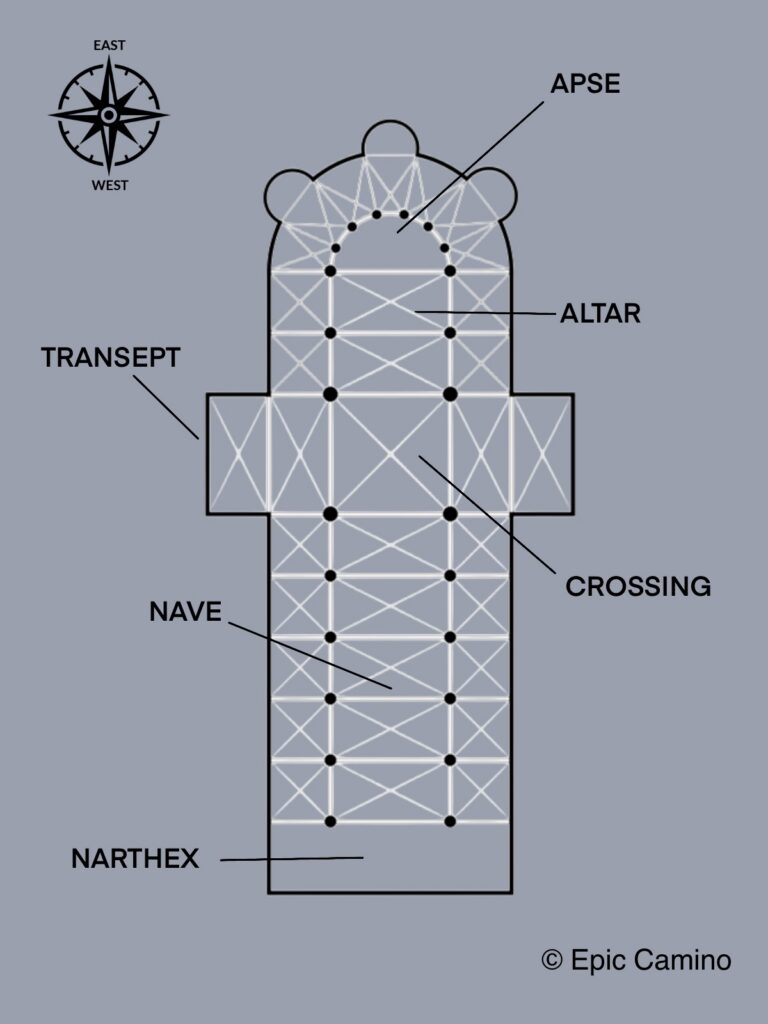
Not every church follows the strict east-to-west alignment, by the way, as the terrain or town layout sometimes forced builders to compromise.
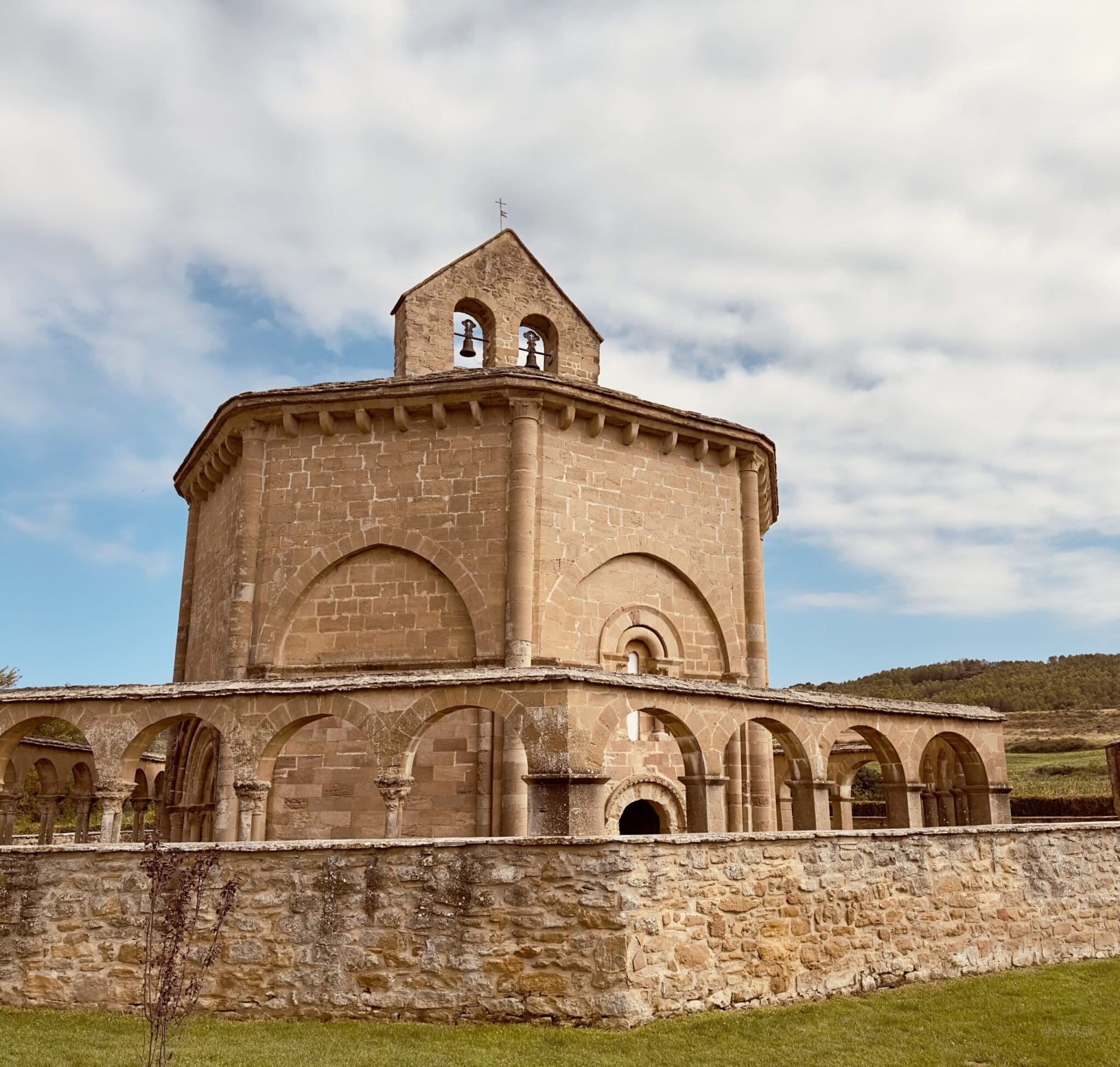
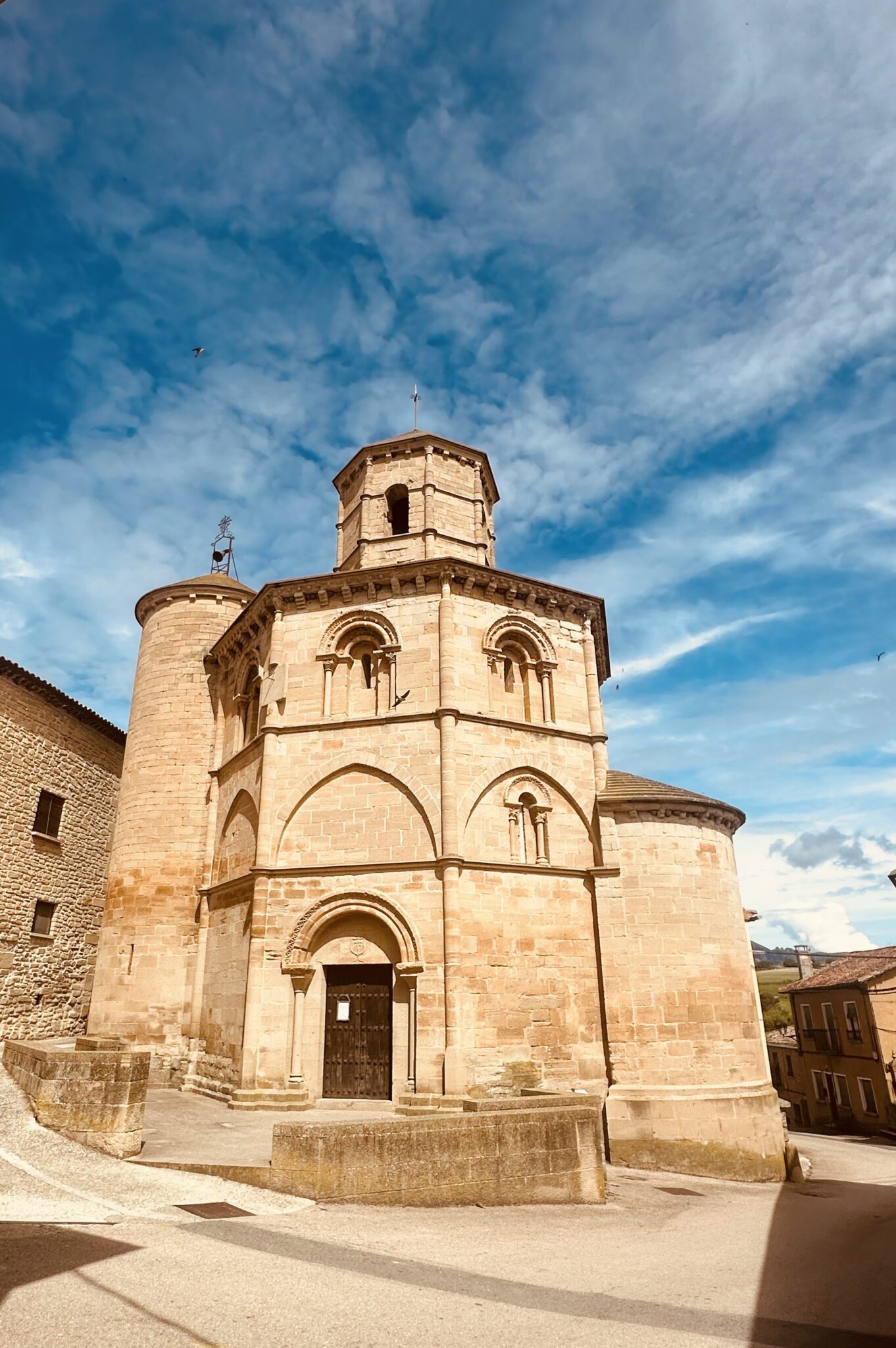
Finally, you’ll occasionally come across churches built to a circular plan with eight walls. These are said to be modelled on the Temple of Solomon in Jerusalem, brought to this region by the Knights Templar. Notable examples along the route include the churches at Eunate and Torres del Río.
If you have any interest in architecture or art, get a copy of “The Pilgrimage Road to Santiago: The Complete Cultural Handbook” by David M. Gitlitz and Linda Kay Davidson. Packed with encyclopaedic knowledge about the churches, art, and history along the way, it was published in 2000 and is still the best resource out there. It is a hefty book, but it is available as a Kindle edition, so you can have it on your phone every step of the way. I reach for it every single day.